
Lab-Grown Diamond Stud Earrings Guide:
How to Choose the Right Pair
Lab-grown diamond stud earrings place the diamond close to the earlobe, creating a compact style that can range from subtle and minimalist to bright and noticeable. Although studs appear simple, the setting, face-up size, profile, post, backing and metal finish can significantly change how a pair looks and feels.
The right pair is not necessarily the pair with the highest carat weight. It is the pair whose proportions, construction and appearance suit the wearer's ear, piercing position and jewellery style.
This guide explains the decisions that are specific to stud earrings. For a broader shopping checklist covering different earring styles, materials and seller information, use the lab-grown diamond earrings buying guide.
Quick Summary
- The design — solitaire, bezel-set, cluster or geometric
- The face-up appearance of the diamonds, not carat weight alone
- Whether the stated weight is per diamond, per earring or for the pair
- The height and balance of the setting
- The post and backing system
- The metal, finish and care requirements
- Millimetre dimensions and genuine on-ear photographs
Quick answer: how should you choose lab-grown diamond studs?
Choose lab-grown diamond stud earrings by checking six things:
- The design, such as solitaire, bezel-set, cluster or geometric.
- The face-up appearance of the diamonds, not carat weight alone.
- Whether the stated weight is per diamond or the total for the pair.
- The height and balance of the setting.
- The post and backing system.
- The metal, finish and care requirements.
Smaller, low-profile studs generally produce a quieter look. Medium or more decorative studs create greater visibility. Whatever the style, the product page should clearly disclose the laboratory-grown origin of the diamonds, the metal construction, dimensions and whether weight is stated per stone or per pair.
See also: Lab-grown diamond earrings buying guide
What are lab-grown diamond stud earrings?
Stud earrings are secured through the ear with a post and backing, while the decorative front sits on or close to the earlobe. Unlike hoops and drop earrings, they do not depend on a hanging element to create their shape.
A lab-grown diamond is a diamond produced in a controlled laboratory environment rather than formed underground. Laboratory-grown diamonds have the same crystal structure and nearly the same chemical, optical and physical properties as natural diamonds, but their origin is different. The Gemological Institute of America publishes reference material on how laboratory-grown diamonds differ from simulants.
The term "lab-grown diamond" should remain clearly visible throughout the product description. It should not be shortened to an unqualified "diamond" where doing so could make the origin unclear.
See also: What are lab-grown diamonds?
Explore Our Store
View all→Understanding the parts of a diamond stud earring
Several components work together to determine the appearance and fit of a stud.
| Component | What it does | What to check |
|---|---|---|
| Diamond | Produces the face-up shape and sparkle | Shape, proportions, measurements and disclosed quality |
| Setting | Holds the diamond in place | Prongs, bezel edge, alignment and finishing |
| Basket or profile | Controls how high the stud sits | Height, balance and how closely it sits to the ear |
| Post | Passes through the piercing | Length, straightness and metal composition |
| Backing | Secures the earring | Backing type, fit and replacement availability |
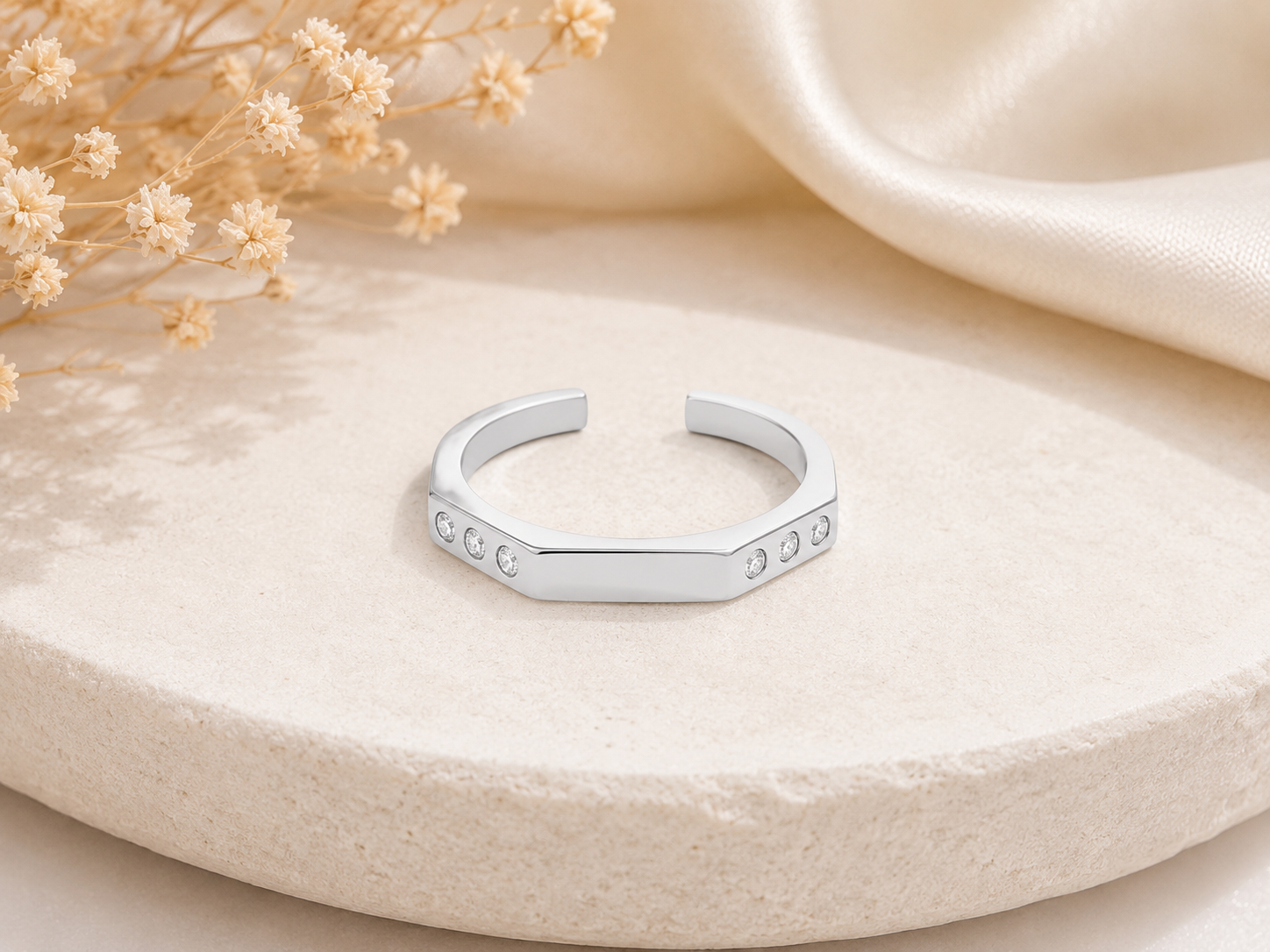
A good product page should show the front, side profile, post and backing. A single front-facing image does not provide enough information to assess the construction.
Which diamond stud design should you choose?
Solitaire studs
A solitaire stud uses one principal diamond on each ear. It is the most traditional option and keeps attention on the shape and appearance of the diamond. Solitaire studs suit shoppers looking for a clean, balanced design that can be worn alone or combined with other earrings.
Prong-set studs
Prongs hold the diamond at several points around its edge. This construction leaves more of the diamond visible, although the appearance depends on the number, thickness and position of the prongs. Check that the prongs appear even and that none visually dominates the diamond.
Bezel-set studs
A bezel surrounds all or part of the diamond with a metal rim. This creates a smooth, clearly defined outline and can make the stud appear more contemporary. Because the metal border is visually noticeable, its colour and thickness become part of the overall design.
Cluster and halo-style studs
Cluster studs use several smaller diamonds to form a larger pattern. A halo design places smaller diamonds around a central stone. These styles can create more face-up presence than a simple solitaire, but shoppers should check whether the stated carat weight refers to the complete design or only the principal stones.
Geometric and motif studs
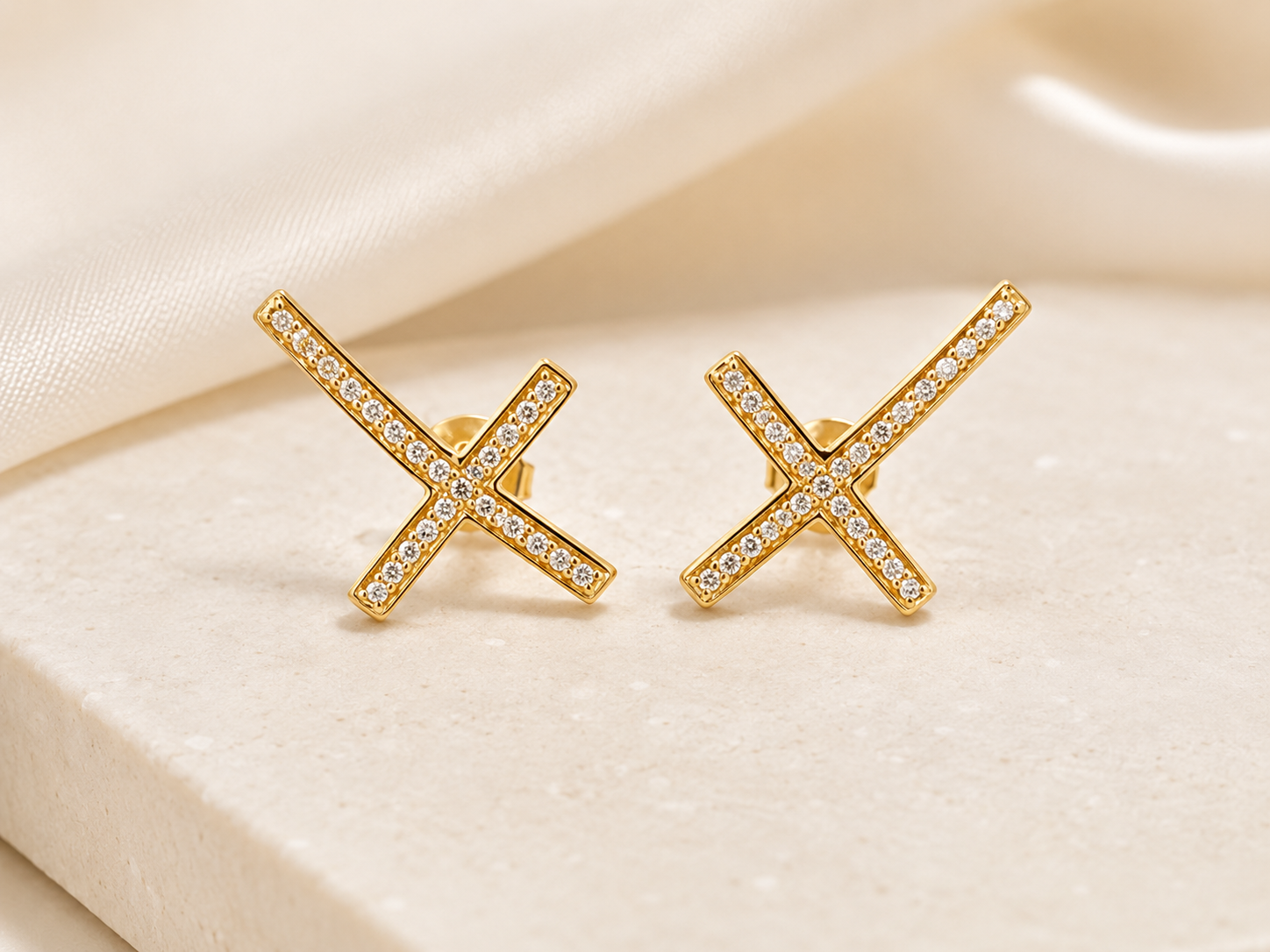
Geometric, floral and other shaped studs use the entire setting to create the design. They are suitable when the wearer wants something more distinctive than a traditional round solitaire. Check the product dimensions because the outline of the setting may be considerably wider than the diamonds themselves.
How to choose the right stud size
Carat is a unit of weight, not a direct measurement of visible diameter. Two diamonds of the same weight can present slightly differently depending on their shape and proportions.
For earrings, another important distinction is whether the retailer states:
- The weight of each diamond.
- The combined total carat weight of both earrings.
- The total weight of every diamond used in a cluster or decorative design.
Never assume that a displayed carat figure applies to each ear. The wording should clearly say "per diamond", "per earring" or "total carat weight for the pair".
Face-up millimetre measurements and genuine on-ear photographs are usually more useful for judging appearance than a carat figure alone. Earlobe size, piercing placement and the wearer's usual jewellery also affect how large the same stud appears.
See also: Lab-grown diamond earring size guide
Small or medium studs: which appearance is right?
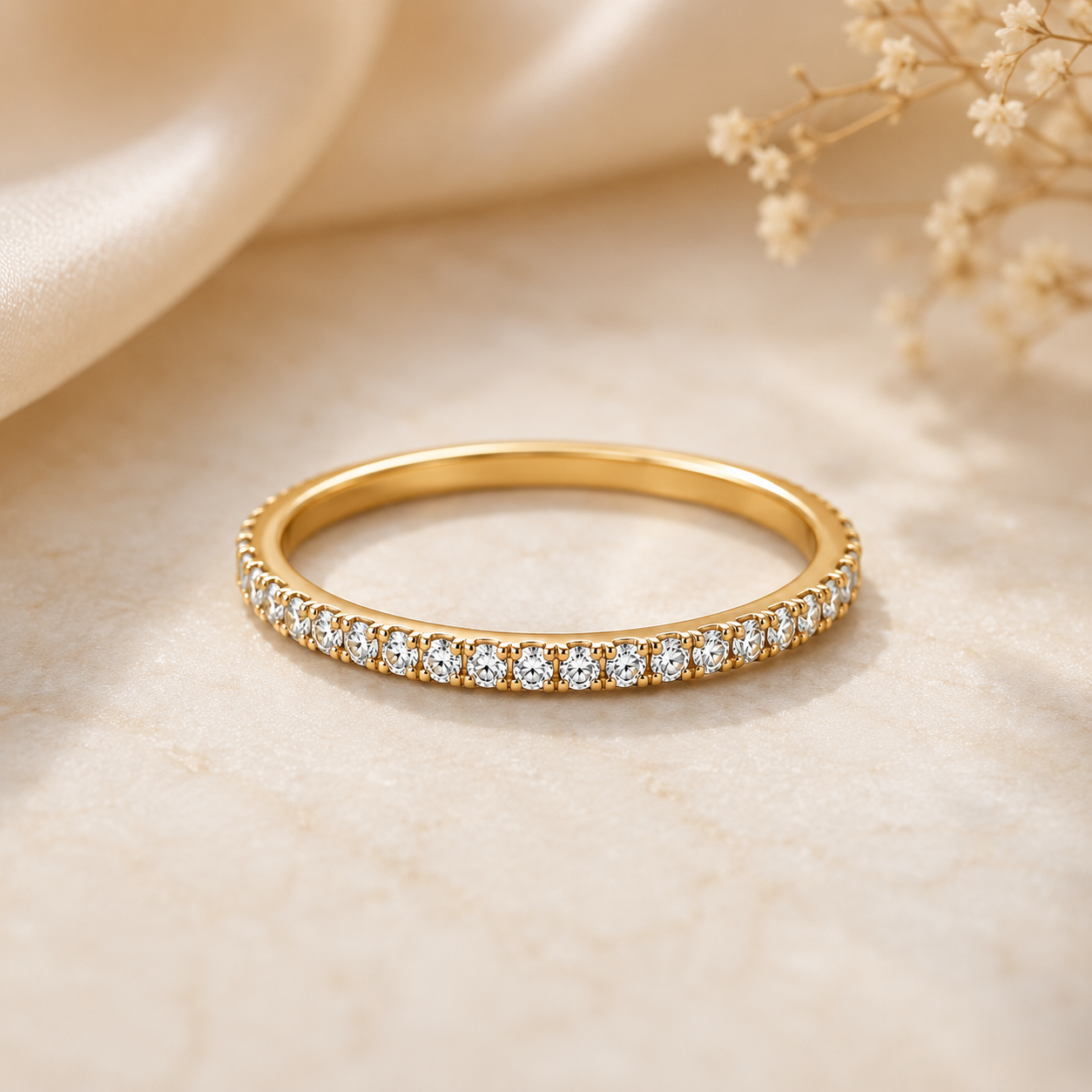
Choose smaller studs when you want:
- Subtle sparkle.
- A minimalist single-piercing look.
- A supporting earring for a stack.
- An understated appearance beside other jewellery.
Choose medium or more visible studs when you want:
- The earring to be easier to notice from conversational distance.
- A stronger standalone earring.
- More face-up presence without moving to a hoop or drop design.
- A stud that can anchor a coordinated ear look.
These descriptions should be supported by product measurements. Terms such as "small" and "medium" are relative and do not replace millimetre dimensions.
How should a diamond stud sit on the ear?
A well-proportioned stud should face forward without feeling excessively front-heavy. Its position depends on the weight of the front, the setting profile, the post position, the backing and the wearer's piercing.
Studs may tilt or droop when:
- The front is heavy relative to the backing.
- The post is positioned high on the setting.
- The backing is loose or too small for the design.
- The piercing sits low on the earlobe.
- The piercing has stretched over time.
A larger supporting back can sometimes improve the position of a front-heavy stud, but it should be compatible with the post. Persistent discomfort or a changing piercing should be discussed with a qualified piercer rather than corrected by forcing a tighter backing.
Which earring backing is best?
There is no single backing type that is best for every wearer.
| Backing | How it works | Best suited to |
|---|---|---|
| Friction or butterfly back | Slides onto the post and is held by tension | Familiar, straightforward everyday use |
| Screw back | Threads onto a compatible post | Shoppers who prefer a threaded fastening |
| Flat back | Uses a flatter rear component | Certain piercings and close-fitting designs |
| Larger support back | Provides a wider area behind the ear | Some larger or more front-heavy studs |
The product description should identify the backing supplied with the earrings. It should also disclose the metal used in both the post and backing, especially when those components differ from the decorative front.
No backing type makes an earring safe for sleeping, swimming or continuous wear on its own.
What diamond details should you check?
Cut and face-up appearance
The quality of the cut influences how light travels through a faceted diamond. For studs, shoppers should also consider how the pair appears together from the front.
Matching between the earrings
A pair should look coordinated in shape, apparent size and colour. The diamonds do not need to be mathematically identical, but obvious differences may be visible when the earrings are worn together.
Clear origin disclosure
The product should consistently identify the stones as laboratory-grown diamonds. Lab-grown diamonds should not be confused with cubic zirconia or moissanite, which are different materials.
Grading information
Not every small diamond used in an earring pair is supplied with an individual grading report. If a report is provided, its number and specifications should correspond with the product information.
A missing individual report does not automatically identify poor quality, but the seller should still disclose enough information for the shopper to understand what is being purchased.
See also: Lab-grown diamonds vs cubic zirconia
Choosing the metal and finish
The metal surrounding the diamond affects the appearance of the complete stud. White-toned metal can create a continuous, cool-toned look around a colourless diamond. Yellow-gold tones introduce warmth and contrast. Rose-gold tones produce a softer pink appearance.
I Want Jewels products may use 925 sterling silver with 14kt gold plating. Gold plating is a surface finish and is not the same as solid gold. Its appearance can change over time through friction and exposure to water, cosmetics, perfume and cleaning products.
Check each product page for the exact base metal, plating colour, post material and backing material. The components are not always made from the same metal.
A six-step diamond stud buying checklist
Before ordering, confirm:
- Design: do you want a solitaire, bezel, cluster or distinctive shaped stud?
- Visible scale: are face-up dimensions provided in millimetres?
- Diamond weight: is the figure stated per stone, per earring or for the pair?
- Fit: does the side photograph show the setting height and post position?
- Backing: is the backing type and metal clearly disclosed?
- Materials: are the lab-grown diamond origin, base metal and finish described accurately?
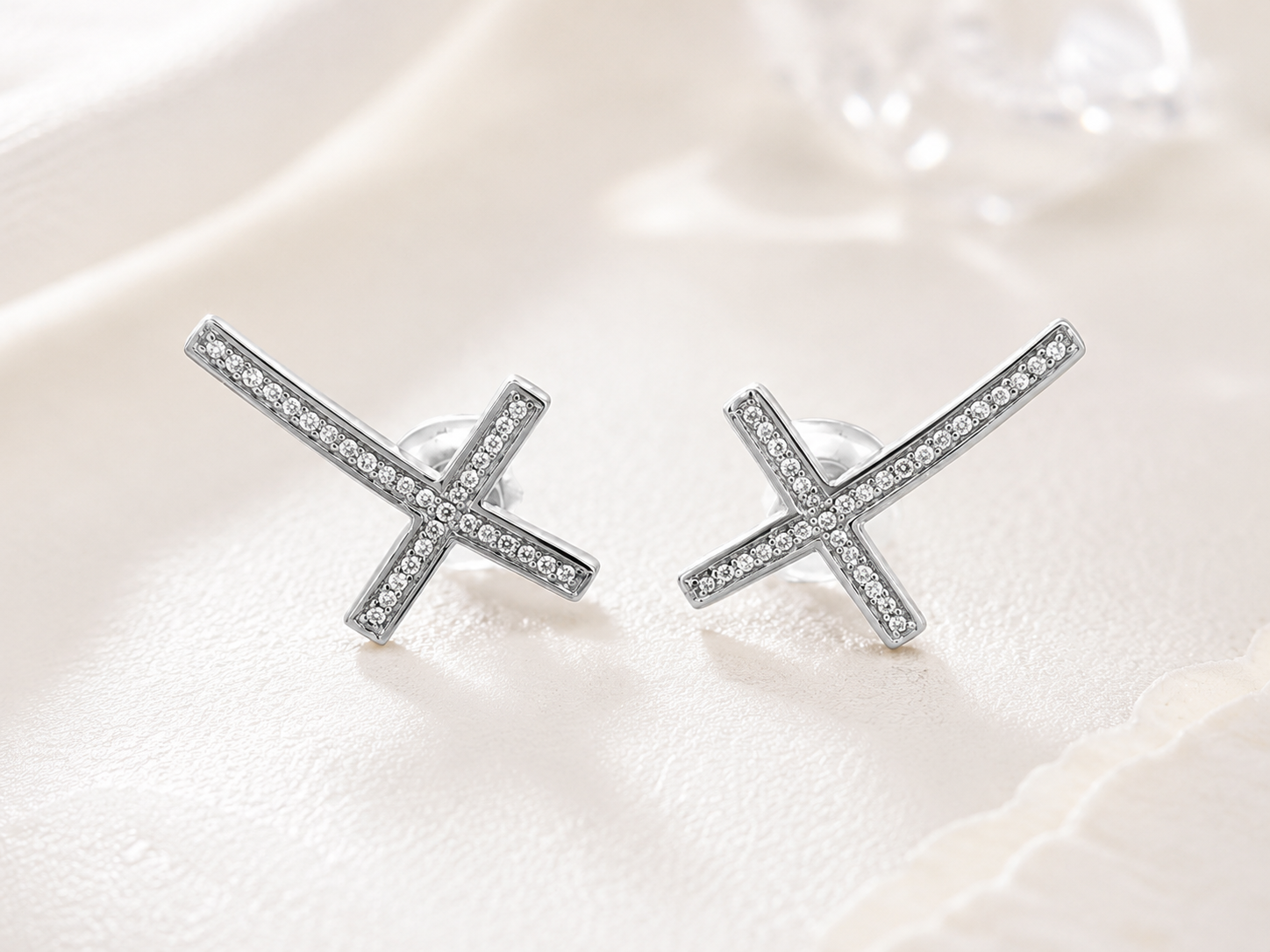
If essential measurements or material information are absent, ask for them before purchasing.
Styling diamond studs
Diamond studs can be worn as a single focal point or as the foundation of a coordinated ear.
For regular wear, consider setting height, backing comfort and how the earrings interact with headphones, glasses and clothing.
For multiple piercings, use one more visible earring as the anchor and reduce the scale of the surrounding pieces.
See also: Diamond ear stack ideas
See also: Stud vs hoop earrings
See also: Lab-grown diamond earrings for gifts
How to care for lab-grown diamond studs
Handle stud earrings by the setting or metal edge rather than repeatedly touching the diamond surface. Skin oils and cosmetic residue can reduce the appearance of sparkle.
After wearing them:
- Wipe the earrings gently with a clean, soft cloth.
- Check that the posts remain straight.
- Inspect the backs and prongs for visible movement.
- Store the pair separately to limit scratching and tangling.
- Keep plated finishes away from perfume, harsh chemicals and abrasive cleaners.
Do not use an ultrasonic cleaner unless the brand specifically confirms that it is suitable for the complete earring, including its setting, plating and any additional materials.
See also: How to clean lab-grown diamond earrings
Choose studs by construction, not carat weight alone
The best lab-grown diamond stud earrings combine a suitable face-up scale with a balanced setting, clearly disclosed materials and a backing that works for the wearer.
Compare the dimensions, side profile, total carat weight wording and metal construction before choosing. These details provide a more useful picture of the earrings than size labels or carat weight alone.
Explore Our Store
View all→Got Questions?
Frequently Asked Questions
Ready to Shop?
The best lab-grown diamond studs combine a suitable face-up scale with a balanced setting, clearly disclosed materials and a backing that works for the wearer — not the highest carat weight.
Explore I Want Jewels lab-grown diamond stud earrings and check each product page for current measurements, materials, backing, price and availability before choosing a pair.
Continue Reading
More From Lab-Grown Diamond Guides
Are Lab-Grown Diamonds Real Diamonds?
Yes, lab-grown diamonds are real diamonds. Learn how they compare to natural diamonds, fake diamonds, cubic zirconia and moissanite before buying.
Lab-Grown vs Natural Diamonds: What Is the Difference?
Compare lab grown and natural diamonds in simple language. Learn the difference in origin, price, sparkle, value and jewellery use before buying.
Are Lab-Grown Diamonds Worth It?
Find out if lab grown diamonds are worth buying, how they compare to natural diamonds, and when lab grown diamond jewellery makes sense.