
What Are Lab-Grown Diamonds?
How They Are Made, How They Compare and What to Check
Lab-grown diamonds are diamonds created in a controlled laboratory environment rather than formed naturally underground and recovered through mining. They consist of carbon arranged in a diamond crystal structure and possess the characteristic hardness, brilliance and optical properties associated with diamond.
Their origin is the principal distinction: natural diamonds form within the Earth, while laboratory-grown diamonds are produced using technology that creates the conditions required for diamond crystal growth.
Lab-grown diamonds must always be clearly described as laboratory-grown, lab-created or synthetic diamonds so buyers can distinguish their origin from naturally formed diamonds.
Quick Summary
- A diamond produced in a laboratory through HPHT or CVD growth
- Not glass, cubic zirconia or moissanite
- Same diamond material as a natural diamond, different origin
- Appearance depends on cut, colour, clarity and carat weight
- Laboratory origin must always be disclosed clearly
- Neither growth method automatically produces a better stone
- Judge the finished piece, not only the word "diamond"
Quick answer
A lab-grown diamond is a diamond produced in a laboratory through either the HPHT or CVD growth process.
It is not glass, cubic zirconia or moissanite. Although lab-grown and natural diamonds have different origins and growth histories, both consist of diamond material. Their appearance and quality depend on factors such as cut, colour, clarity and carat weight.
Lab-grown diamonds at a glance
| Question | Short answer |
|---|---|
| Are they diamonds? | Yes. They consist of diamond material but have a laboratory origin. |
| Are they mined? | No. They are created in controlled manufacturing environments. |
| How are they produced? | Primarily through HPHT or CVD growth. |
| Are they cubic zirconia? | No. Cubic zirconia is a diamond simulant. |
| Are they moissanite? | No. Moissanite is a separate gemstone material. |
| Do they look like natural diamonds? | Well-cut examples can appear very similar without specialised testing. |
| Are they durable? | Diamond is extremely resistant to scratching, although it can still chip after a strong impact. |
| Are they less expensive? | They are generally priced lower than comparable natural diamonds, although prices vary. |
| Do they need care? | Yes. The diamond, setting, metal and finish all require appropriate care. |

Explore Our Store
View all→What exactly is a lab-grown diamond?
A lab-grown diamond begins with a small diamond seed. Carbon atoms are then encouraged to form around that seed under carefully controlled conditions. As the process continues, the carbon develops into a diamond crystal that can be cut and polished for use in jewellery.
You may encounter several terms while shopping:
- Laboratory-grown diamond
- Lab-grown diamond
- Laboratory-created diamond
- Lab-created diamond
- Synthetic diamond
These terms describe a diamond with a manufactured rather than natural origin. They should not be confused with "diamond-look" stones.
The word "synthetic" can sound as though the stone is an imitation, but in gemmological terminology it refers to a material created through manufacturing that has substantially the same chemical composition and crystal structure as its naturally occurring counterpart.
UK advertising guidance requires retailers to make the laboratory-grown origin clear and not describe these stones simply as "diamonds" in a way that could cause buyers to believe they are naturally formed.
See also: Are lab-grown diamonds real?
How are lab-grown diamonds made?
The two principal growth methods are High Pressure High Temperature and Chemical Vapour Deposition.
HPHT: High Pressure High Temperature
The HPHT process exposes a diamond seed and carbon source to very high pressure and temperature. These conditions allow carbon to crystallise around the seed and gradually develop into diamond material.
HPHT technology is designed to reproduce some of the conditions involved in natural diamond formation, but it does so inside specialised equipment rather than beneath the Earth's surface.
CVD: Chemical Vapour Deposition
In the CVD process, a thin diamond seed is placed inside a controlled chamber. A carbon-containing gas is introduced and energised. Carbon atoms separate from the gas and accumulate on the seed in successive layers.
The diamond crystal grows over multiple stages until it is large enough to be removed, assessed, cut and polished.
HPHT vs CVD diamonds
| Factor | HPHT | CVD |
|---|---|---|
| Full name | High Pressure High Temperature | Chemical Vapour Deposition |
| Main conditions | Very high pressure and temperature | Carbon-rich gas inside a controlled chamber |
| Growth pattern | Carbon crystallises around a diamond seed | Carbon is deposited onto a seed in layers |
| Result | Laboratory-grown diamond material | Laboratory-grown diamond material |
| Most important buying consideration | Quality of the finished diamond | Quality of the finished diamond |
Neither growth method automatically guarantees a better finished diamond. The appearance of the final stone depends on its individual characteristics, cutting and any disclosed post-growth treatment.
For most jewellery buyers, the finished diamond's appearance, documentation and suitability for the design are more important than choosing purely between CVD and HPHT. The GIA publishes a technical explanation of both growth processes and how laboratory-grown diamonds are identified.
How do lab-grown diamonds differ from natural diamonds?
Lab-grown and natural diamonds differ in origin, formation time, growth environment, rarity and market behaviour.
Natural diamonds form through geological processes beneath the Earth's surface. Laboratory-grown diamonds are manufactured under controlled conditions using specialised equipment.
| Factor | Lab-grown diamond | Natural diamond |
|---|---|---|
| Origin | Controlled laboratory environment | Natural geological formation |
| Formation | Manufactured using HPHT or CVD | Formed underground |
| Availability | Can be produced repeatedly | Limited by natural supply |
| Identification | Laboratory testing can establish origin | Laboratory testing can establish origin |
| Typical price | Generally lower than a comparable natural diamond | Generally higher |
| Resale market | Often limited and subject to changing prices | More established, although resale value is never guaranteed |
| Main attraction | Diamond material at a more accessible purchase price | Natural origin and geological rarity |
This page only provides a summary. Read the dedicated comparison before deciding between the two.
Are lab-grown diamonds fake?
Lab-grown diamonds should not be described as mined or natural diamonds, but they are also not diamond imitations such as cubic zirconia.
The important distinction is between origin and material:
- A lab-grown diamond has a laboratory origin and consists of diamond material.
- A natural diamond has a geological origin and consists of diamond material.
- Cubic zirconia and moissanite are different materials that may be used as diamond alternatives.
Specialised testing can establish whether a diamond formed naturally or was produced through HPHT or CVD growth. Visual appearance alone may not be enough to determine origin reliably.
Lab-grown diamonds vs diamond simulants
| Property | Lab-grown diamond | Moissanite | Cubic zirconia |
|---|---|---|---|
| Diamond material | Yes | No | No |
| Laboratory-produced versions available | Yes | Yes | Yes |
| Relative scratch resistance | Extremely high | High | Lower than diamond and moissanite |
| Typical sparkle | Diamond brilliance and fire | Often stronger rainbow-coloured fire | Bright initially but can appear glassier |
| Common use | Fine and demi-fine diamond jewellery | Diamond-alternative jewellery | Lower-cost fashion jewellery |
| Specialist identification | Origin can be identified through testing | Identifiable as moissanite | Identifiable as cubic zirconia |
See also: Lab-grown diamonds vs moissanite
See also: Lab-grown diamonds vs cubic zirconia
Are all lab-grown diamonds the same quality?
No. A laboratory origin does not mean every diamond has the same appearance or quality.
Cut
Cut influences how effectively a faceted diamond reflects light. A well-proportioned diamond can appear brighter and more lively than a poorly cut diamond of a larger carat weight.
Colour
Diamonds may display different degrees of colour. The difference between nearby grades may be difficult to notice once the diamond is set, particularly in smaller earrings.
Clarity
Clarity considers internal and external characteristics. Many characteristics are difficult to see without magnification and may have little effect on how an earring appears during normal wear.
Carat weight
Carat measures diamond weight, not visual dimensions. Two diamonds with the same carat weight can appear different in size depending on their shape and proportions.
Shape
Round, oval, pear, emerald, princess and other shapes distribute their weight differently and create different visual effects.
Treatment and documentation
Some laboratory-grown diamonds receive post-growth treatment to alter their colour or appearance. Any relevant treatment and laboratory-grown origin should be disclosed by the retailer or assessment documentation.
For earrings, customers should also check whether a stated carat weight applies to each diamond or to the total pair.
See also: Lab-grown diamond earring size guide
Are lab-grown diamonds durable?
Diamond is rated 10 on the Mohs scale of mineral hardness, meaning it is exceptionally resistant to scratching. Laboratory-grown diamonds share this characteristic because they consist of diamond material.
Hardness does not mean indestructibility. A diamond can still chip if struck strongly at a vulnerable point. Jewellery can also be damaged through:
- Loose or bent settings
- Broken posts or clasps
- Worn plating
- Harsh chemical exposure
- Impact during exercise or manual work
- Incorrect storage
- Contact with other jewellery
The durability of a finished piece therefore depends on the complete construction—not only the stone.
If jewellery is intended for regular wear, examine the setting, closure, metal, weight and care requirements as carefully as the diamond.
Do lab-grown diamonds lose their sparkle?
Laboratory-grown diamonds do not permanently lose their diamond properties through normal wear. However, oils, cosmetics, soap, dust and hair products can accumulate on the stone and reduce the amount of light reaching it.
Earrings are especially likely to collect residue because they sit close to the face, hair and skin.
Gentle cleaning can restore their appearance, but the method must also be suitable for the metal and finish. Gold-plated sterling silver should not be scrubbed aggressively or exposed to harsh cleaning chemicals.
See also: How to clean lab-grown diamond earrings
Are lab-grown diamonds more sustainable?
Lab-grown diamonds avoid the physical extraction involved in diamond mining, but that fact alone does not prove that every laboratory-grown diamond has a lower environmental impact.
Production requires equipment and energy. Environmental performance can vary depending on:
- Energy source
- Production efficiency
- Factory location
- Growth method
- Cutting and polishing
- Metal sourcing
- Transportation
- Packaging
- Product lifespan
Terms such as "sustainable", "eco-friendly" or "carbon neutral" should only be used when a business has reliable evidence supporting the specific claim. The UK Advertising Standards Authority advises businesses to disclose laboratory-grown origin clearly and to substantiate environmental claims.
The strongest transparent description is that laboratory-grown diamonds have a different production route from mined diamonds. Buyers should consider the complete supply chain rather than assuming that origin alone answers every environmental question.
Are lab-grown diamonds suitable for jewellery?
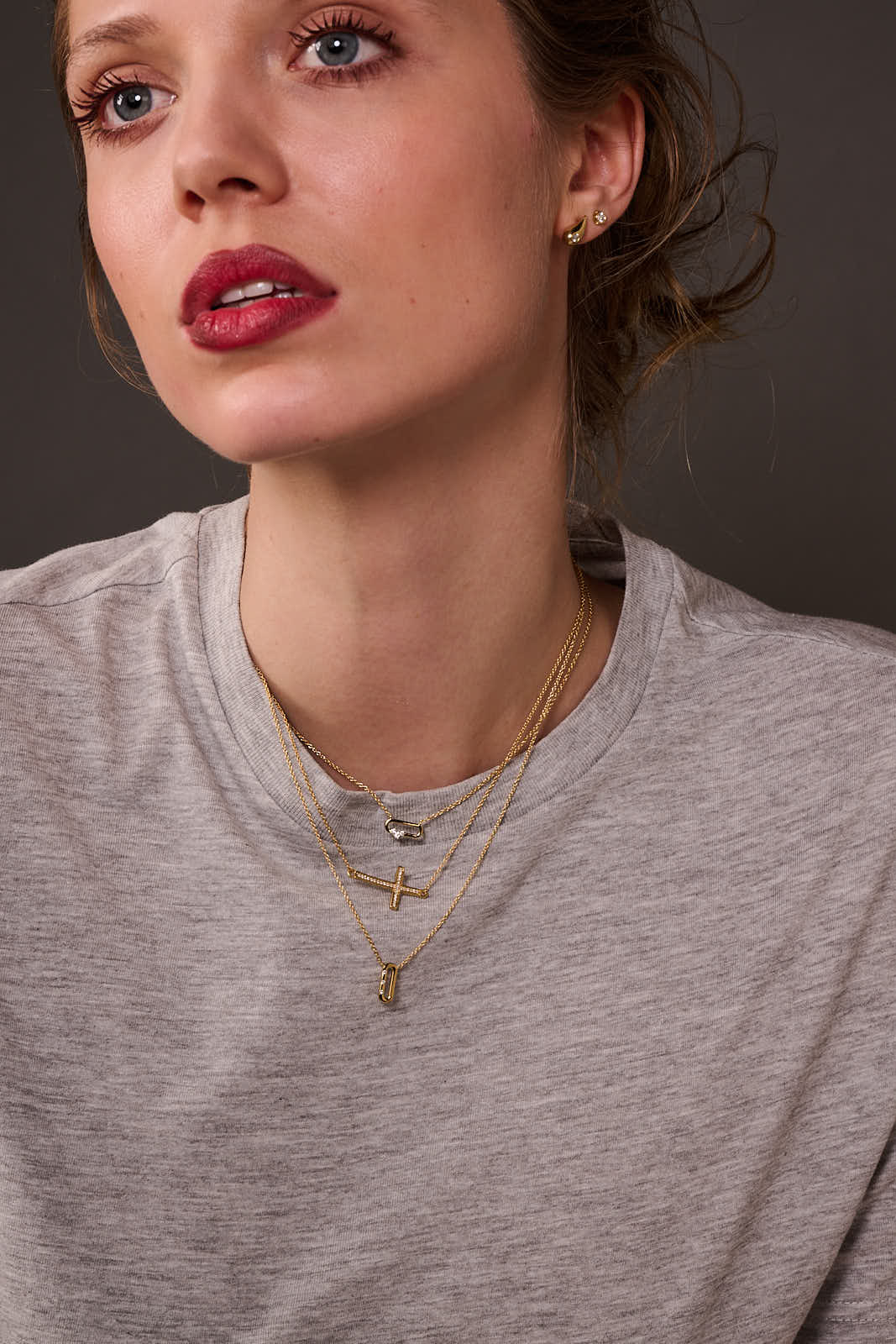
Yes. Laboratory-grown diamonds can be used in many of the same jewellery styles as natural diamonds, including stud earrings, huggie earrings, hoops, drop earrings, necklaces, bracelets, rings, ear stacks and occasion jewellery.
The most suitable design depends on how and where the jewellery will be worn.
| Jewellery style | Suitable for | What to check |
|---|---|---|
| Diamond studs | Work, everyday wear and gifting | Size, post length, setting and total carat weight |
| Huggie earrings | Ear stacks and compact everyday styling | Internal diameter, closure and weight |
| Diamond hoops | Everyday statement and evening outfits | Diameter, weight and clasp |
| Drop earrings | Weddings, parties and formal events | Length, movement and comfort |
| Necklaces | Everyday styling and gifting | Chain length, clasp and pendant dimensions |
| Bracelets | Layering and occasion wear | Wrist size, clasp security and flexibility |
See also: Lab-grown diamond earrings buying guide
See also: What are huggie earrings?
What should you check before buying lab-grown diamond jewellery?
Check the complete piece rather than looking only at the word "diamond".
Confirm the diamond's origin
The product description should clearly identify the stone as laboratory-grown. It should not use vague language that leaves the origin unclear.
Check the metal construction
Determine whether the jewellery is made from solid gold, sterling silver, gold-plated sterling silver, gold vermeil or another metal. These constructions have different prices, care requirements and long-term wear characteristics.
Check the actual dimensions
For earrings, look for diameter, drop length, post length, internal huggie diameter, product weight and individual or total carat weight.
Review the setting and closure
A beautiful stone still needs a suitable setting. Check whether the closure works for your routine and whether the design is likely to feel comfortable for the intended period of wear.
Understand the care requirements
Gold plating is a surface finish and may gradually wear depending on friction, moisture, chemicals and frequency of use. It is not permanent.
Choose for the intended use
A compact stud may be best for work and travel. A huggie can suit an ear stack. A drop earring may be preferable for weddings or evening events.
Laboratory-grown diamonds at I Want Jewels
I Want Jewels uses laboratory-grown diamonds in jewellery designed for everyday styling, gifting and occasions. Pieces are created using 925 sterling silver with 14kt gold-plated finishes, subject to the specification of each individual product.
This provides a different proposition from solid-gold fine jewellery. Customers should choose based on the complete product construction, design, budget and care expectations.
Always review the individual product page for:
- Diamond details
- Metal construction
- Dimensions
- Closure
- Available colour finishes
- Care instructions
- Delivery and return information
See also: Lab-grown diamond earrings
Conclusion
Lab-grown diamonds are manufactured diamonds created through HPHT or CVD growth rather than natural geological formation. They are distinct from simulants such as moissanite and cubic zirconia, and their laboratory-grown origin should always be disclosed clearly.
For jewellery buyers, the decision should extend beyond whether a diamond was created in a laboratory. Look at the quality of the finished stone, the setting, metal construction, dimensions, closure, care requirements and how the piece will be worn.
If you are considering earrings, continue with the buying guide before comparing individual styles.
Explore Our Store
View all→Got Questions?
Frequently Asked Questions
Ready to Shop?
Lab-grown diamonds are manufactured diamonds created through HPHT or CVD growth, distinct from simulants such as moissanite and cubic zirconia. Judge the finished piece — stone, setting, metal, dimensions and care — not only the word "diamond".
Ready to compare styles? Explore I Want Jewels laboratory-grown diamond earrings, including studs, huggies, hoops and occasion designs, and check each product page for its diamond details, metal construction, dimensions, closure and care instructions.
Continue Reading
More From Lab-Grown Diamond Guides
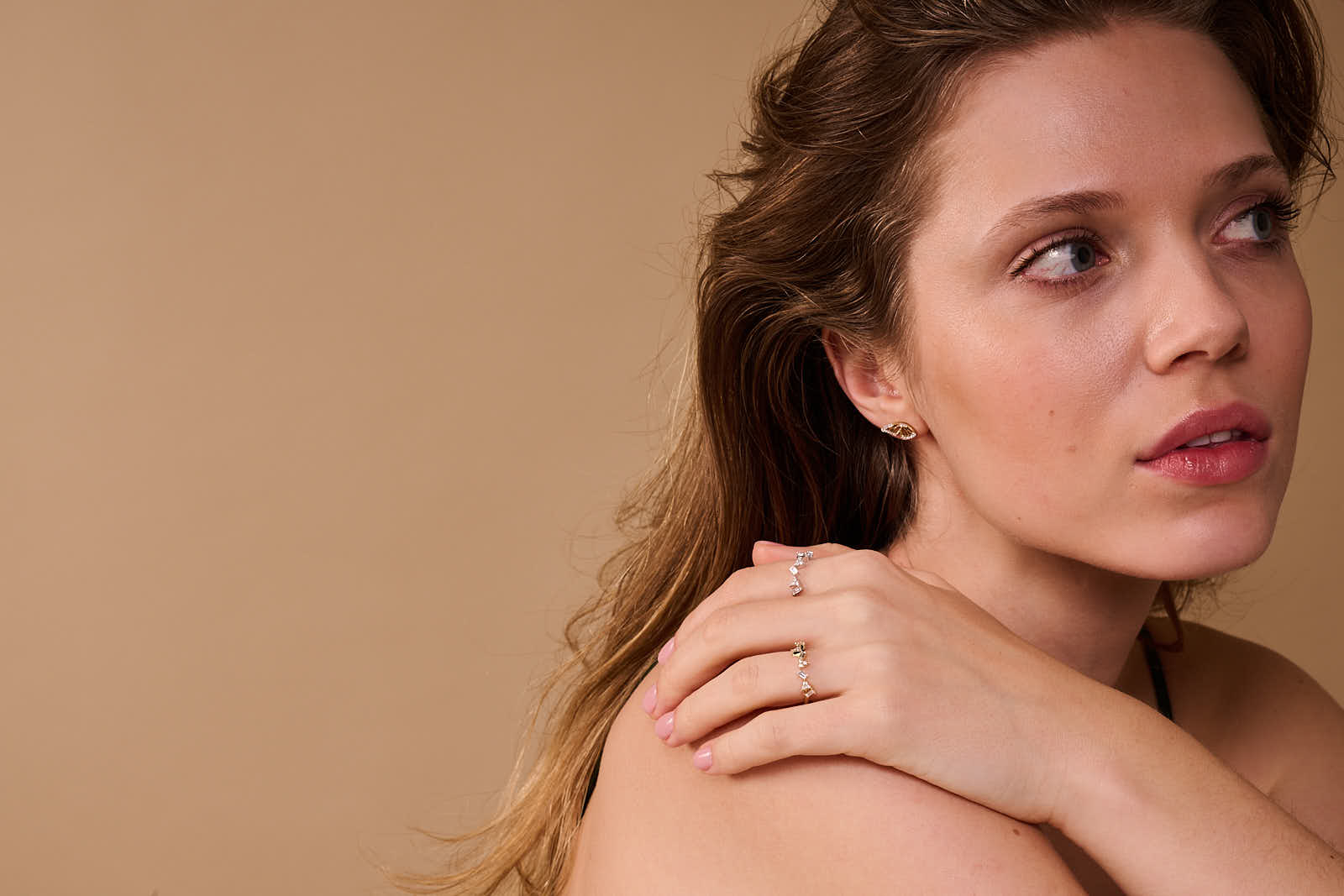
Are Lab-Grown Diamonds Real Diamonds?
Yes, lab-grown diamonds are real diamonds. Learn how they compare to natural diamonds, fake diamonds, cubic zirconia and moissanite before buying.

Lab-Grown vs Natural Diamonds: What Is the Difference?
Compare lab grown and natural diamonds in simple language. Learn the difference in origin, price, sparkle, value and jewellery use before buying.
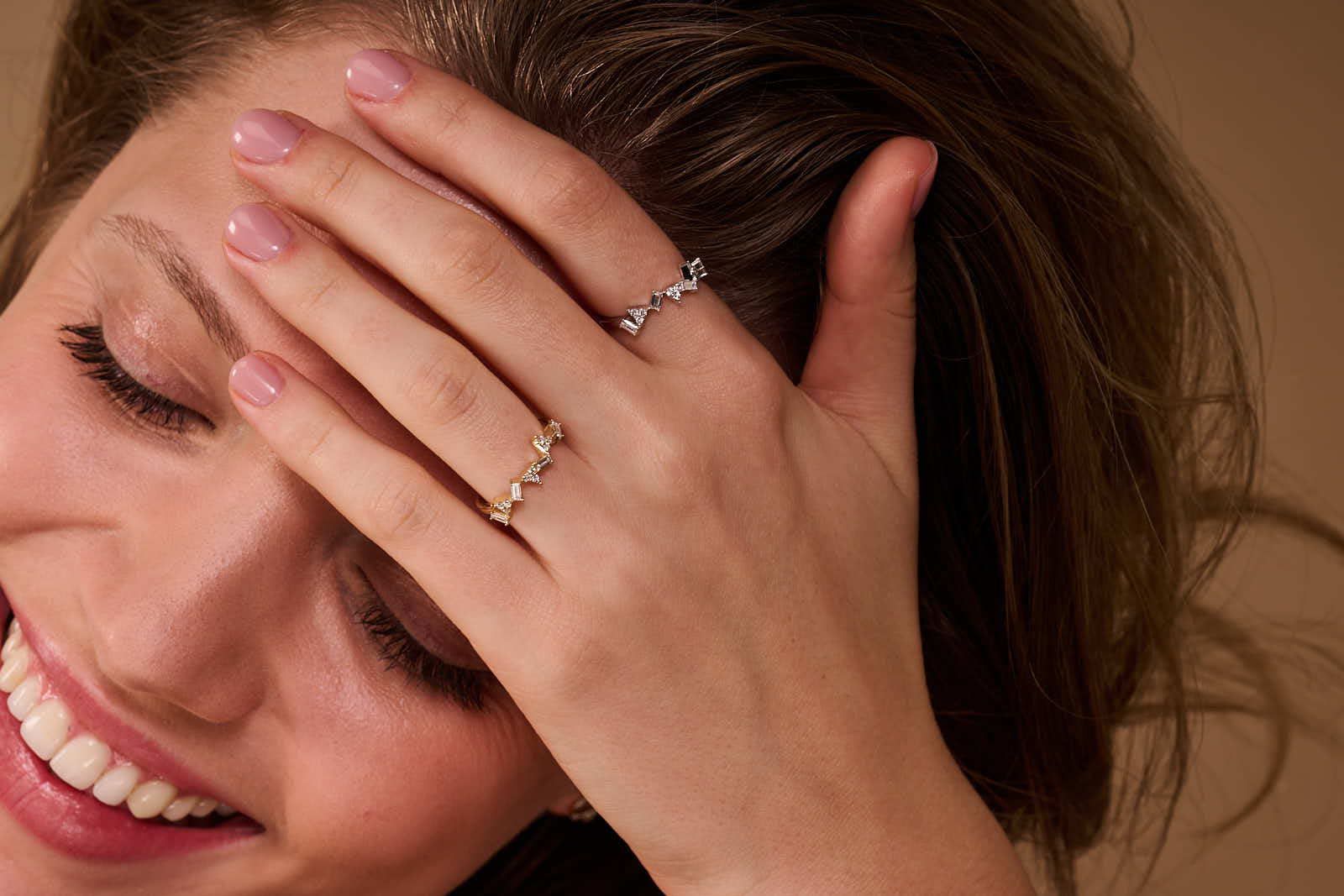
Are Lab-Grown Diamonds Worth It?
Find out if lab grown diamonds are worth buying, how they compare to natural diamonds, and when lab grown diamond jewellery makes sense.