
Can You Wear Lab-Grown Diamond Earrings Every Day?
Daily Wear, Removal and Care
Yes, lab-grown diamond earrings can be worn regularly. However, wearing earrings every day is different from wearing them continuously through sleep, showers, swimming, exercise and every other activity.
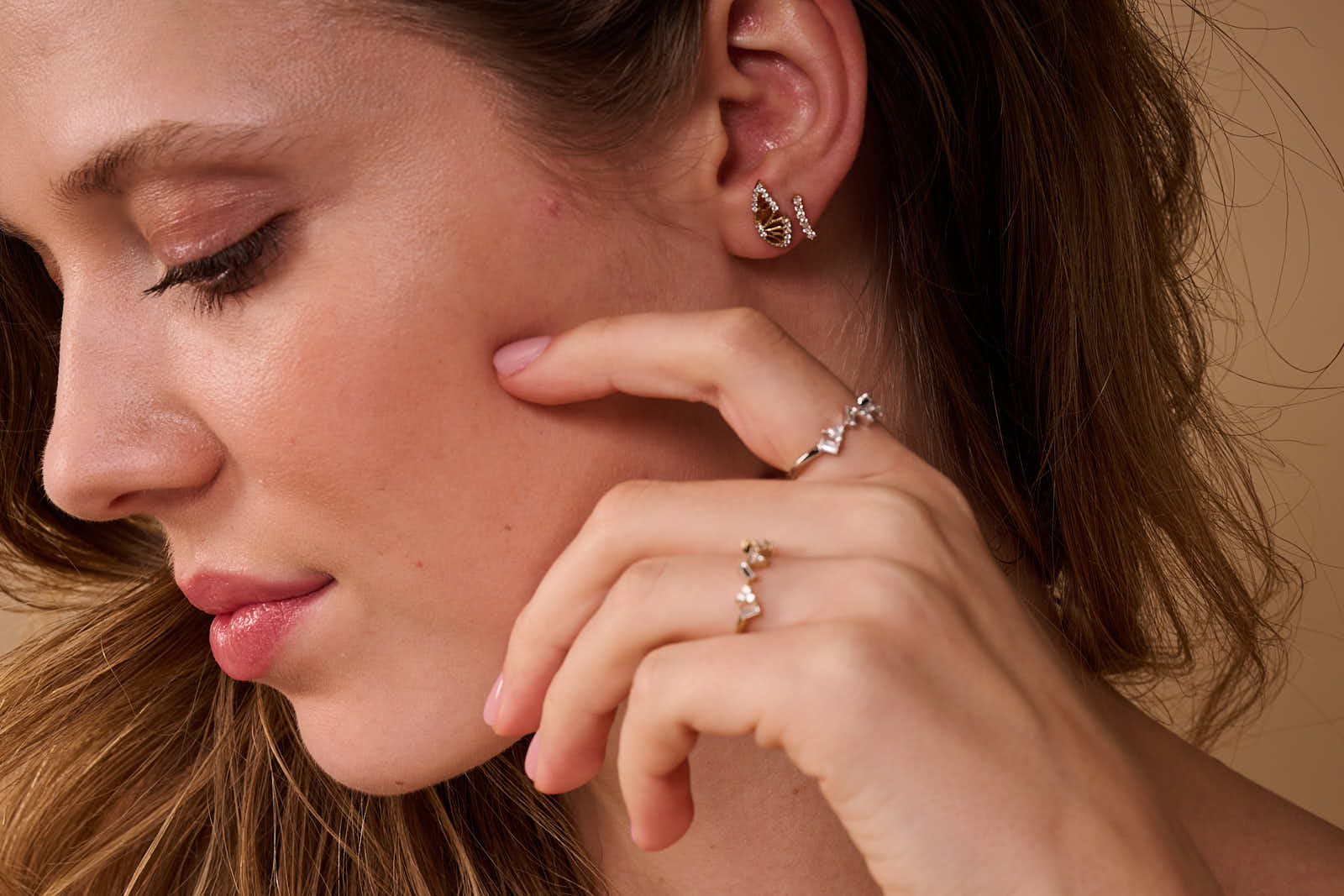
The lab-grown diamond is only one part of an earring. Daily wear also affects the setting, post, backing, hinge, metal and surface finish. A lab-grown diamond has essentially the same chemical composition and optical and physical properties as a natural diamond, but that does not make the complete piece of jewellery indestructible.
I Want Jewels earrings combine lab-grown diamonds with 925 sterling silver and 14kt gold plating. The diamond itself does not tarnish, but the metal and plated finish can be affected by moisture, cosmetics, chemicals, friction, storage and wearing habits.
The practical answer is therefore: wear your earrings regularly, but remove them for activities that create unnecessary pressure, moisture, chemical exposure or risk of catching.
Quick Summary
- The complete earring is in good condition
- The setting and closure are checked regularly
- The earring does not pull, pinch or cause irritation
- It is removed before sleeping, showering and swimming
- It is removed for exercise, sports and heavy physical activity
- Perfume, skincare and hair products are applied before putting it on
- It is wiped and stored correctly after wear

Quick answer
"Everyday earrings" should mean earrings you can enjoy frequently—not jewellery that never needs to be removed.
Lab-grown diamond earrings are suitable for frequent daytime wear when the complete earring is in good condition, the setting and closure are checked regularly, and the pair is removed for the activities described below.
See also: Lab-grown diamond earrings
When should lab-grown diamond earrings be removed?
| Situation | Recommended action | Main reason |
|---|---|---|
| Normal dry daytime wear | Wear if comfortable and in good condition | Regular wear is generally suitable |
| Sleeping | Remove | Pressure, catching and unnecessary stress on posts and closures |
| Showering or bathing | Remove | Water, soap, shampoo and product residue |
| Swimming in a pool | Remove | Chlorine exposure and risk of loss |
| Swimming in the sea | Remove | Salt, moisture, sand and risk of loss |
| Gym workouts | Remove | Sweat, friction, movement and equipment |
| Running or sport | Remove | Movement, catching and impact risk |
| Applying perfume | Put earrings on afterwards | Reduces direct chemical exposure |
| Applying skincare or makeup | Put earrings on after products have absorbed | Reduces residue around the setting and metal |
| Using hairspray | Put earrings on after styling | Reduces product build-up |
| Cleaning with chemicals | Remove | Protects the metal, plating and setting |
| Gardening or DIY | Remove | Reduces impact, dirt and snagging |
| Workplace with safety rules | Follow the workplace policy | Safety requirements take priority |
Explore Our Store
View all→Everyday wear does not mean continuous wear
Jewellery described as suitable for everyday use is designed to be worn frequently during appropriate activities. It does not mean the jewellery should remain on the body twenty-four hours a day.
Continuous wear exposes earrings to:
- Natural skin oils
- Sweat
- Skincare products
- Makeup
- Shampoo and conditioner
- Hair products
- Perfume
- Chlorinated or salt water
- Friction from clothing and bedding
- Pressure from sleeping
- Accidental pulling
- Dirt and dust
These exposures can leave residue on the diamond, affect the appearance of the metal and place unnecessary stress on settings, posts and closures.
Removing earrings for certain activities is not an indication that the jewellery is poor quality. It is a normal part of caring for a complete piece of jewellery.
Why the complete earring matters more than the diamond alone
Lab-grown diamonds are diamonds. Their hardness gives them strong resistance to scratching, but hardness should not be confused with being impossible to damage.
The diamond
The diamond provides the brilliance and central visual detail. It does not tarnish, but oils, cosmetics and other residue can collect on its surface and reduce visible sparkle.
The setting
The setting holds the diamond in position. Depending on the design, it may use prongs, a bezel or another construction. If the setting becomes bent, damaged or loose, the stone may no longer be held correctly.
The post
A stud post can bend if it is slept on, pulled during dressing or stored under pressure. A bent post should not simply be forced back into position repeatedly.
The backing
Butterfly backs and other fastenings can loosen with use. The backing should engage correctly without needing excessive force.
The hinge or closure
Huggies and hoops may use a hinged or clicking mechanism. The closure should align and fasten correctly. If it no longer closes as designed, stop wearing the earring until it has been checked.
The metal and plated finish
Gold plating is a surface layer over the underlying metal. Moisture, friction, chemicals and wearing habits can affect its appearance over time. The exact rate of change varies according to the piece and how it is worn and cared for.
Can you sleep in lab-grown diamond earrings?
It is better to remove lab-grown diamond earrings before sleeping.
Sleeping can press studs and backs against the ear and place sideways pressure on posts. Earrings may also catch on hair, pillows or bedding. Hoops, huggies and drops can experience additional pulling or pressure depending on how the wearer sleeps.
Even if a small stud feels comfortable, removing it before bed helps:
- Reduce pressure on the post and backing
- Reduce the chance of catching
- Prevent unnecessary friction against the plated finish
- Keep earrings away from hair and skincare residue
- Give the wearer an opportunity to inspect and wipe the pair
Occasionally falling asleep in earrings does not automatically mean they have been damaged. Before wearing them again, check the posts, settings, backs and closures.
Can you shower in lab-grown diamond earrings?
It is better to remove them before showering or bathing, particularly when the earrings have a gold-plated finish.
Water may not harm the diamond itself, but showering exposes the full earring to soap, shampoo, conditioner, body wash, skincare ingredients, heat and repeated moisture.
These products can leave a film over the diamond and metal, reducing visible brilliance. Repeated moisture and product exposure can also affect the appearance of a plated finish.
Remove the earrings before entering the shower, keep them somewhere dry and put them back on after skincare and hair products have been applied.
Can you swim in lab-grown diamond earrings?
Remove diamond earrings before swimming in a pool, sea, lake or hot tub. Swimming creates several avoidable risks:
- Chlorine and other pool chemicals
- Salt water
- Sand
- Repeated moisture
- Sudden temperature changes
- Loss of the earring in water
- Catching during movement
Even a well-fitting closure is not a guarantee against loss. Once an earring falls into a pool, sea or open body of water, recovery may be difficult or impossible.
Store jewellery securely before changing for swimming rather than leaving it loose beside the pool or inside a towel.
Can you work out in lab-grown diamond earrings?
It is better to remove earrings before gym sessions, running, sport and high-sweat exercise.
Sweat can collect around the post, setting and backing. Movement can also cause earrings to rub, pull or catch on clothing, towels, headphones and gym equipment.
Small studs may appear less intrusive than hoops or drops, but they are still exposed to sweat and physical contact. During contact sport or activities involving helmets, mats and protective equipment, jewellery may also present a safety concern.
Remove earrings before starting the activity and store them in a secure compartment rather than placing them loose in a gym bag.
Can you wear them while applying perfume, makeup and skincare?
Put earrings on after perfume, hairspray, makeup, moisturiser and other beauty products have been applied.
Perfume should not be sprayed directly onto jewellery. Hairspray and other styling products can settle around the diamonds, settings and metal. Moisturisers, foundation and sunscreen can also transfer onto posts and backs.
A useful order is:
- Apply skincare.
- Apply makeup.
- Style the hair.
- Apply perfume away from the jewellery area.
- Allow products to settle or dry.
- Put on the earrings.
- Remove the earrings before taking off makeup or completing an evening skincare routine.
This habit reduces unnecessary product build-up without preventing regular wear.
Are gold-plated lab-grown diamond earrings suitable for regular wear?
They can be worn regularly, but a plated finish should be treated differently from solid gold.
Gold plating is applied over an underlying metal. Friction, moisture, chemicals and repeated exposure to beauty products can gradually affect the surface. The rate at which this happens depends on factors including:
- Frequency of wear
- Plating specification
- Contact with skin and hair
- Perspiration
- Skincare and cosmetics
- Exposure to water
- Storage
- Cleaning method
- Friction against clothing and other jewellery
No gold-plated earring is permanently tarnish-proof or incapable of changing. Careful wearing, gentle cleaning and separate storage help preserve its appearance.
See also: How to care for gold-plated jewellery
What about sensitive ears?
Lab-grown diamonds do not determine whether an earring is suitable for sensitive ears. The parts touching the skin—the post, backing, base metal and plated finish—are more relevant.
Someone with a known metal sensitivity should check the complete material specification for the exact product. Broad terms such as "diamond earrings", "sterling silver" or "gold plated" do not provide every detail needed to understand an individual reaction.
A product is only hypoallergenic when its complete composition and appropriate testing support that claim.
If irritation develops:
- Remove the earrings.
- Do not continue wearing them through discomfort.
- Clean and store the jewellery according to its instructions.
- Check the full product material information.
- Seek appropriate professional advice if the reaction persists.
See also: Is 925 sterling silver hypoallergenic?
How to inspect earrings worn frequently
A quick visual and functional check can help identify problems before the earrings are worn.
Check the diamond and setting
Hold the earring in good light. Look for a diamond that appears to move, bent or lifted prongs, a visible gap between the diamond and setting, a setting that appears misaligned, or threads and fibres repeatedly catching around the setting. Do not continue wearing an earring if the diamond appears loose.
Check the post
Confirm that the post appears straight and properly attached. Do not repeatedly bend a post back into place at home, as repeated movement may weaken it.
Check the backing
Make sure the backing slides or fastens as intended. A backing that feels unusually loose, excessively tight or damaged should be replaced or professionally checked.
Check hinges and hoop closures
Open and close the mechanism gently. It should align correctly and engage as designed. Do not force a misaligned closure.
Check the plated finish
Look for changes in colour, areas of increased wear or residue around points of frequent contact. Follow the care instructions rather than polishing aggressively.
How to care for earrings after wearing them
A short after-wear routine is usually more useful than allowing residue to build up and then using an aggressive cleaning method. After wearing:
- Remove the earrings with clean, dry hands.
- Inspect the settings, posts and closures.
- Gently wipe the earrings using the cloth recommended by the brand.
- Ensure the earrings are dry before storage.
- Store each pair in a separate pouch, box or divided compartment.
- Keep the earrings away from bathrooms and other humid storage areas.
- Keep backs with the correct pair.
Avoid toothpaste, baking soda, abrasive polishing compounds, rough brushes, bleach, household cleaners, uncontrolled soaking, aggressive polishing, and ultrasonic or steam cleaning unless confirmed as suitable for that exact piece.
Because these earrings combine diamonds, settings, sterling silver and gold plating, the cleaning method must be suitable for every component—not only the diamond.
See also: How to clean lab-grown diamond earrings
How often should frequently worn earrings be cleaned?
There is no single cleaning schedule that works for every wearer. An earring worn once a week in a dry environment may need less attention than one worn frequently around skincare, makeup or perspiration.
A practical approach is:
- Wipe after wearing when appropriate.
- Inspect before putting the earrings on.
- Clean when visible residue or reduced brilliance appears.
- Follow the product's specific cleaning instructions.
- Arrange a professional inspection when a setting, post or closure appears damaged.
Cleaning too aggressively or too often with inappropriate products can be more harmful than gentle, controlled care.
Warning signs that earrings should not be worn
Stop wearing the earring and arrange an appropriate inspection if you notice:
- A loose or moving diamond
- A bent post
- A cracked or damaged setting
- Lifted or visibly damaged prongs
- A backing that no longer holds as intended
- A hinge that does not align
- A hoop closure that no longer engages
- Sharp or rough edges
- Unexpected pulling or discomfort
- Significant visible damage to the metal
Do not rely on glue or improvised repairs. Jewellery components should be assessed and repaired using a method appropriate for the materials and construction.
Choosing earrings for everyday styling
This page explains when earrings should be removed and how to protect them. For help choosing between studs, huggies, hoops and modern office-to-dinner designs, use the dedicated everyday guide.
That guide covers diamond earrings for work, small versus medium studs, huggies versus hoops, office-to-dinner styling, modern diamond stud styling and earring measurements.
Final answer
Lab-grown diamond earrings can be worn regularly, but everyday wear should not mean continuous wear.
Remove earrings before sleeping, showering, swimming, exercise, sports and activities involving chemicals or heavy friction. Put them on after perfume, skincare and hair products. Inspect the setting, post, backing and closure regularly, and store the pair separately after wearing.
The diamond may be highly resistant to scratching, but the complete earring still needs considered care. Protecting the metal, plating, setting and fastening is what helps make frequent wear practical.

Explore Our Store
View all→Got Questions?
Frequently Asked Questions
Ready to Shop?
Wear your lab-grown diamond earrings regularly, but remove them before sleeping, showering, swimming and exercise. The diamond resists scratching; the setting, post, backing and plated finish still need care.
Explore I Want Jewels lab-grown diamond earrings and check each product page for its materials, closure and care instructions so you know how to look after the complete piece.
Continue Reading
More From Lab-Grown Diamond Guides
Are Lab-Grown Diamonds Real Diamonds?
Yes, lab-grown diamonds are real diamonds. Learn how they compare to natural diamonds, fake diamonds, cubic zirconia and moissanite before buying.

Lab-Grown vs Natural Diamonds: What Is the Difference?
Compare lab grown and natural diamonds in simple language. Learn the difference in origin, price, sparkle, value and jewellery use before buying.
Are Lab-Grown Diamonds Worth It?
Find out if lab grown diamonds are worth buying, how they compare to natural diamonds, and when lab grown diamond jewellery makes sense.