

What Are Huggie Earrings?
Fit, Sizes and Buying Guide
Huggie earrings are small hoop earrings designed to sit relatively close to the earlobe. Their name comes from the way the hoop appears to "hug" the ear with less visible space than a traditional hoop.
Most huggies use a hinged post and clicking closure, although construction varies between products. They can be plain metal, set with diamonds, sculptural or finished with small charms.
The important difference is not the product name alone. Internal diameter, hoop thickness, post dimensions, closure and piercing position determine whether a huggie will sit close to your ear.
This guide explains how huggie earrings work, how their sizes are measured and what to check before buying a pair.
Quick Summary
- A relatively small internal diameter
- A curved or circular shape
- A hinged or clicking closure
- Less visible space than a traditional hoop
- Limited movement when correctly sized
- A close fit that should never feel painful or compressed
- Measurements that matter more than the word "huggie"
Quick answer
Huggies are a small category of hoop earrings designed to sit close to the edge of the ear.
A huggie should not press painfully into the lobe. The correct fit depends on your anatomy, piercing placement and the earring's exact measurements.
See also: Lab-grown diamond earrings
How do huggie earrings work?
A typical huggie contains a hinged section that opens to reveal a post. The post passes through the piercing and connects with the opposite side of the hoop.
When correctly aligned, the mechanism closes with a click or similar engagement. The design may include:
- A straight post
- A curved post
- A hinge at the bottom or side
- A notch or groove receiving the post
- A latch or click closure
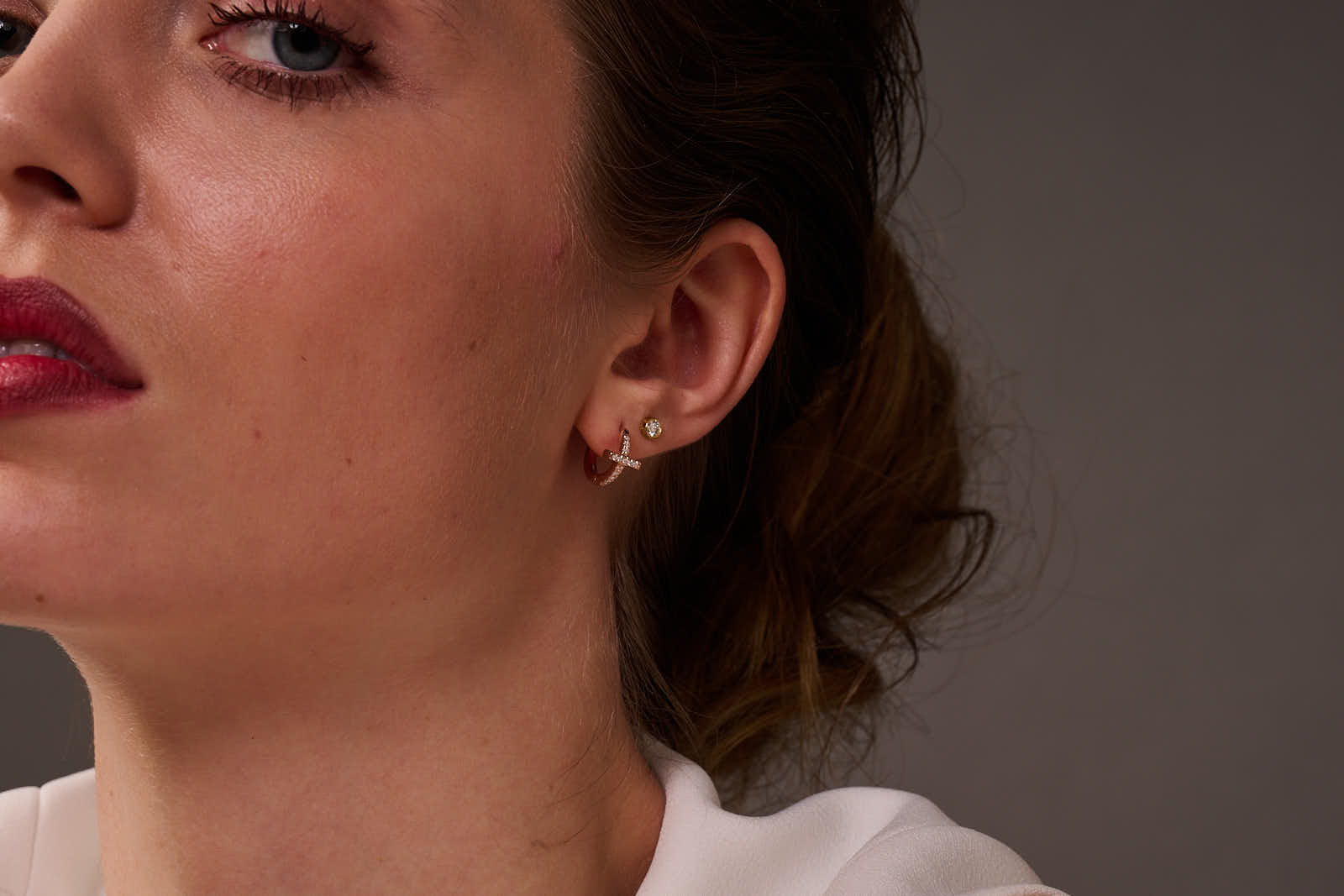
- Diamonds set across the visible front
- A plain or decorative back section
Not every huggie uses the same closure. A product page should show the earring both open and closed.
Explore Our Store
View all→Huggie earrings versus traditional hoops
Huggies are a type of hoop, but not every hoop is a huggie.
| Feature | Huggie earrings | Traditional hoop earrings |
|---|---|---|
| Typical appearance | Sits relatively close to the ear | More visible space below the lobe |
| Diameter | Usually smaller | Available in small, medium and large sizes |
| Movement | Usually limited | Increases with hoop size |
| Closure | Often hinged or click closure | Hinged, latch, wire or continuous |
| Styling | Worn alone or in ear stacks | More visible circular outline |
| Fit dependency | Strongly affected by piercing position | Still affected, but often allows more clearance |
See also: Hoop earrings versus huggie earrings
How are huggie earrings measured?
The most important measurement is normally the internal diameter.
Internal diameter
The internal diameter is the distance across the open space inside the hoop. This determines how much room is available for the earlobe.
External diameter
The external diameter measures the complete hoop from one outside edge to the other. It includes the thickness of the earring.
Hoop thickness
A thicker huggie occupies more visual and physical space, even when it has the same internal diameter as a thinner design.
Post thickness or gauge
The post must be suitable for the wearer's healed piercing. Do not assume that every huggie uses a standard post thickness.
Post length
The post must pass through the piercing and connect with the closure without pressing into the lobe.
Every huggie product page should state all five measurements.
Huggie earring size guide
Brands classify huggie sizes differently, and there is no universal industry standard. Use the following only as a general visual guide.
| Approximate internal diameter | General visual direction |
|---|---|
| 6–7mm | Very close fit; suitable only when anatomy and placement allow |
| 8–9mm | Common huggie-style range for many lobe placements |
| 10–11mm | More clearance or a transition towards a small hoop |
| 12mm and above | Often described as a small hoop rather than a huggie |
These ranges do not guarantee fit. A 7mm huggie may suit one person and press into another person's lobe.
See also: Lab-grown diamond earring size guide
How to measure for huggie earrings
1. Identify the intended healed piercing
Decide which piercing will hold the huggie. First-, second- and upper-lobe positions can have different distances from the edge of the ear.
2. Measure from the piercing to the edge
Use a millimetre ruler to estimate the distance from the centre of the piercing to the lower edge of the lobe. Do not measure from the top of the earring currently being worn.
3. Allow clearance
The internal diameter must exceed the distance between the piercing and the lobe edge. A very tight measurement can cause the hoop to press against the skin.
4. Check the hoop thickness
A thick hoop may appear and feel closer than a thin hoop with the same internal diameter.
5. Compare with genuine try-on images
Look for images showing:
- The same huggie from the front
- The same huggie from the side
- The product open and closed
- The model's actual piercing position
- A millimetre scale or product dimensions
If you are uncertain about fit, ask a qualified piercer to measure the intended position.
Should huggie earrings fit tightly?
Huggies are designed to sit close to the ear, but close-fitting should not mean painful or compressed.
A huggie may be too tight if it:
- Presses visibly into the lobe
- Causes pain or persistent tenderness
- Leaves deep indentation
- Pulls on the piercing
- Cannot move enough for the closure to operate normally
- Is difficult to insert without force
A huggie may be larger than intended if it:
- Has substantially more space than expected
- Moves like a conventional hoop
- Does not create the desired close-to-lobe appearance
Do not force jewellery through a piercing. Professional piercing guidance is to consult a piercer when jewellery does not insert easily, since size, weight, material and style all affect suitability.
Are huggie earrings comfortable?
Huggie earrings can be comfortable when their dimensions, post, closure, weight and materials suit the wearer. The word "huggie" alone does not guarantee comfort.
Comfort can be affected by:
- Internal diameter
- Hoop thickness
- Weight per earring
- Post thickness
- Piercing angle
- Lobe thickness
- Closure alignment
- Surface finish
- Skin or metal sensitivities
- Hair, glasses and headphones
- How long the earrings are worn
No huggie is comfortable for everyone, and no design is universally suited to all-day wear. A product page should provide weight and measurements so shoppers can make a more informed decision.
Can huggies be worn in new or healing piercings?
Do not replace initial piercing jewellery with fashion huggies simply for styling purposes while a piercing is healing.
Healing requirements depend on the piercing and individual circumstances. A qualified piercer should manage jewellery changes and downsizing during healing.
This guide is intended for selecting earrings for healed piercings.
Types of huggie earrings
Plain metal huggies
Plain huggies use a simple polished or textured metal surface. Their appearance depends on hoop thickness, finish and shape. Check whether the metal description refers to solid metal, sterling silver, gold plating, vermeil or another plated base metal.
Diamond huggies
Diamond huggies place diamonds across part or all of the visible front of the hoop. Check:
- Whether the stones are lab-grown or mined diamonds
- Number of diamonds
- Total carat weight
- Whether carat weight applies to one earring or the pair
- Setting type
- Which part of the hoop contains diamonds
- Whether the stones face forward when worn
Pavé huggies
Pavé-style huggies use multiple small stones set closely along the visible surface. A close-up photograph should show the stone arrangement, metal edges, front coverage, side profile and closure area.
Sculptural huggies
Sculptural huggies may use domed, twisted, tapered or geometric forms. These can look more substantial than thin huggies even when their internal diameter is similar.
Charm huggies
Some huggies include fixed or removable charms. A charm adds length, movement and weight, so the finished earring may behave more like a small drop than a plain huggie. A product page must state whether the charm is detachable.
Huggies versus stud earrings
Studs place the main design directly on the lobe. Huggies create a curved outline around the edge of the ear. Choose based on:
- Desired shape
- Piercing position
- Earring dimensions
- Backing preference
- Hoop closure
- Whether the earring will be stacked
- How much movement you want
See also: Stud earrings versus huggie earrings
Can huggies be used in ear stacks?
Yes, huggies can introduce a curved shape alongside studs and other small earrings. However, suitability depends on their dimensions and the spacing between piercings. Check:
- Whether the huggie touches a neighbouring stud
- Space between the piercings
- Post and backing positions
- Whether the huggie can open fully
- Whether decorative surfaces face forward
- Total weight across the stack
See also: How to stack earrings
See also: Diamond ear stack ideas
Can you wear huggie earrings every day?
Some huggies may suit regular wear, but daily suitability must be evaluated product by product. Consider weight, dimensions, closure, material, plating, piercing fit, hair and headphones, exercise and water exposure, and care requirements.
For gold-plated sterling silver earrings, frequent contact with water, cosmetics, sweat and friction can accelerate changes to the finish. Remove gold-plated huggies before:
- Showering
- Swimming
- Exercise
- Sleeping, unless the specific piercing jewellery and a qualified piercer indicate otherwise
- Applying perfume or hairspray
How to style huggie earrings
Worn alone
A single pair of huggies creates a clear curved outline without requiring additional earrings.
With a diamond stud
A huggie and stud combination contrasts a curved shape with concentrated sparkle. Check the distance between the piercings before combining them.
With a minimalist jewellery look
Use huggies with a fine necklace or one clean ring. If the huggies contain visible pavé diamonds, keep the other jewellery relatively restrained.
For day-to-evening styling
The same huggies can be paired with different supporting jewellery. During the day, wear them alone or with a simple pendant. For an evening look, add a bracelet or change the necklace rather than adding several more earrings.
See also: Minimalist jewellery styling guide
See also: Minimalist earrings guide
How to choose huggie earrings
Before purchasing, confirm:
- Internal diameter
- External diameter
- Hoop thickness
- Post thickness
- Post length
- Closure type
- Weight per earring
- Base metal
- Plating or finish
- Diamond type
- Total carat weight
- Number of diamonds
- Whether sold as a pair or single
- Whether charms are detachable
- Applicable hygiene and returns policy
- Genuine on-ear photographs
Do not purchase based only on the words "small", "close-fitting" or "huggie". Those labels do not replace measurements.
What a huggie product page should tell you
Use this as a checklist when comparing huggies from any brand.
| Field | What to look for |
|---|---|
| Product name | The current, verified product name |
| Internal diameter | Stated in millimetres |
| External diameter | Stated in millimetres |
| Thickness | Hoop thickness in millimetres |
| Post thickness | Gauge or millimetre measurement |
| Weight | Grams per earring, not per pair |
| Closure | The specific closure type, such as a hinged click closure |
| Base metal | For example 925 sterling silver |
| Finish | For example 14kt gold plating |
| Stones | Whether the diamonds are lab-grown or mined |
| Carat information | Whether the figure covers one earring or the pair |
| Quantity | Whether the listing is for a pair or a single earring |
| Fit images | Front, side, open and closed |
If a product page does not publish these details, treat the listing as incomplete rather than assuming a standard size.
Caring for gold-plated huggie earrings
For confirmed 925 sterling silver huggies with 14kt gold plating:
- Apply cosmetics and fragrance before putting on the earrings.
- Remove them before showering and swimming.
- Remove them before exercise.
- Wipe them gently after wear.
- Avoid abrasive cleaning products.
- Check the hinge and closure without forcing them.
- Store earrings separately to reduce friction.
- Follow the care instructions provided with the product.
See also: How to care for gold-plated jewellery
Explore Our Store
View all→Got Questions?
Frequently Asked Questions
Ready to Shop?
The right huggie is determined by measurements, not the product name alone. Compare internal diameter, hoop thickness, post dimensions, weight and closure before choosing.
Browse I Want Jewels demi-fine lab-grown diamond earrings and check each product page for its stated dimensions, materials, diamond information and care instructions. If a listing does not publish the internal diameter, thickness and weight, treat it as incomplete rather than assuming a standard size.
Continue Reading
More From Earring Styling Guides
How to Stack Earrings: Complete Ear Stack Guide
Learn how to stack earrings step by step: choose a focal piece, vary the scale, repeat one feature and check spacing across two or three piercings.
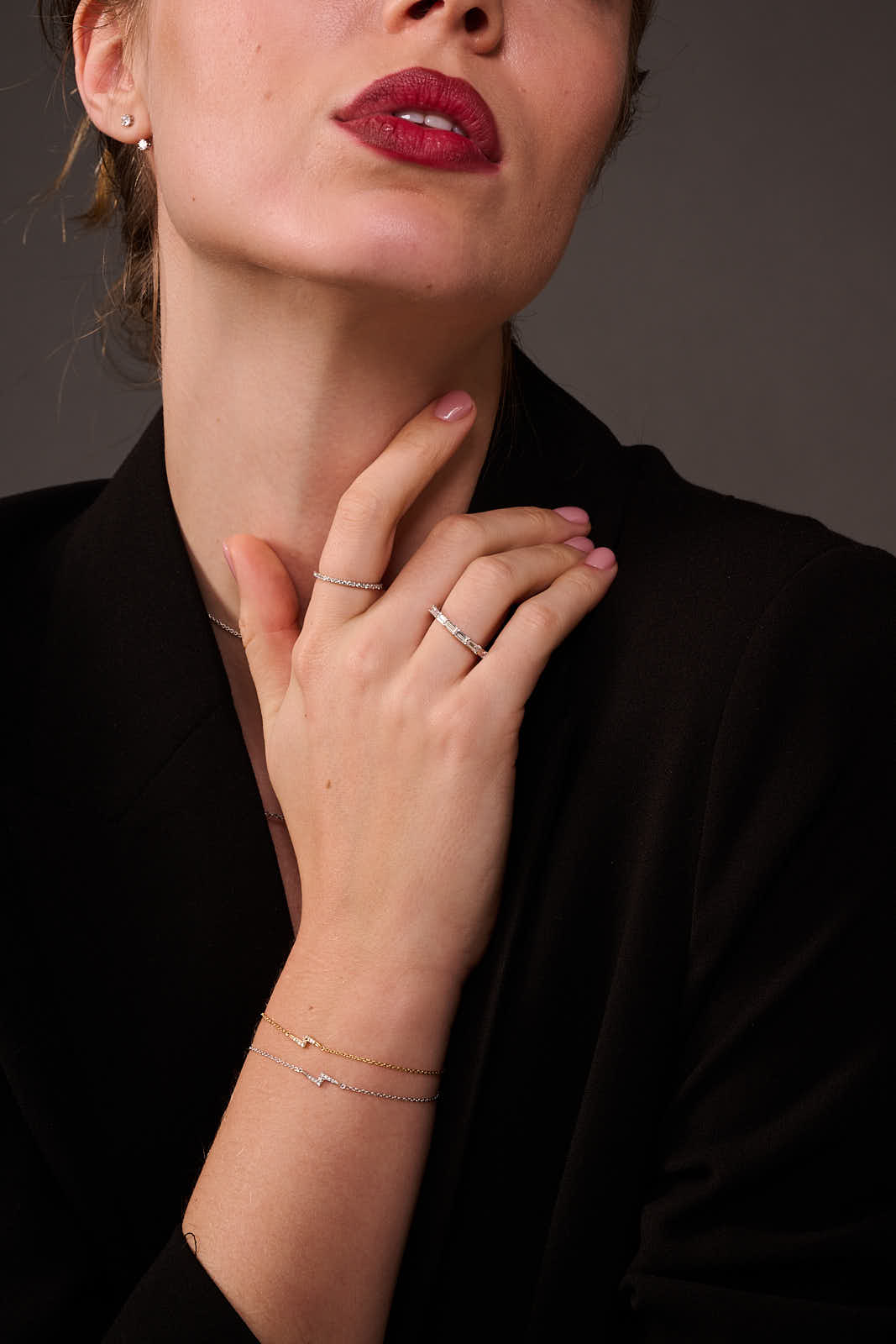
Diamond Ear Stack Ideas: 15 Curated Looks
Fifteen diamond ear stack ideas for two and three piercings, covering minimalist, everyday, workwear, wedding guest and evening combinations.
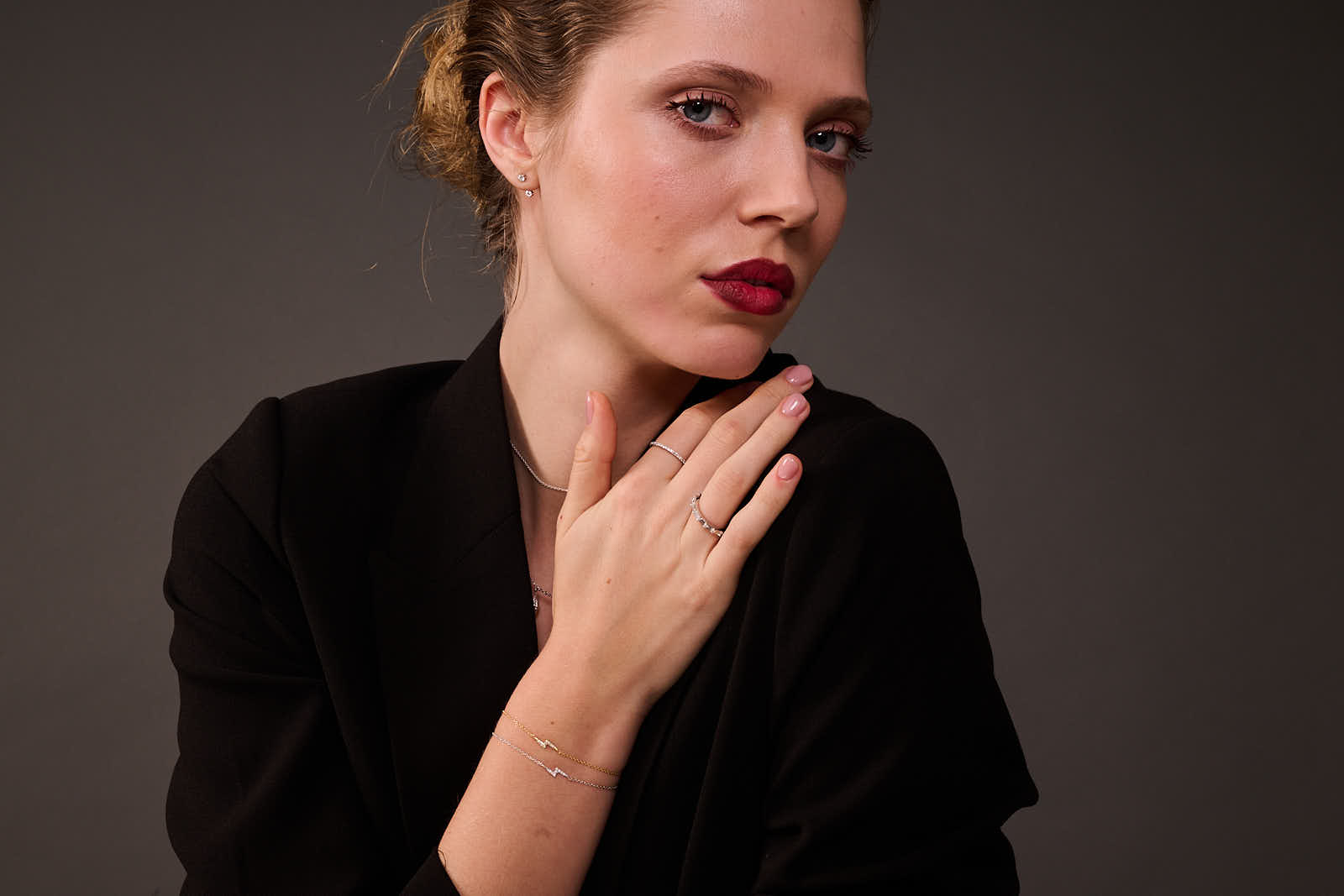
Minimalist Earrings Guide: Styles & Buying Tips
Learn how to choose minimalist earrings by style, size, metal, closure and sparkle. Compare studs, huggies, slim hoops and subtle diamond designs.