
How to Style Minimalist Jewellery:
A Complete Guide
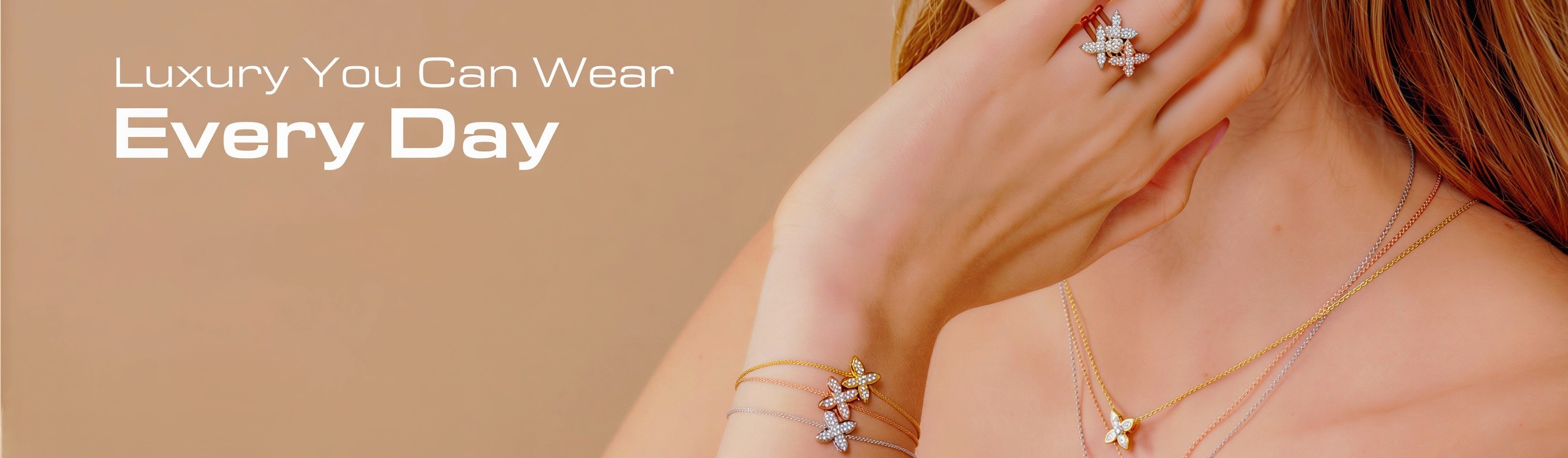
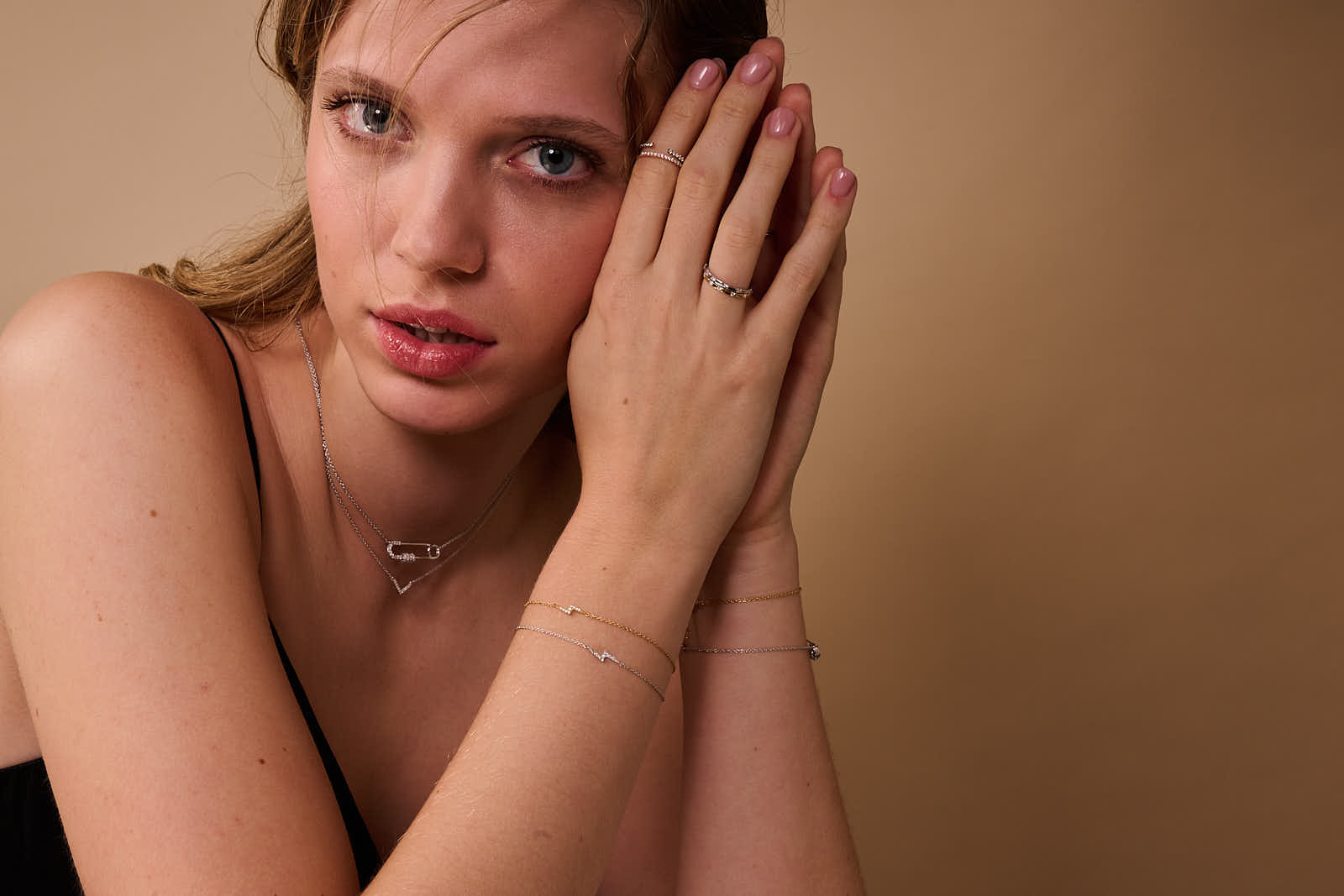
Minimalist jewellery styling is the practice of combining a small number of considered pieces so that they complement your outfit rather than compete with it.
The jewellery does not have to be invisible. A diamond stud, slim hoop, pendant, ring or bracelet can still provide visible sparkle and shape. The minimalist effect comes from controlling the number of focal points, repeating related details and leaving visual space between pieces.
This guide explains how to build a minimalist jewellery capsule, layer different pieces and coordinate jewellery with outfits, necklines, hairstyles and metal colours.
Quick Summary
- The formula: one focal point + one repeated detail + visual space
- Repeat metal colour, diamond shape or line to connect separate pieces
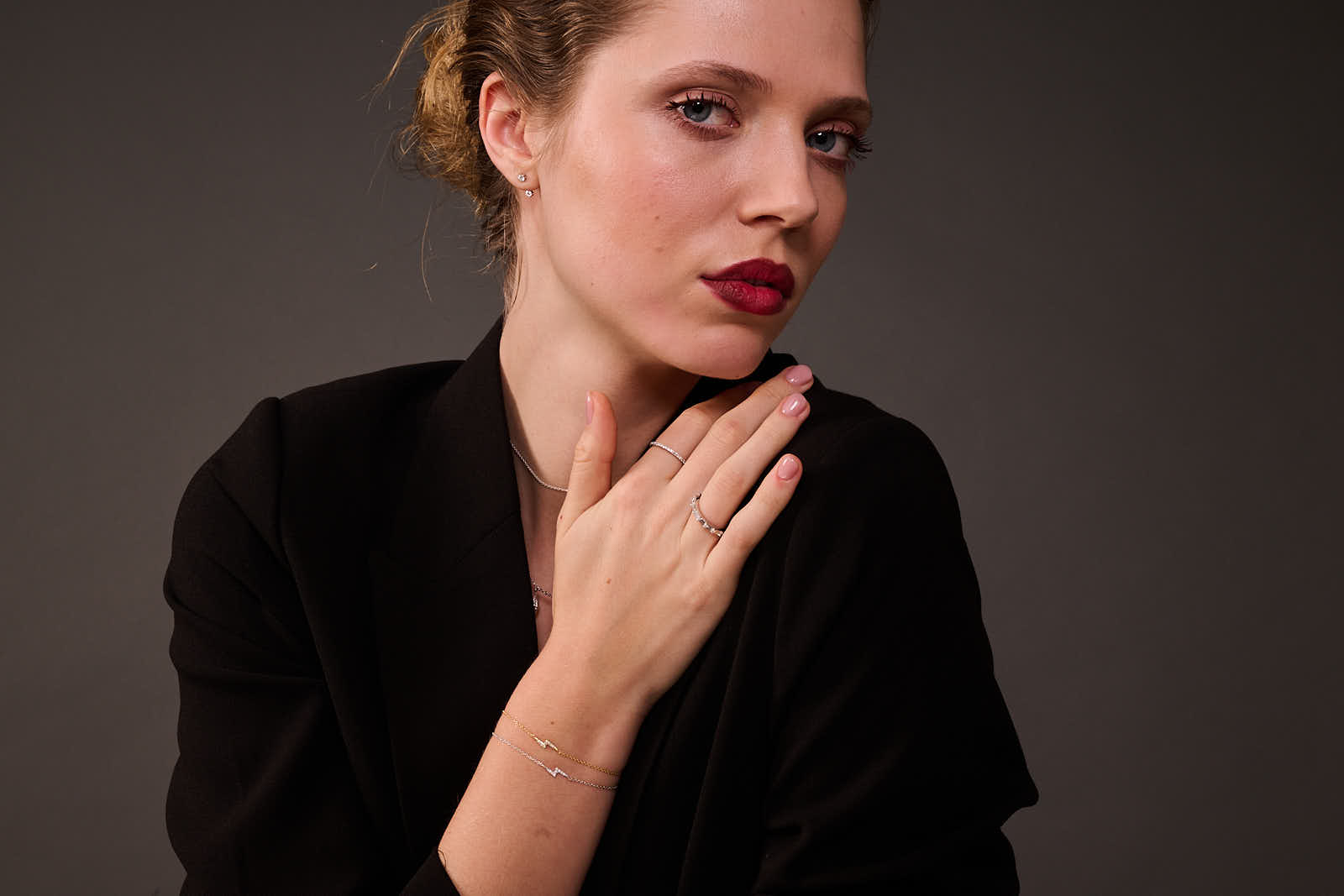
- Start with a three-piece capsule: earrings, a necklace and one hand or wrist detail
- Match the necklace to the neckline, not to the outfit in general
- Change one focal piece — not several — to move from day to evening
- Mixed metals work when both colours appear more than once
The minimalist jewellery formula
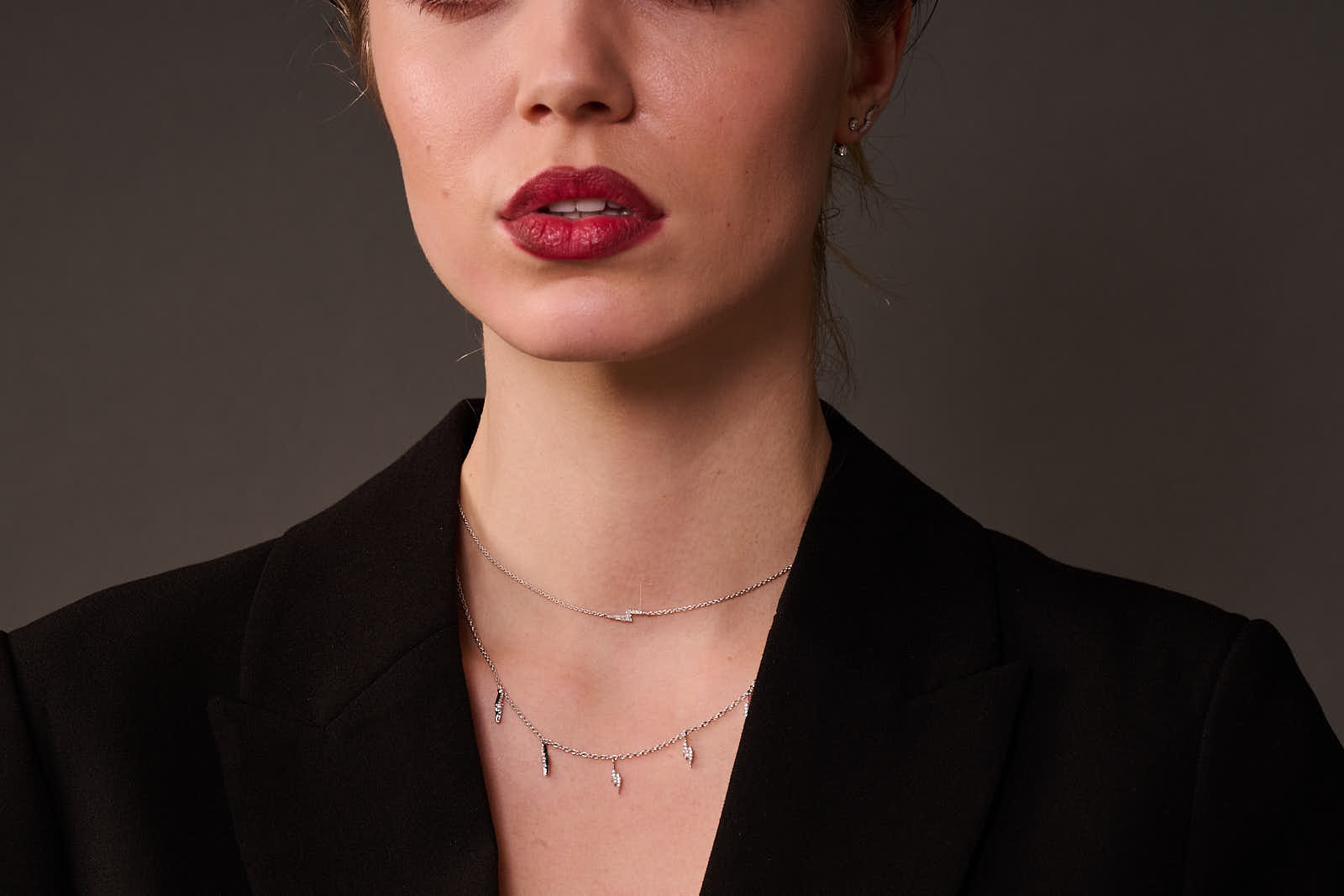
One focal point + one repeated detail + visual space.
For example: diamond studs as the focal point, a small diamond pendant repeating the sparkle, and no additional large necklace or decorative earrings.
Another combination might use a clean pendant as the focal point, a narrow bracelet repeating the metal, and small, restrained earrings that do not compete with the necklace.
Minimalist styling is not determined by the number of pieces alone. Three small but unrelated items can look busier than two slightly more visible pieces that share the same shape and finish.
What is minimalist jewellery?
Minimalist jewellery normally uses clear silhouettes, restrained proportions, limited decorative detail, coordinated metal finishes, one or two repeated shapes, controlled sparkle, and pieces that can be combined in several ways.
Possible minimalist pieces include:
- Solitaire-style diamond studs
- Huggies or narrow hoops
- Simple geometric earrings
- Fine chains
- Small pendants
- Narrow bracelets
- Clean rings
- Short, restrained drop earrings
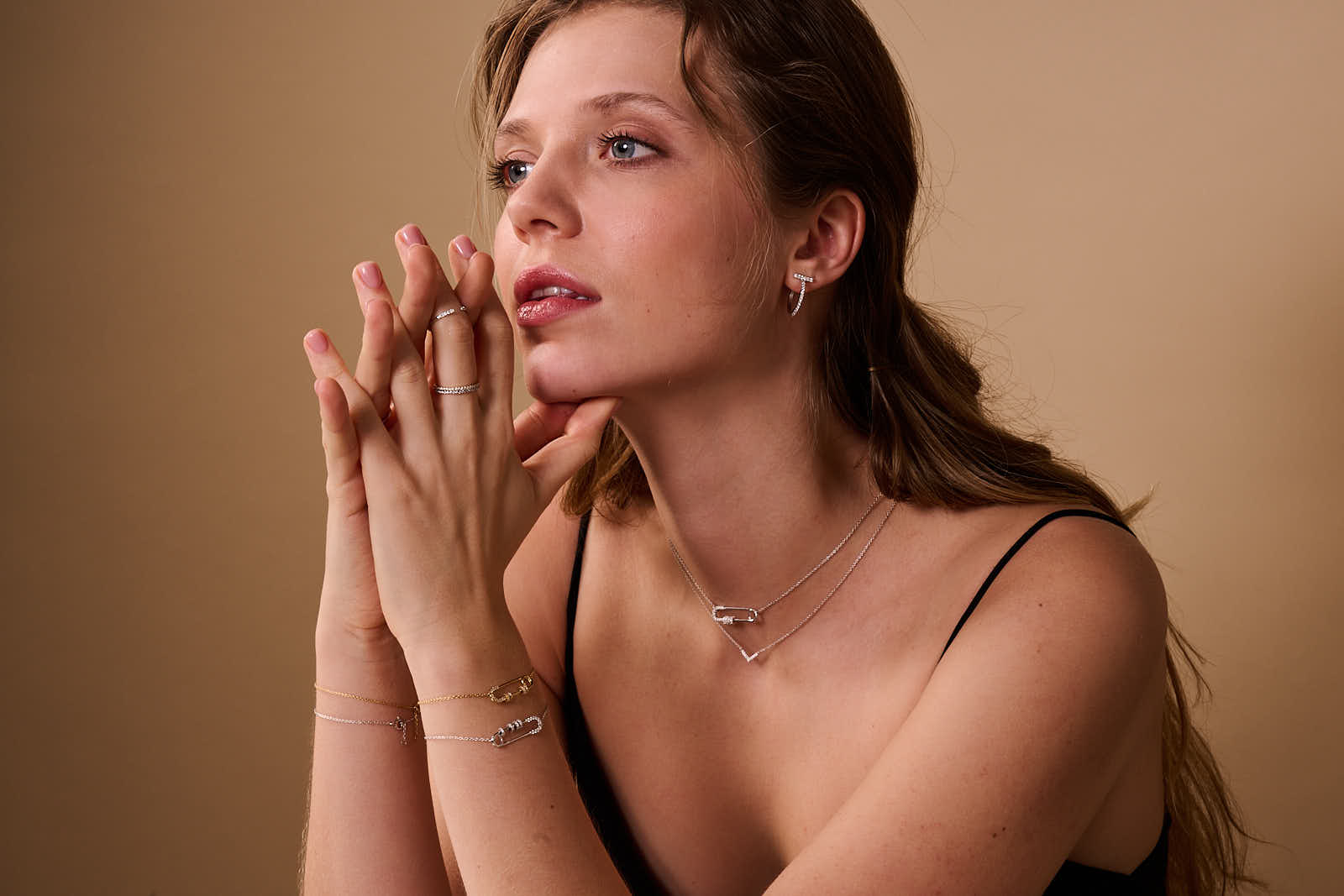
"Minimalist" describes the design direction. It does not guarantee that a product is lightweight, durable, hypoallergenic or suitable for every activity.
Explore Our Store
View all→What makes minimalist jewellery styling work?
A clear focal point
Choose the area you want the eye to notice first. The focal point could be earrings framing the face, a pendant relating to the neckline, a small arrangement of rings, a bracelet visible below a sleeve, or one carefully constructed ear stack.
Avoid making the earrings, necklace, rings and bracelet equally prominent.
Repetition
Repeat one detail to connect separate pieces. Useful details to repeat include metal colour, diamond shape, rounded or angular lines, motif, level of sparkle and texture.
The pieces do not need to come from the same collection, but they should have a visual relationship.
Visual space
Minimalist styling needs areas where the jewellery is not competing. If you wear visible earrings, a necklace and several rings, keep at least one area quieter. This may mean omitting a bracelet or choosing a necklace without additional decorative layers.
Proportion
Compare the jewellery with the outfit rather than judging each piece by itself. A very small stud may disappear beside a high-volume hairstyle or strongly patterned outfit. A narrow hoop or medium stud can still be minimalist when its design remains clean.
Build a minimalist jewellery capsule
A jewellery capsule is a small group of pieces that can be combined into several arrangements. A practical capsule might contain six categories.
| Capsule piece | Role | What to check |
|---|---|---|
| Small diamond studs | Restrained sparkle | Diameter, weight and backing |
| Huggies or narrow hoops | Curved shape | Diameter, thickness and closure |
| Simple pendant necklace | Neckline detail | Chain length and pendant dimensions |
| Fine bracelet | Wrist detail | Length, fastening and adjustability |
| Clean ring | Hand detail | Size, width and finish |
| Optional focal piece | Dinner or occasion variation | Dimensions, weight and outfit compatibility |
You do not need to purchase the entire capsule at once. Begin with the pieces that suit your most frequently worn outfits.
A three-piece starter capsule
For a smaller starting collection, choose:
- One pair of restrained earrings
- One simple necklace
- One ring or bracelet in a coordinating finish
These three pieces can create several combinations: earrings alone; earrings and necklace; earrings and bracelet; necklace and ring; or all three together when their proportions remain balanced.
A five-piece capsule
A more flexible capsule might include small diamond studs, huggies or slim hoops, a simple pendant, a fine bracelet and a clean ring. The earrings provide two different face-framing options, while the pendant, bracelet and ring can be added or removed according to the outfit.
How to combine minimalist earrings and necklaces
When the earrings are the focal point
Choose a restrained necklace or leave the neckline bare. This works when wearing visible diamond studs, pavé hoops, a small ear stack, geometric earrings or short drop earrings.
When the necklace is the focal point
Use smaller studs or simple huggies so that the face and neckline are not competing for attention. This works with a pendant necklace, a layered two-chain arrangement, a necklace with a recognisable motif, or a necklace that follows the shape of the neckline.
When both contain diamonds
Repeat the diamond detail but vary the scale. For example, use a more visible pendant with smaller diamond studs rather than equally prominent pieces at the ear and neckline.
See also: Minimalist earrings guide
How to layer minimalist necklaces
Minimalist necklace layering should create a visible difference between the chains. Consider chain length, pendant size, chain thickness, metal colour, the neckline, and whether the pendants overlap.
A straightforward two-chain arrangement uses a shorter plain chain and a slightly longer chain with one pendant. The length difference should be sufficient to keep the chains visually separate. Universal centimetre recommendations are unreliable — measure the actual products and consider the wearer's neck and neckline.
For three necklaces, introduce a clear progression in length and keep at least one chain free of a pendant.
Avoid combining:
- Several pendants of similar size at the same length
- Multiple chains that tangle immediately
- Several unrelated motifs
- Heavy and delicate chains without a clear relationship
How to stack minimalist rings and bracelets
Rings
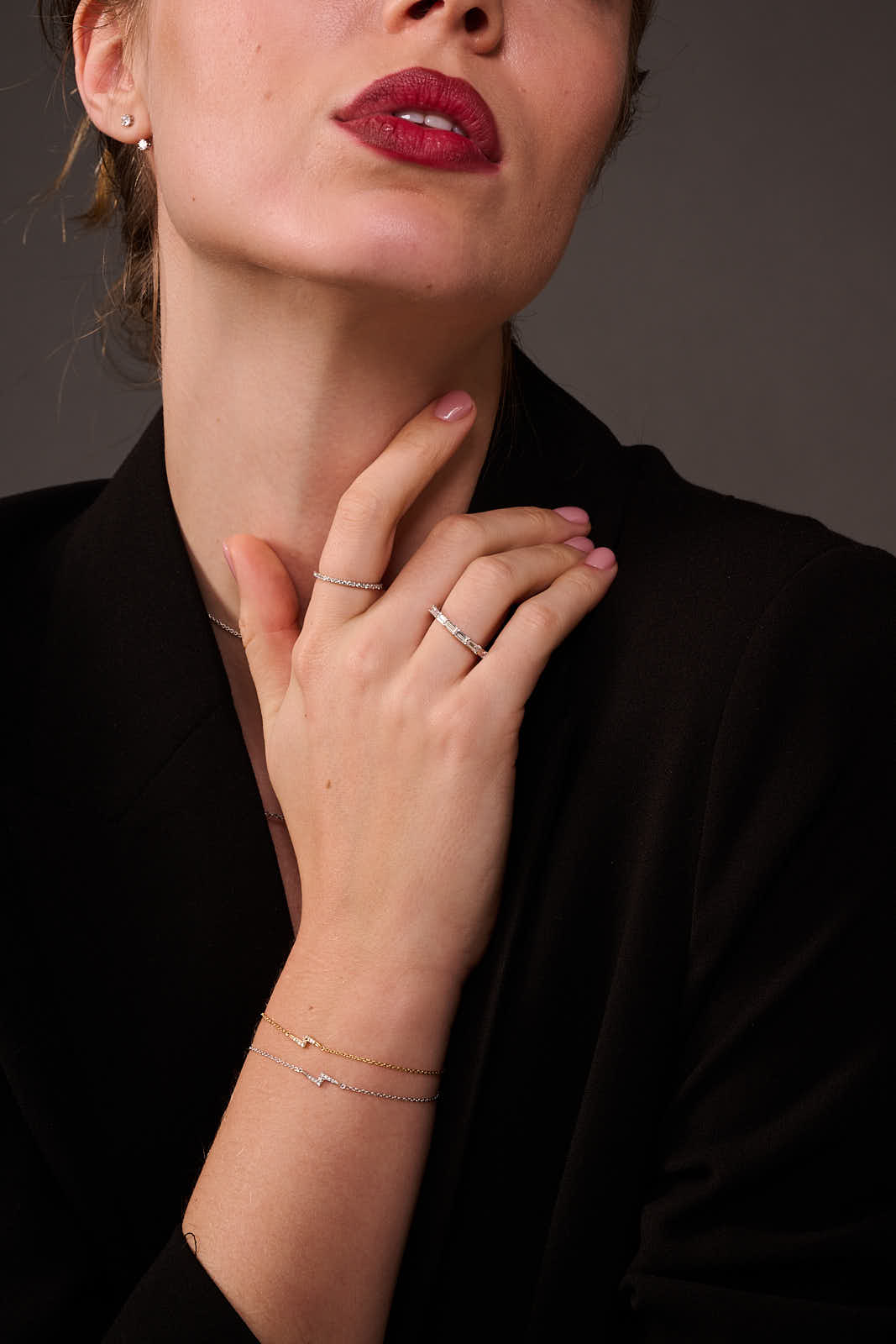
A minimalist ring stack can contain one plain band with one diamond-detail ring, two narrow bands with different textures, one ring on several fingers, or two coordinated rings on one finger.
Vary either the width or texture so that the rings do not look accidentally duplicated. If one ring contains the strongest diamond detail, let the other rings provide metal, shape or texture rather than equal sparkle.
Check ring sizing individually. Several rings worn together can fit differently from one ring worn alone.
Bracelets
A single bracelet can provide enough wrist detail, particularly with long sleeves, a watch or an outfit that already contains several jewellery elements.
When layering, combine different but related widths, check whether the clasps interfere, avoid excessive difference in weight, leave enough movement without allowing the bracelets to continually overlap, and consider the colour and size of a watch.
A watch can act as part of the jewellery arrangement. Coordinate the bracelet's finish with the watch case, strap or other metal detail.
Minimalist jewellery with different necklines
High or crew neckline
A high neckline reduces the amount of visible skin around the necklace area. Let earrings provide the main detail, or use a necklace that sits clearly above or below the neckline rather than directly on its edge. Studs or huggies with a clean visible outline work well, and a necklace is optional.
V-neck
A pendant can follow the downward direction of a V-neck. If the pendant is the focal point, use restrained earrings — small or medium studs, a fine pendant necklace and one clean ring or bracelet.
Sweetheart neckline
A sweetheart neckline already creates a curved focal shape. Choose jewellery that complements the curve without filling every open area: a small pendant or no necklace, studs, huggies or restrained drop earrings, and one bracelet or ring detail.
See also: Jewellery for a sweetheart neckline
Off-shoulder neckline
An off-shoulder outfit leaves the shoulders and neckline open. Choose whether the earrings or necklace will be the primary feature: visible earrings with no necklace, a pendant with restrained studs, or one clean bracelet to balance the open neckline.
Minimalist jewellery with common outfits
White shirt and jeans
A white shirt creates a neutral base for a small diamond detail or clean metal shape. Try small diamond studs, a fine pendant and one ring or bracelet. If the shirt is open at the collar, the pendant can become the focal point. If buttoned higher, let the earrings lead.
Blazer and tailored trousers
Structured clothing works well with jewellery that repeats clean lines: a medium stud or geometric earring, a fine chain, a clean ring, and a bracelet only if it does not compete with a watch.
For workwear, check workplace expectations and practical factors such as headphone use rather than assuming one style suits every environment.
Knitwear
Texture in the clothing can catch or obscure fine jewellery. Try studs or huggies, a necklace only when it sits clearly above the knit, and a ring or bracelet for additional detail. Avoid delicate chains that continually catch on textured fabric.
Black dress
A black dress provides strong contrast for both warm and cool metal finishes. Try a visible stud or narrow hoop, a fine pendant or bare neckline, and one ring or bracelet. If the earrings are more visible, reduce the necklace detail.
Satin dress
Satin already reflects light and creates movement. Avoid covering it with several competing pieces. Try diamond studs with a fine bracelet, restrained drop earrings with no necklace, or a fine pendant with small studs.
Patterned or embellished outfit
When the outfit contains embroidery, sequins, prints or other decorative details, reduce the number of jewellery focal points: small studs, a plain chain or no necklace, and one restrained ring. Minimalist does not mean invisible; the goal is to let the outfit and jewellery occupy different visual roles.
Minimalist jewellery with hairstyles and glasses

Hair worn down
Small earrings may be partially hidden by loose hair. Consider a cleaner, more visible outline if you want the earrings to remain noticeable, and check whether hoops, drops or decorative edges catch in the hair.
Hair tied back
Tied-back hair exposes the ear and can make smaller earrings more visible. A stud, huggie or minimalist ear stack may provide sufficient detail without requiring a larger earring.
Short hair
Short hair can leave both the ear and neckline visible. Decide whether the earrings or necklace will lead rather than making both equally prominent.
Glasses
Glasses introduce another shape and metal or acetate colour around the face. Consider the frame colour, frame thickness, metal finish, distance between the frame arm and earrings, and whether the earrings compete with a decorative frame.
Jewellery does not need to match the glasses exactly, but their proportions should be considered together.
How to mix metal colours
Mixed-metal minimalist styling works when the contrast is repeated. For example: yellow-gold earrings with a mixed-metal watch, a white-toned necklace with a ring containing both finishes, or alternating ring finishes repeated at the ear.
Avoid adding one isolated contrasting piece without another visual connection. For a uniform result, choose the finish already used by your watch, everyday ring or most frequently worn chain.
Before deciding on a product in a yellow, white or rose-gold finish, confirm its current variants on the product page.
A minimalist day-to-evening transition
You do not need to replace every jewellery piece to change the effect of an outfit.
Day
- Small diamond studs
- Fine pendant
- Clean ring
Evening
- Replace the studs with a more visible earring
- Keep the pendant, or remove it if the earrings become the focal point
- Add one bracelet
- Retain the same ring and metal direction
Changing one focal piece usually creates a clearer transition than adding several extra pieces.
Minimalist jewellery and ear stacks
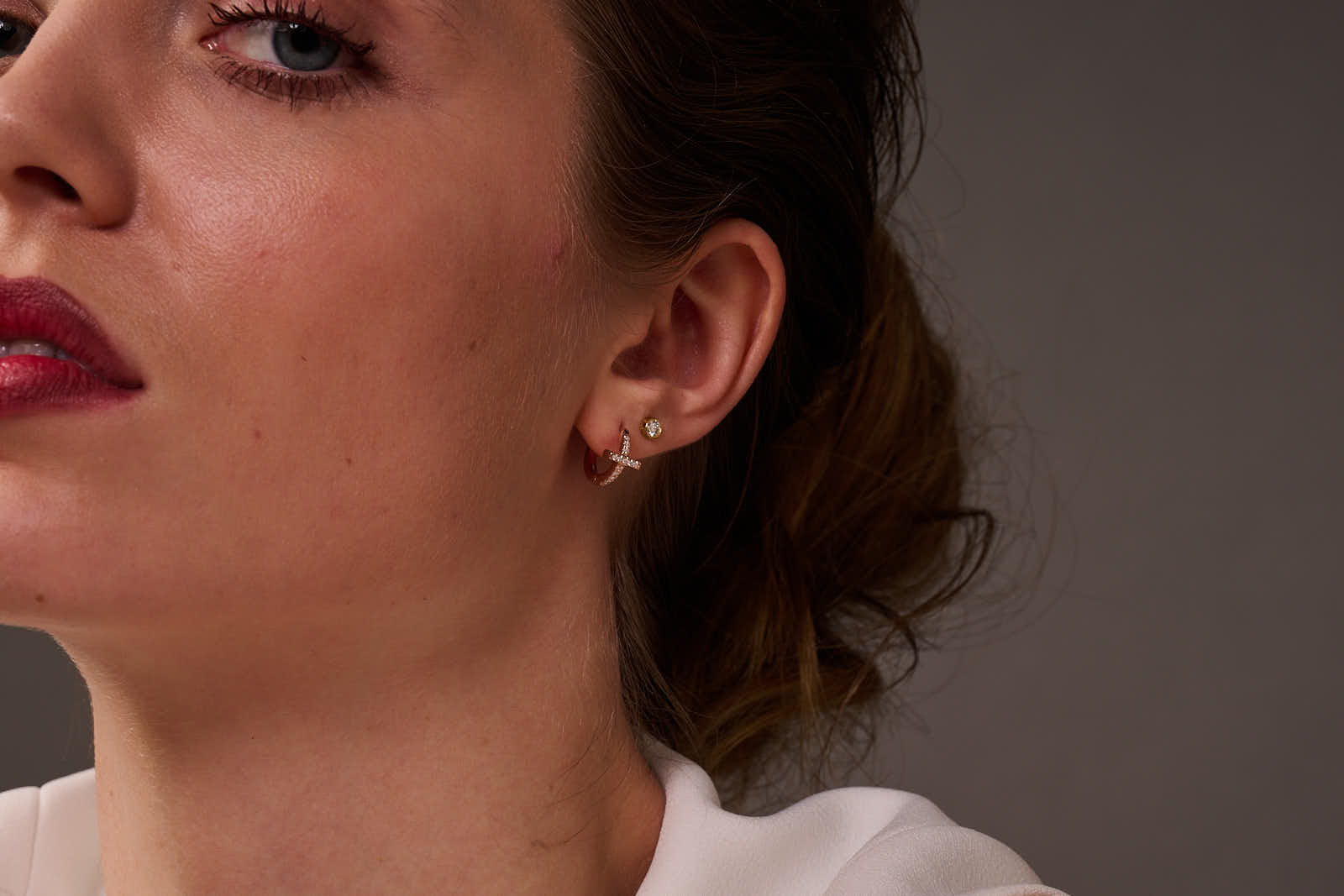
A minimalist ear stack can use two graduated studs, a stud with a huggie, a narrow hoop with a small stud, or three restrained earrings with a repeated metal or diamond shape.
See also: How to stack earrings
See also: Diamond ear stack ideas
Caring for a minimalist jewellery capsule
A smaller capsule often means the pieces are worn and handled more frequently. For confirmed gold-plated sterling silver pieces:
- Apply perfume, cosmetics and hair products before putting on jewellery
- Remove jewellery before showering, swimming and exercise
- Wipe pieces gently after wear
- Store pieces separately to reduce friction
- Keep fine chains fastened during storage to reduce tangling
- Avoid abrasive polishing products
- Follow the care instructions supplied with each product
See also: How to care for gold-plated jewellery
Common minimalist jewellery styling mistakes
Wearing several focal pieces
Visible earrings, several necklaces, multiple rings and stacked bracelets can compete. Choose one main area and make the remaining pieces quieter.
Assuming minimalist means tiny
A very small piece may disappear against an outfit, hairstyle or glasses. Use the proportions of the complete look when choosing size.
Combining unrelated details
Several small motifs can still look busy. Repeat a shape, diamond detail or metal colour.
Ignoring measurements
Chain length, pendant dimensions, hoop diameter and earring size affect how pieces interact. Use actual measurements and genuine model photographs.
Mixing metals accidentally
Mixed metals can look intentional when repeated. One isolated contrasting piece may look disconnected.
Choosing every piece for the same occasion
A useful capsule contains pieces that can be recombined across several outfits rather than one complete set that is always worn together.
Final styling checklist
Before finishing the look, ask:
- Which piece is the focal point?
- What detail connects the jewellery?
- Is there enough visual space?
- Does the necklace relate to the neckline?
- Do the earrings work with the hairstyle and glasses?
- Are the jewellery proportions suitable for the outfit?
- Does the metal combination look intentional?
- Are any chains, hoops or drops catching on clothing?
- Can one piece be removed to make the composition clearer?
- Are the materials and care requirements understood?
Explore Our Store
View all→Got Questions?
Frequently Asked Questions
Ready to Shop?
Minimalist jewellery styling is about clarity rather than strict rules. Select one focal point, repeat a related detail and leave enough visual space for every piece to be recognised.
Explore I Want Jewels minimalist pieces and build a capsule around the outfits you wear most often, checking each product page for its dimensions, materials and finish.
Continue Reading
More From Earring Styling Guides
How to Stack Earrings: Complete Ear Stack Guide
Learn how to stack earrings step by step: choose a focal piece, vary the scale, repeat one feature and check spacing across two or three piercings.
Diamond Ear Stack Ideas: 15 Curated Looks
Fifteen diamond ear stack ideas for two and three piercings, covering minimalist, everyday, workwear, wedding guest and evening combinations.
Minimalist Earrings Guide: Styles & Buying Tips
Learn how to choose minimalist earrings by style, size, metal, closure and sparkle. Compare studs, huggies, slim hoops and subtle diamond designs.