
Yellow Gold vs White Gold vs Rose Gold
Lab-Grown Diamond Earrings
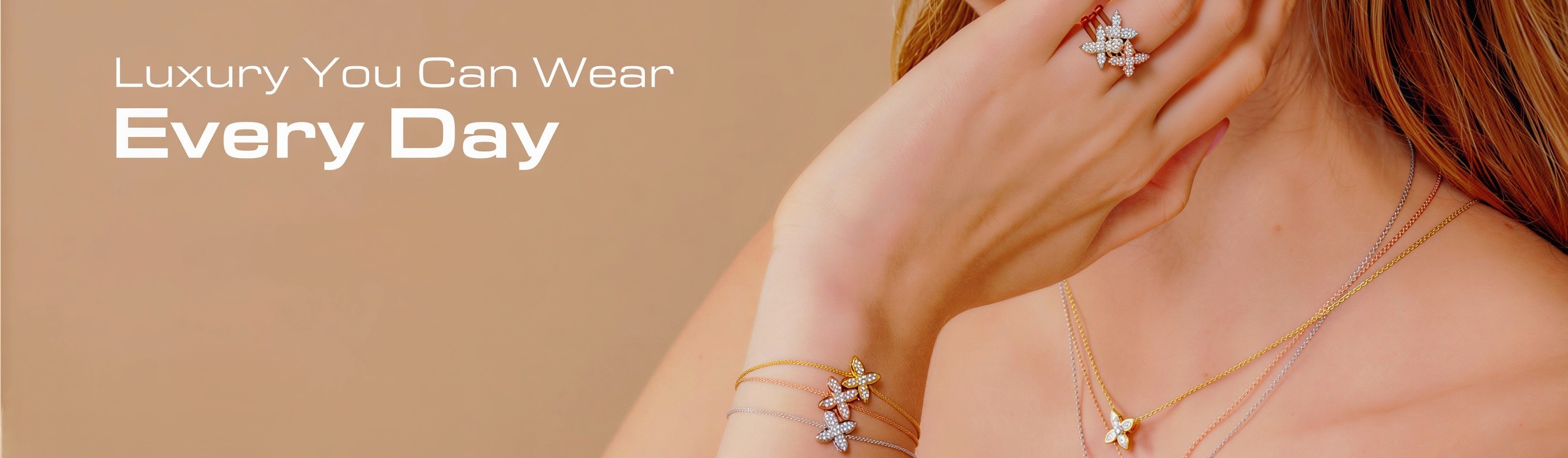
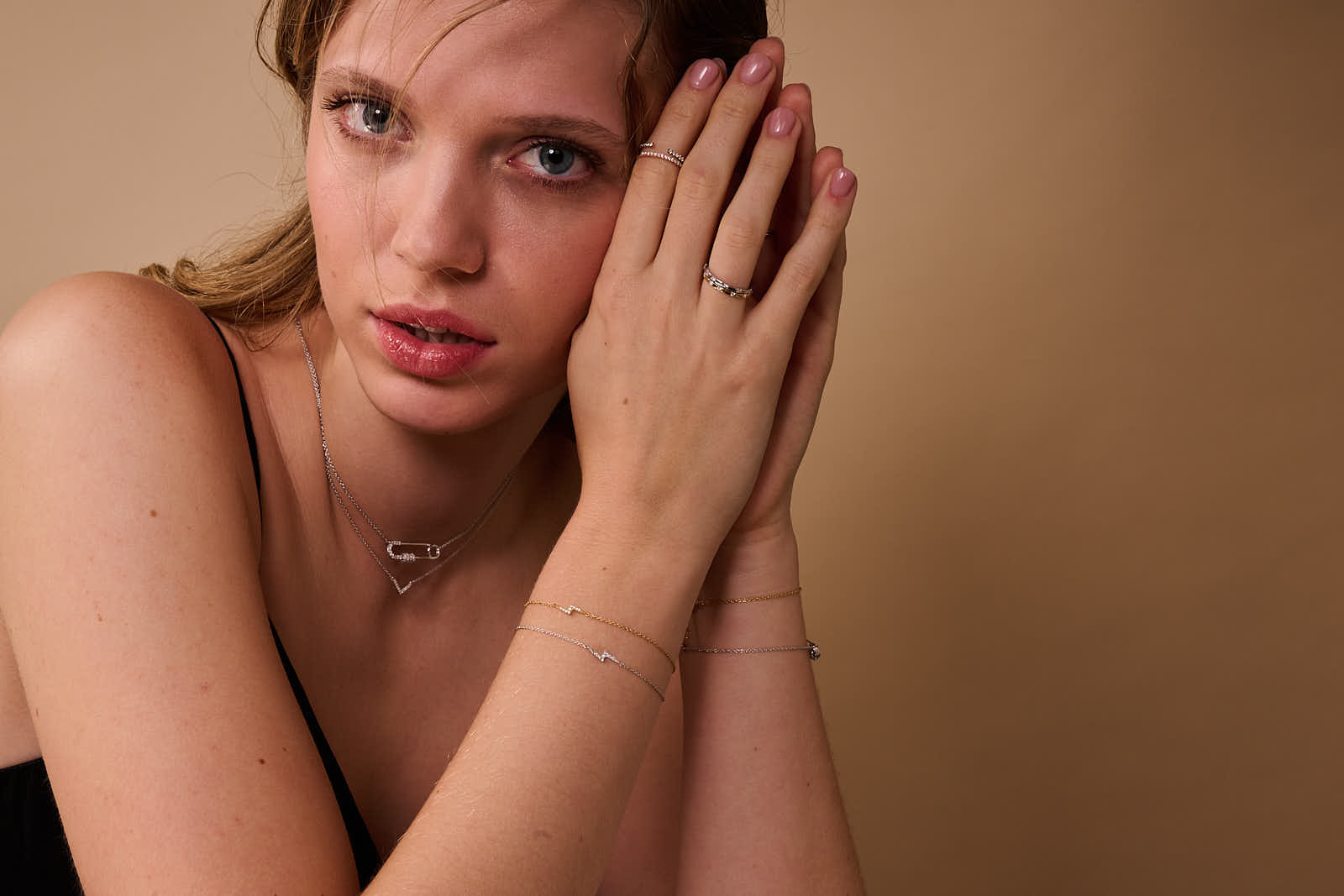
Yellow gold, white gold and rose gold can surround the same lab-grown diamond with three noticeably different colour effects. Yellow gold creates warm contrast, white gold creates a cooler transition between the diamond and setting, and rose gold adds a pink-toned frame.
But colour is only part of the decision. Before choosing an earring, confirm whether the product is made from solid gold or from another base metal with a gold-coloured surface finish. An earring described as "14kt gold-plated sterling silver" is not a solid 14-carat gold earring.
The right choice depends on the look you want, the jewellery you already wear, the earring design and the complete product construction.
Quick Summary
- Yellow gold — visible warmth and contrast around the diamonds
- White gold or a verified white finish — cooler, more continuous with colourless stones
- Rose gold — a softer pink-toned contrast
- Metal colour and metal construction are not the same thing
- "925 sterling silver with 14kt gold plating" is not solid gold
- Colour cannot establish sensitive-ear suitability

Quick answer
Choose yellow gold when you want visible warmth and contrast around the diamonds. Choose white gold or a verified white-metal finish when you want the setting to appear cooler and blend more closely with colourless or near-colourless diamonds. Choose rose gold when you want a softer pink-toned contrast.
Do not choose by colour name alone. Check:
- Base metal
- Whether the construction is solid or plated
- Gold purity
- Exact plating material
- Plating thickness, when available
- Complete earring measurements
- Weight and closure
- Diamond specifications
- Whether the product is sold singly or as a pair
Yellow, white and rose-gold earring comparison
| Feature | Yellow gold | White gold | Rose gold |
|---|---|---|---|
| Visible colour | Warm yellow | Cool white or grey-white | Pink or copper-toned |
| Contrast with diamonds | Creates a visible warm border | Can create a more continuous cool appearance | Creates soft pink contrast |
| Styling direction | Warm, traditional or high-contrast | Clean, neutral or cooler | Soft, distinctive or warm |
| Wardrobe coordination | Cream, brown, green, red, black and warm neutrals | Black, white, grey, navy and cool colours | Blush, mauve, cream, sage and muted colours |
| Existing jewellery | Coordinates with yellow-gold pieces | Coordinates with white-metal jewellery | Coordinates with rose-gold pieces |
| Construction to verify | Solid gold or yellow-gold plating | Solid white gold, white-gold plating, rhodium or another finish | Solid rose gold or rose-gold plating |
| Maintenance | Depends on alloy and finish | Some white finishes may require renewal | Depends on alloy and finish |
These are visual directions, not fixed rules. Any of the three colours can be styled with a wide range of outfits.
Explore Our Store
View all→Metal colour and metal construction are not the same
A product can look yellow gold, white gold or rose gold without being made entirely from solid gold.
Solid gold
Solid gold jewellery uses a gold alloy throughout the metal component. Pure gold is mixed with other metals to adjust its colour, strength and working properties. A 14-carat or 14kt gold alloy contains approximately 14 parts gold out of 24. It may also be marked as 585, representing approximately 58.5% gold. The remaining alloy composition helps create the yellow, white or rose colour.
Gold-plated sterling silver
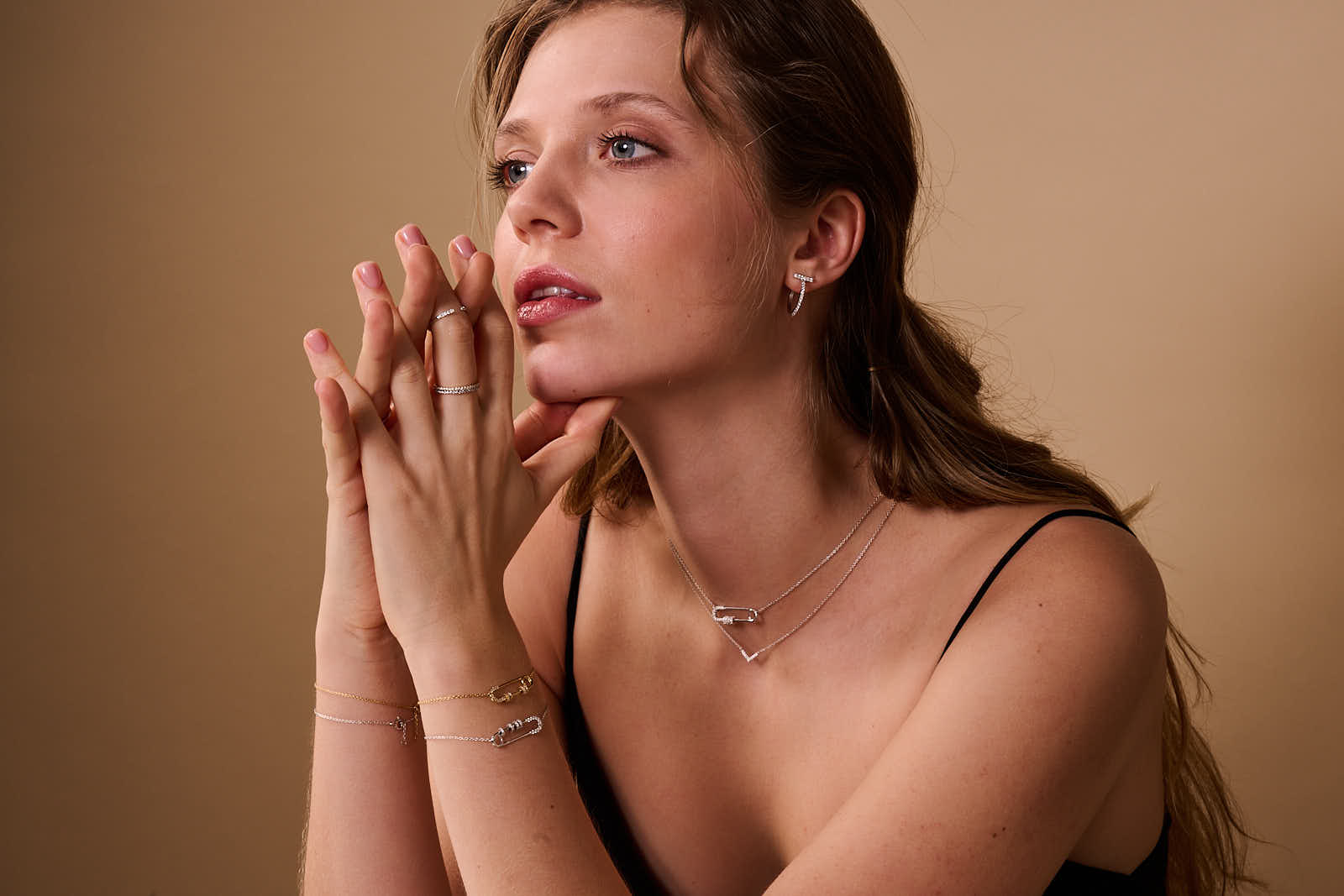
Gold-plated sterling silver has a sterling silver base with a gold-alloy surface layer. A 925 mark refers to sterling silver containing 92.5% silver; it does not mean the entire earring is gold. If the product is described as "925 sterling silver with 14kt gold plating", the 14kt description applies to the plating material, not the full earring.
White-coloured finishes
A white-coloured earring may use:
- Solid white gold
- White-gold plating
- Rhodium plating
- Platinum
- Palladium
- Sterling silver
- Another white-metal finish
The colour alone does not reveal the construction. The product page must state the actual base metal and finish.
Rose-gold finishes
Rose gold obtains its pink tone through its alloy composition, commonly involving copper. When applied as plating, the rose-gold alloy forms only the surface layer over the base metal. The exact composition should be verified instead of assuming that every rose-coloured earring uses the same alloy.
See also: What is demi-fine jewellery?
What are yellow-gold lab-grown diamond earrings?
Yellow-gold earrings surround the diamonds with a warm yellow colour. This creates a visible distinction between the white diamond and its setting, especially when the design exposes more metal.
Yellow gold can work with diamond studs, hoops, drop earrings, butterfly designs, geometric earrings and earring stacks.
The effect also depends on how much metal is visible. A four-prong stud may show only a small amount of yellow gold, while a hoop or geometric design can make the metal colour a major part of the earring.
Choose yellow gold because you prefer its appearance or because it coordinates with jewellery you already own — not because it is universally suited to a particular skin tone.
What are white-gold lab-grown diamond earrings?
White gold is a gold alloy made to produce a white or grey-white colour. Solid white-gold jewellery may also have a rhodium surface finish, but this is not universal and must be verified for the specific product.
A white setting can reduce the visible colour boundary between a colourless or near-colourless diamond and its surrounding metal. This can make the setting appear visually continuous with the stones.
White-coloured earrings can work when:
- You already wear silver or white-metal jewellery
- You want the setting colour to remain restrained
- Your wardrobe includes black, white, navy, grey or cool colours
- You want metal and diamonds to appear more closely related
925 sterling silver with a white finish should never be described as solid white gold.
What are rose-gold lab-grown diamond earrings?
Rose gold has a pink or copper-toned appearance. The depth of that colour depends on the alloy or plating composition.
Rose-gold earrings create a more noticeable colour contrast than white gold but often a softer contrast than strong yellow gold. They can coordinate with blush, cream, sage, mauve, brown and muted colours, but they are not limited to those wardrobes.
Rose gold can be used in stud settings, butterfly earrings, short drops, hoops, geometric designs and mixed-metal stacks. As with the other colours, confirm whether the product is solid rose gold or a rose-gold surface finish over another base metal.
Does metal colour change how the diamond looks?
Metal colour can affect the contrast around a diamond, but it does not change the diamond's origin or underlying properties. The Gemological Institute of America explains that laboratory-grown diamonds have essentially the same chemical composition, crystal structure and optical and physical properties as natural diamonds.
Yellow gold
Yellow gold creates a warm frame around a white diamond. The effect is more noticeable when the setting, hoop or decorative metal is clearly visible.
White gold or white metal
White metal can visually blend with a colourless or near-colourless diamond, particularly in smaller prongs or pavé-style settings.
Rose gold
Rose gold adds a pink-toned boundary. This contrast may be subtle in a small stud setting and more visible in hoops, drops or geometric earrings.
Diamond cut, proportions, setting, cleanliness and lighting also affect what the viewer sees. No metal colour automatically makes every diamond sparkle more.
See also: What are lab-grown diamonds?
Which colour works with each earring style?
Diamond studs
Stud earrings expose less metal than many hoops or drops, so the difference between yellow, white and rose gold may be concentrated around the prongs, bezel or basket. Choose yellow gold for a warm outline, white gold or verified white metal for a cooler transition, or rose gold for a pink-toned border.
Also check the side view. A stud can show more metal from the side than it does from the front. The stud's diameter, projection, basket, backing and total carat weight may affect the appearance more than a small change in metal colour.
See also: Lab-grown diamond stud earrings guide
Diamond hoops
Hoops expose more metal surface than many stud earrings, so the finish can become a major part of the design. Yellow-gold hoops create a warm curved outline. White-metal hoops appear cooler, while rose-gold hoops add a pink-toned shape.
Before choosing a hoop, confirm the outer diameter, inner diameter, width, weight, closure, diamond placement, whether diamonds appear only on the front or continue around the hoop, and the base metal and surface finish.
See also: Lab-grown diamond hoop earrings guide
Drop and geometric earrings
Drop and geometric earrings can expose a larger metal area and may move as they are worn. Their colour can therefore be more noticeable than the colour of a small stud setting. Yellow gold can emphasise the outline of the design. White metal can keep the visible structure cooler, while rose gold creates a softer coloured frame.
Check the full height, width, projection, finished weight and closure. Long or geometric earrings should not be recommended for extended wear without verified measurements and wearer-specific information.
Should you choose by skin tone?
Skin-tone advice can be used as an experiment, but it should not be treated as a rule.
Someone with warm undertones may still prefer white metal. Someone with cool undertones may prefer yellow gold. Clothing, hair colour, existing jewellery and personal preference can matter more than a simplified skin-tone category.
A more reliable comparison is to:
- Look at jewellery you already wear.
- Compare the colours in natural light.
- Check how each colour looks beside your usual clothing.
- Decide whether you prefer coordination or contrast.
The colour you are most likely to combine with your existing jewellery may be the more useful choice.
Match the metal colour to your wardrobe
| Wardrobe colour | Yellow gold | White or silver tone | Rose gold |
|---|---|---|---|
| Black | Warm contrast | Clean contrast | Softer contrast |
| White | Warm definition | Tonal, cooler appearance | Pink-toned detail |
| Navy | Warm contrast | Cooler coordination | Muted contrast |
| Green | Coordinates with many warm greens | Contrasts with cool greens | Works with some sage and muted greens |
| Red or burgundy | Adds warmth | Creates a cooler contrast | Can soften muted reds |
| Blush or mauve | Warm contrast | Clean contrast | Closely coordinated |
| Brown or camel | Warm coordination | Sharper contrast | Soft coordination |
| Grey | Warm contrast | Tonal coordination | Pink-toned contrast |
| Cream | Warm coordination | Cooler contrast | Soft coordination |
These combinations are starting points rather than restrictions.
Should all your jewellery use the same metal colour?
No. Matching every piece can create a consistent look, but mixed metals can also appear intentional.
For a controlled mixed-metal combination:
- Choose one main metal colour
- Repeat it in at least one other piece
- Keep the earring sizes balanced
- Avoid making every piece equally detailed
- Use the diamond colour as a repeated visual element
If you already wear a white-metal watch and a yellow-gold necklace, earrings can repeat either metal or include both if the design genuinely uses mixed metals.
A single-colour plated product is not mixed metal merely because the base metal underneath is different. Mixed-metal styling refers to visible metal colours.
See also: How to stack earrings
Choosing a metal colour for a gift
When buying earrings for someone else, look at what they already wear. Check:
- Earrings in recent photographs
- Watch colour
- Necklace and bracelet colour
- Whether they mix metals
- Whether they repeatedly choose one finish
- Whether their piercings usually carry studs, hoops or drops
Do not choose solely from assumed skin tone, age or job. If their existing preference cannot be established, choose a flexible gift option rather than treating one metal colour as universally suitable.
Solid gold vs gold-plated earrings
| Feature | Solid-gold construction | Gold-plated construction |
|---|---|---|
| Core material | Gold alloy throughout | Separate base metal |
| Surface | Same alloy or an additional finish | Gold-alloy surface layer |
| Product description | Should state gold purity | Should state base metal and plating |
| Hallmark or mark | Depends on market and legal requirements | Base-metal marks may apply |
| Colour maintenance | Depends on alloy and surface treatment | Surface layer may change with wear |
| Price structure | Influenced by gold content and finished weight | Influenced by base metal, plating, design and stones |
| Information to verify | Gold purity, weight and alloy colour | Base metal, plating material, thickness and care |
Neither construction should be hidden behind a colour selector. The shopper should be able to see the complete material information before adding the product to their basket.
See also: Demi-fine vs fine vs fashion jewellery
Does metal colour determine sensitive-ear suitability?
No. Colour alone cannot determine whether an earring will suit sensitive ears. Suitability depends on:
- Complete base-metal composition
- Alloy composition
- Plating material
- Plating thickness and condition
- Post and backing material
- Nickel release
- Individual sensitivity
- Piercing condition
Yellow, white and rose-gold earrings should not be described as hypoallergenic without complete composition and relevant evidence.
Care considerations by construction
Care requirements depend more on the construction and finish than on whether the visible colour is yellow, white or rose. Before cleaning or wearing the earrings around water, cosmetics or chemicals:
- Read the product-specific care instructions
- Confirm whether the earrings are solid or plated
- Avoid abrasive cleaners unless the manufacturer confirms their suitability
- Store pieces separately to reduce surface contact
- Inspect posts, backs and closures
- Follow specific guidance for swimming, showering, sleeping and exercise
Do not assume that every gold-plated product has the same plating thickness or wear characteristics.
See also: How to care for gold-plated jewellery
Metal-colour shopping checklist
Before choosing a colour variant, confirm:
- Is the product solid gold or plated?
- What is the base metal?
- What does the gold-purity description apply to?
- What creates the white colour?
- What creates the rose colour?
- Is the plating thickness stated?
- Are the post and backing made from the same material?
- What metal colours are actually available for the selected item?
- Does the product image change with the selected colour?
- Are price and availability correct for that variant?
- Are the diamonds lab-grown and clearly disclosed?
- Is carat weight individual or total?
- Is the item sold singly or as a pair?
- What are the measurements in millimetres?
- What is the weight per earring and combined?
- What closure is used?
- Are front, side and on-ear images available?
See also: Lab-grown diamond earrings buying guide
Explore Our Store
View all→Got Questions?
Frequently Asked Questions
Ready to Shop?
Choose yellow gold for visible warmth, white gold or a verified white-metal finish for a cooler appearance, or rose gold for a pink-toned contrast.
Then confirm the product construction and specifications rather than relying on the colour name alone.
Continue Reading
More From Lab-Grown Diamond Guides
Are Lab-Grown Diamonds Real Diamonds?
Yes, lab-grown diamonds are real diamonds. Learn how they compare to natural diamonds, fake diamonds, cubic zirconia and moissanite before buying.

Lab-Grown vs Natural Diamonds: What Is the Difference?
Compare lab grown and natural diamonds in simple language. Learn the difference in origin, price, sparkle, value and jewellery use before buying.
Are Lab-Grown Diamonds Worth It?
Find out if lab grown diamonds are worth buying, how they compare to natural diamonds, and when lab grown diamond jewellery makes sense.