
What Jewellery to Wear
with a Green Dress
The jewellery you wear with a green dress should be chosen around the exact green shade, its undertone, the fabric and the amount of detail in the outfit. Emerald and forest green can support visible contrast, while sage and mint often work with more restrained jewellery. Olive has warmer yellow or brown undertones, and teal contains more blue.
Yellow-gold tones can add warmth, white or silver tones can create cooler contrast, and rose-gold tones can soften muted greens. None of these choices is universal. Look at the dress in natural light and decide whether its green appears warm, cool or neutral before choosing the metal.
Quick Summary
- Identify the undertone first — warm, cool or neutral green
- Emerald, olive, bottle and forest green suit yellow gold
- Mint, teal, pine and cool emerald suit white or silver tones
- Rose gold softens sage, mint and muted olive
- Dark greens can swallow very small earrings, especially with hair down
- Satin, sequins and lace call for cleaner earring outlines

Quick answer
For an emerald, bottle-green or forest-green dress, consider yellow-gold drops, white or silver-tone diamond studs, hoops or a defined geometric earring. For sage and mint, use restrained studs, short drops or motif earrings in a metal that suits the dress's undertone. Olive often coordinates with warm yellow-gold tones, while silver tones can create a deliberate contrast.
If the dress is plain, the earrings can carry more shape or movement. If it contains satin shine, sequins, lace, embroidery or a strong print, choose cleaner earrings. Let either the earrings or necklace become the main jewellery focus.
Green-dress jewellery selector
| Green dress | Earring direction | Metal direction |
|---|---|---|
| Emerald green | Drops, hoops, studs or geometric earrings | Yellow gold for warmth; white or silver tone for contrast |
| Sage green | Studs, short drops or butterfly shapes | Yellow gold, rose gold or white or silver tone by undertone |
| Olive green | Hoops, studs or drops | Yellow gold for coordination; silver tone for contrast |
| Mint green | Small studs, short drops or restrained hoops | White or silver tone, rose gold or delicate yellow gold |
| Forest green | Drops, visible studs or focal earrings | Yellow gold or white or silver tone |
| Bottle green | Drops, hoops or diamond studs | Warm gold or cool white or silver contrast |
| Teal green | Studs, drops or geometric earrings | White or silver tone, or yellow gold |
| Lime green | Clean studs or restrained hoops | Choose a neutral metal and keep the silhouette simple |
| Green satin | Drops, studs or geometric earrings | Match the undertone and control additional shine |
| Detailed green dress | Clean studs | Keep the metal and shape restrained |
| Simple green dress | Drops, hoops or a focal design | Choose according to undertone and occasion |
Explore Our Store
View all→Start with the green undertone
Colour names alone do not always reveal how a dress will look. Two dresses labelled emerald can have different amounts of blue or yellow in them.
Warm green
Warm greens contain noticeable yellow, brown or olive undertones — olive, moss, khaki, avocado, some forest greens and yellow-green. Yellow-gold tones often coordinate with these undertones. Rose gold may work with muted or softer warm greens. White or silver tones can still be used when you want a sharper contrast.
Cool green
Cool greens contain more blue or grey — teal, blue-green, mint, some emerald greens, cool sage and deep pine. White or silver-tone jewellery can repeat that cooler quality. Yellow gold creates a warmer contrast rather than a direct tonal match.
Neutral or mixed green
Some dresses sit between warm and cool. In that case, use the wearer's existing jewellery, dress hardware, shoes, bag or other accessories to decide the metal direction.
Gold, silver or rose gold with a green dress
| Metal colour | Effect with green | Green shades to consider |
|---|---|---|
| Yellow gold | Adds warmth and contrast | Emerald, olive, moss, bottle and forest green |
| White or silver tone | Creates a cooler, cleaner contrast | Mint, teal, pine, blue-green and cool emerald |
| Rose gold | Creates a softer transition | Sage, mint, muted olive and pastel green |
| Mixed metals | Adds contrast without committing to one temperature | Simple green dresses with limited embellishment |
Metal colour is only one part of the decision. A large yellow-gold earring and a small yellow-gold stud will create very different results. Consider shape, dimensions and movement alongside colour.
Jewellery by green shade
Emerald green
Emerald green has enough colour depth to support noticeable jewellery, but the dress's construction still matters. With a simple emerald dress, consider drop earrings, medium hoops, geometric earrings, visible diamond studs or one focal earring design. With an emerald dress containing sequins, beading, lace or a dramatic neckline, use studs or a restrained drop.
Yellow gold creates a warm contrast against emerald. White or silver tones can create a cooler, sharper effect. Rose gold may work when the emerald is muted or when rose-gold accessories already appear elsewhere in the outfit.
Sage green
Sage is a muted green that often includes grey, yellow or blue undertones. This variation means sage should not automatically be paired with one metal.
For a romantic or floral sage dress, consider short drops, butterfly-shaped earrings or restrained studs. For a clean satin or tailored sage dress, hoops or geometric earrings can make the outfit feel more contemporary. A sage dress with lace, embroidery or a detailed neckline usually needs smaller earrings.
Olive green
Olive contains yellow or brown undertones and often coordinates with warm metal colours. Hoops can add a defined curve, while drops can make an olive dress feel more event-led. Studs work when the dress has utility details, buttons, prints or visible hardware.
If the dress contains a belt buckle, zip or metallic buttons, consider whether the jewellery should coordinate with that hardware.
Mint green
Mint is light and frequently cool, although some mint dresses contain more yellow. Small studs, short drops and restrained hoops keep the jewellery proportionate to the lightness of the colour. Butterfly or floral shapes can work with softer outfits, while geometric earrings can add contrast to a minimalist mint dress.
Forest and bottle green
Forest and bottle green create a deeper background for jewellery. Small earrings may be less visible, especially with long hair or evening lighting. Consider a defined stud, drop, hoop or geometric design with enough visible width or movement to remain noticeable. This does not mean the earrings must be oversized.
Teal and blue-green
Teal sits between blue and green, so both cool and warm jewellery can work. White or silver tones can repeat teal's cooler side. Yellow gold creates contrast and may make the green element appear warmer. Rose gold can work with softer or more muted teal. Because teal already has strong colour, use a simple earring silhouette when the dress also contains shine, print or embellishment.
Match the jewellery to the dress fabric
Green satin or silk
Satin and silk can reflect light and create visible draping. A simple green satin dress can support drops or geometric earrings, while a ruched, cowl-neck or embellished dress usually needs studs or shorter drops.
Green velvet
Velvet absorbs and reflects light differently depending on its direction and lighting. Defined diamond studs, drops or clean metal shapes can remain visible against the depth of the fabric. Avoid assuming that velvet always requires large earrings — the neckline and hairstyle still determine the scale.
Green lace
Lace already provides pattern and texture. Use studs or restrained drops, particularly when the lace extends around the neck or shoulders. Check earrings and bracelets for raised settings or edges that may catch the fabric.
Green sequins or metallic fabric
Sequins create multiple reflected surfaces. Choose clean studs or a restrained geometric silhouette instead of adding several equally visible jewellery pieces.
Green floral or printed fabric
Coordinate with one part of the print rather than matching every colour. Use simple earrings when the print is large or high-contrast.
Earrings to wear with a green dress
Stud earrings
Studs work with detailed dresses, high necklines and outfits where the necklace is intended to lead. Their visibility depends on diameter, stone arrangement and projection from the ear. A small stud creates restrained sparkle. A larger or clustered stud can remain visible against dark green fabric without introducing the movement of a drop.
Drop earrings
Drops add a vertical line and movement. They work with simple emerald, forest, bottle-green and satin dresses, particularly when the neckline is open. Check the total drop length, width, weight and closure rather than relying only on model photographs.
Hoop earrings
Hoops create a modern outline and can work with olive, emerald, teal and simple party dresses. The suitability depends on outer diameter, inner diameter, thickness, weight and closure. Do not classify a non-circular earring as a hoop or huggie without confirming the construction.
Butterfly and floral earrings
Motif earrings can complement sage, mint and floral green dresses. Keep the necklace restrained if the earrings already contain a recognisable shape.
Geometric earrings
Geometric earrings contrast with soft or fluid green fabrics. They can work with minimalist dresses, tailoring, satin and modern corset silhouettes.
Focal earrings
A focal design works when the green dress is plain enough to give it space. With lace, sequins, embroidery, print or a heavily structured neckline, use a quieter earring.
See also: Bold statement earrings: styling guide
Match jewellery to the neckline and hairstyle
| Green-dress neckline | Jewellery direction |
|---|---|
| V-neck | Drops or studs; pendant may follow the V |
| Sweetheart | Studs, short drops or motif earrings |
| Off-shoulder | Drops, hoops or a focal earring when the dress is simple |
| Strapless | Drops, hoops, visible studs or a necklace |
| High neck | Studs, hoops or geometric earrings; usually no necklace |
| Halter | Studs or measured drops; usually no necklace |
| Square neck | Studs, drops or hoops; short necklace if space allows |
| Cowl neck | Studs or short drops; avoid a necklace that catches in the drape |
| One shoulder | Studs or one clear earring silhouette; keep the necklace restrained |
Hair worn up exposes more of the ear and can support drops, hoops or geometric earrings. Hair worn down may partially cover smaller designs. Consider the visible earring width, total drop length, hair texture, setting edges, closure, piercing position, and whether the style remains visible in photographs.
Do not assume that a heavier or larger earring will be suitable simply because the hair is worn down.
See also: Jewellery for a sweetheart neckline
Jewellery by occasion
A green wedding guest dress
For weddings, choose the jewellery around the venue, formality, dress detail and time of day.
- Emerald can support drops or defined studs
- Sage can work with short drops, studs or motif earrings
- Olive can work with hoops or drops
- Mint can work with restrained studs or shorter drops
- A green satin dress requires balance because the fabric already reflects light
- A printed or lace dress generally needs cleaner earrings
Avoid treating every green wedding guest dress as formal. A city ceremony, daytime garden wedding and evening reception can require different levels of jewellery visibility.
A green party dress
A simple green party dress can carry drops, hoops, geometric earrings or a focal design. A sequinned, metallic or heavily embellished party dress usually needs studs. If the earrings lead, skip the necklace or use a fine chain. If the necklace leads, use smaller earrings.
See also: Party earrings guide
Necklace or no necklace?
Wear a necklace when the neckline creates clear space for one.
- A V-neck can work with a pendant that follows the V
- A square neck can support a shorter necklace positioned within the open area
- A strapless dress may work with a necklace or visible earrings
- A high-neck or halter dress usually needs no necklace
- A cowl neck often looks cleaner without a necklace
- A detailed or beaded neckline may already provide enough decoration
The necklace should not repeatedly strike or catch the dress edge.
Can you wear an ear stack with a green dress?
Yes. Use one main earring and one or two smaller supporting pieces. Possible combinations include:
- Drop earring with a small stud
- Hoop with a restrained second-lobe stud
- Butterfly earring with a simple diamond stud
- Geometric earring with a smaller plain-metal piece
- Medium stud with a smaller supporting stud
Keep the metal direction and diamond detail related, but do not make every piece identical in size.
See also: How to stack earrings
Green-dress jewellery checklist
Before choosing the jewellery, confirm:
- The exact green shade
- Whether the undertone is warm, cool or neutral
- The dress fabric
- Whether the dress is plain or detailed
- The neckline
- The hairstyle
- Whether earrings or necklace should lead
- Earring height, width and projection in millimetres
- Individual and combined earring weight
- Closure
- Complete base metal and finish
- Stone type
- Individual and total carat weight
- Whether the product is sold singly or as a pair
- Whether settings or edges could catch the dress or hair
Explore Our Store
View all→Got Questions?
Frequently Asked Questions
Ready to Shop?
Start with the green undertone, then consider the fabric, neckline and level of detail. Choose one jewellery focal point and keep the remaining pieces supportive.
Check the exact product measurements, weight, materials, closure and sale unit before purchasing.
Continue Reading
More From Earring Styling Guides
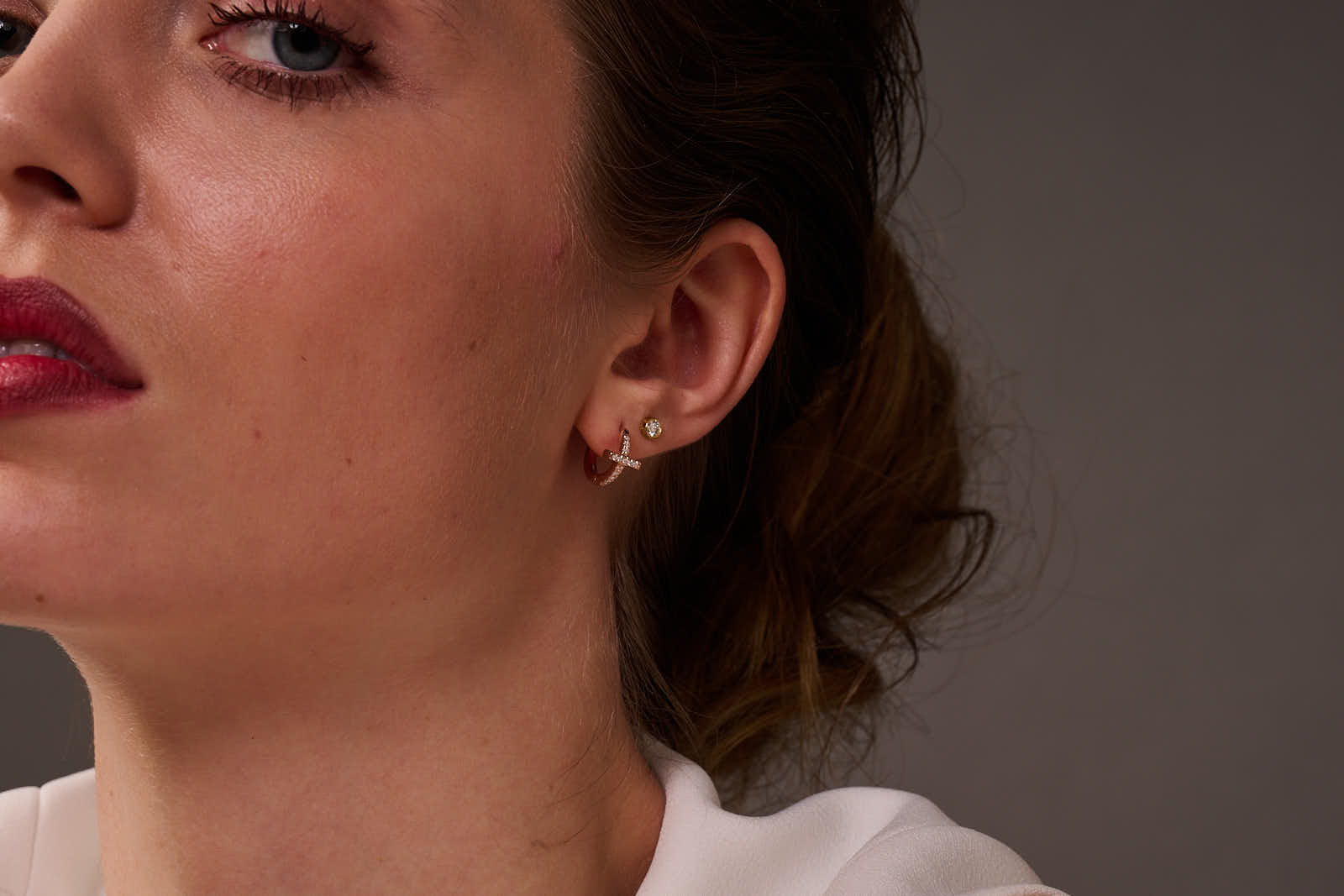
How to Stack Earrings: Complete Ear Stack Guide
Learn how to stack earrings step by step: choose a focal piece, vary the scale, repeat one feature and check spacing across two or three piercings.
Diamond Ear Stack Ideas: 15 Curated Looks
Fifteen diamond ear stack ideas for two and three piercings, covering minimalist, everyday, workwear, wedding guest and evening combinations.
Minimalist Earrings Guide: Styles & Buying Tips
Learn how to choose minimalist earrings by style, size, metal, closure and sparkle. Compare studs, huggies, slim hoops and subtle diamond designs.