
Bold Statement Earrings:
How to Choose and Style Them
Bold statement earrings are designed to play a noticeable role in an outfit. Their impact may come from scale, shape, movement, contrast, diamond coverage or an unusual motif — not simply from being oversized.
The most balanced way to wear statement earrings is to decide what should lead the look. If the earrings are the focal point, the necklace, ear stack and outfit details can support them instead of competing for attention.
Before choosing a pair, check the complete dimensions, weight per earring, fastening and materials. These details are more helpful than relying on words such as "bold" or "lightweight", which can mean different things across different designs.
Quick Summary
- Impact comes from shape, movement, contrast or diamond coverage — not size alone
- "Statement" and "stud" are not opposites: a sculptural stud can be both
- Choose one jewellery focal point and let the rest support it
- Check complete width, height, drop, projection and weight per earring
- A necklace is not automatically wrong — the neckline decides
- Statement earrings can work during the day when the specifications suit the wear time
Statement earring styling at a glance
| Styling situation | Earring direction | How to balance it |
|---|---|---|
| Plain or minimal outfit | A more visible shape, motif or diamond arrangement | Keep the necklace and other earrings restrained |
| Detailed or embellished outfit | A statement design with controlled dimensions | Avoid repeating every detail in the dress |
| Open neckline | Earrings can become the main jewellery feature | A necklace is optional |
| High or detailed neckline | Consider width, length and possible contact with the fabric | Usually keep the necklace minimal |
| Hair worn up | Most shapes will remain visible | Choose according to scale and comfort |
| Hair worn down | Select a visible outline or contrasting finish | Do not increase weight simply for visibility |
| Multiple piercings | Use one focal earring with smaller supporting pieces | Check the physical spacing between piercings |
| Long event | Prioritise stated weight, fastening and movement | Consider how the earrings feel over several hours |
What counts as a bold statement earring?
Statement earrings are not one fixed product category. A pair may create visual impact through one or more of the following features:
- A wider or longer silhouette
- A sculptural or geometric shape
- A recognisable motif
- Multiple stones or a more visible diamond arrangement
- Movement from articulated or drop elements
- Strong contrast against the wearer's hair or clothing
- An unusual combination of shape, texture or negative space
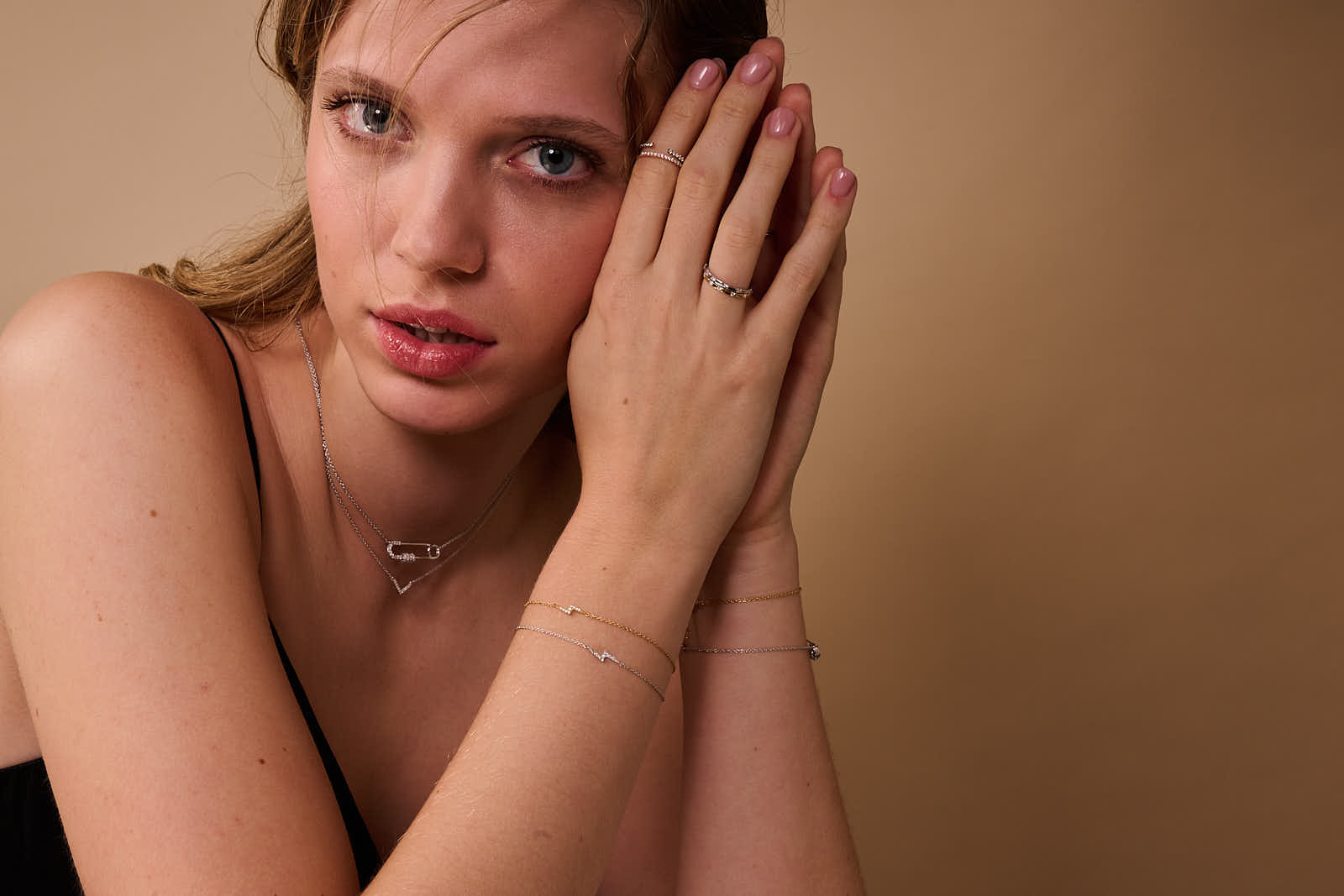
A compact sculptural stud can make more of a statement than a thin, longer earring. Likewise, a pavé hoop can function as the focal point of an outfit without being an oversized hoop.
This is why measurements and photographs are more useful than product labels alone.
Explore Our Store
View all→Check the measurements before choosing
Product photographs are not always shown at the same scale. Two earrings can appear similarly sized online while having very different proportions when worn.
Complete width and height
The complete outline determines how much space an earring occupies around the ear. Measurements should include the entire design, not only the central stone or motif.
Drop length
For drop earrings, measure from the piercing or fastening point to the lowest part of the design. This helps determine whether the earring may approach the jawline, neckline or collar.
Projection
Projection describes how far an earring extends away from the ear. This can affect how a sculptural piece appears from the side and whether it may catch against hair or clothing.
Weight per earring
Weight should be stated per earring rather than only as a combined pair. Personal comfort varies, but the measurement allows shoppers to compare designs properly.
Fastening and backing
Check whether the earring uses a post and butterfly back, hinged closure, lever back or another fastening. The closure should always match the actual product.
Movement
An articulated drop behaves differently from a rigid design. Movement can make an earring more noticeable, but it may also increase contact with hair, collars or shoulders.
How to wear statement earrings without making the outfit feel crowded
Start by choosing one primary jewellery focal point.
If the earrings contain a strong shape, visible diamond coverage or substantial movement, allow them to lead. The rest of the jewellery does not need to disappear, but it should have a supporting role.
- Look at the outfit's existing detail.
- Decide whether the earrings or neckline should attract more attention.
- Add a necklace only if it gives the outfit something it genuinely needs.
- Keep secondary piercings smaller than the focal earring.
- Review the complete look from normal viewing distance.
Balance does not require every outfit to be minimal. It means avoiding several unrelated focal points around the face and neckline.
Should statement earrings be worn with a necklace?
There is no rule that statement earrings must always be worn without a necklace. The decision depends on the neckline, the visual weight of the earrings and the necklace itself.
| Earring and outfit combination | Necklace direction |
|---|---|
| Statement earrings with a strapless outfit | No necklace or a restrained necklace can both work |
| Statement earrings with an off-shoulder neckline | Let the earrings lead, or use a very simple necklace |
| Statement earrings with a V-neck | A pendant may work if it does not compete with the earrings |
| Statement earrings with a high neckline | A necklace is often unnecessary |
| Statement earrings with an embellished neckline | Usually avoid adding another prominent feature |
| Statement earrings with a plain crew neck | A fine chain may add structure without becoming a second focal point |
Do not base the decision only on the earring's length. Width, shape, sparkle and movement also contribute to its visual presence.
Styling statement earrings with simple and detailed outfits
Simple outfits
A simple outfit provides room for a distinctive earring shape. This might include a plain dress, tailored jumpsuit, clean shirt, monochrome knit or uncomplicated evening top.
The earrings do not necessarily need to match the outfit's shape. Contrast can be effective: a curved hoop can soften a structured outfit, while a geometric design can add definition to a flowing fabric.
For a black dress, both warm and cool metal colours can create visible contrast. The final choice should consider the dress fabric, other accessories and the wearer's preference.
Detailed outfits
Sequins, lace, embroidery, metallic fabric, prints and dramatic necklines already contain visual information. Statement earrings can still work, but their shape should relate to the outfit rather than simply adding more detail.
- A clean outline instead of several competing motifs
- Controlled dimensions near a highly detailed neckline
- One metal colour repeated elsewhere in the outfit
- Less movement when the fabric already has movement or fringe
- A clear space between the earring and the garment
The aim is not to avoid bold earrings automatically. It is to understand where the existing focal points are.
Choose statement earrings by neckline
The neckline affects the physical space surrounding the earrings.
| Neckline | What to consider |
|---|---|
| Strapless | Open space allows the earrings to become prominent; decide whether a necklace is needed |
| Off-shoulder | Check the relationship between earring length, exposed shoulders and hairstyle |
| Sweetheart | Curved or softly structured designs may echo the neckline, while geometric earrings can create contrast |
| V-neck | Consider whether the earrings or a pendant should lead |
| Square neck | Both curved and angular earrings can work; repeat or contrast the neckline deliberately |
| High neck | Check for contact between longer earrings and the fabric |
| Halter | The neckline already directs attention upwards, so assess the complete face-and-shoulder area |
| Cowl neck | Moving or folded fabric may compete with long or highly articulated earrings |
| Embellished neckline | Controlled width or a compact statement stud may provide sufficient impact |
Choose statement earrings by hairstyle
Hair affects visibility, but it should not be used as the only reason to select a larger or heavier earring.
Hair worn up
A bun, ponytail or pinned style exposes the complete earring. This makes width, projection and the fastening more noticeable.
Short hair
Shorter hairstyles can show both compact sculptural studs and longer designs clearly. Consider the space between the earring and the jawline.
Hair tucked behind the ears
This provides visibility without requiring a fully pinned hairstyle. Check whether textured surfaces or moving components may catch in the hair.
Hair worn down
A defined outline, contrasting metal colour or visible movement may help the earring remain noticeable. Review photographs showing the design with hair down rather than relying only on isolated product images.
Can statement earrings work during the day?
Statement earrings are not limited to evening events. A compact sculptural stud, small pavé hoop or controlled geometric design may function as the focal point of a daytime outfit.
For work or longer periods of wear, compare the weight per earring, complete dimensions, fastening security, movement, workplace dress expectations, and use with headphones, telephones or head coverings.
A design should not be described as suitable for all-day wear unless its specifications and testing support that statement. Comfort remains personal.
Statement earrings for parties, weddings and black-tie events
Parties and evening events often provide more freedom to use visible shapes, movement or diamond coverage. Before choosing, consider the venue and the full outfit rather than using the event name alone. A simple cocktail dress may allow a more prominent earring than an intricately embellished party dress.
See also: Party earrings guide
Statement earrings can be worn for weddings and black-tie events when they work with the outfit, dress code and setting.
Wedding guests should consider whether the design complements the outfit without introducing an unintended bridal effect. For black-tie styling, examine the relationship between the earrings, hairstyle, neckline and any necklace.
A long earring is not automatically more formal, and a stud is not automatically casual. Material, finish, proportion and the complete styling determine the result.
Statement earrings versus studs and hoops
"Statement earring" and "stud" are not opposites.
A stud describes how an earring sits at the piercing, while statement describes its visual role. A wide diamond cluster, sculptural form or distinctive motif can be both a stud and a statement earring.
Choose a compact statement stud when you want visible detail without a long drop. Choose a smaller classic stud when you want the earring to support another part of the outfit.
A hoop can also be a statement earring. Hoop refers to the curved construction, while statement refers to its prominence in the complete look. A hoop may become a focal point through its diameter, width, diamond placement, shape, surface detail, multiple rows or sculptural construction.
Compare actual measurements rather than assuming every hoop is more restrained than a statement drop or stud.
See also: Stud vs hoop earrings
See also: Lab-grown diamond hoop earrings guide
Can statement earrings be used in an ear stack?
Yes, provided the focal earring has enough physical space and the supporting pieces remain secondary. A simple ear-stack structure is:
- One statement earring in the main piercing
- One smaller stud or close-fitting piece in the next piercing
- Optional additional detail only when the spacing allows it
Check the distance between piercings, the width of every earring, post direction and whether neighbouring pieces touch. Product mock-ups should not replace photographs of the exact combination being worn.
See also: How to stack earrings
See also: Diamond ear stack ideas
Choosing metal colour, materials and diamonds
Metal colour and metal composition are different pieces of information. "Gold tone" describes appearance. It does not confirm solid gold, gold plating, vermeil or another material. Every product should state its actual base metal and finish accurately.
- Yellow gold colours add warmth
- White or silver colours create cooler contrast
- Rose gold colours introduce a softer pink tone
- Mixed metals can work when the combination is repeated intentionally
For lab-grown diamond statement earrings, verify more than the general product description. The product page should state:
- Whether the stones are lab-grown diamonds
- Total carat weight and whether it refers to the pair
- Number of stones
- Stone shapes
- Diamond placement
- Complete earring measurements
- Weight per earring
- Metal and finish
- Fastening
- Whether the listing is sold as a pair or single earring
A larger total carat weight does not automatically create a more visible design. Stone distribution, setting, width and contrast also affect how the earring appears.
See also: Lab-grown diamond stud earrings guide
Common statement-earring styling mistakes
Assuming statement earrings must be oversized
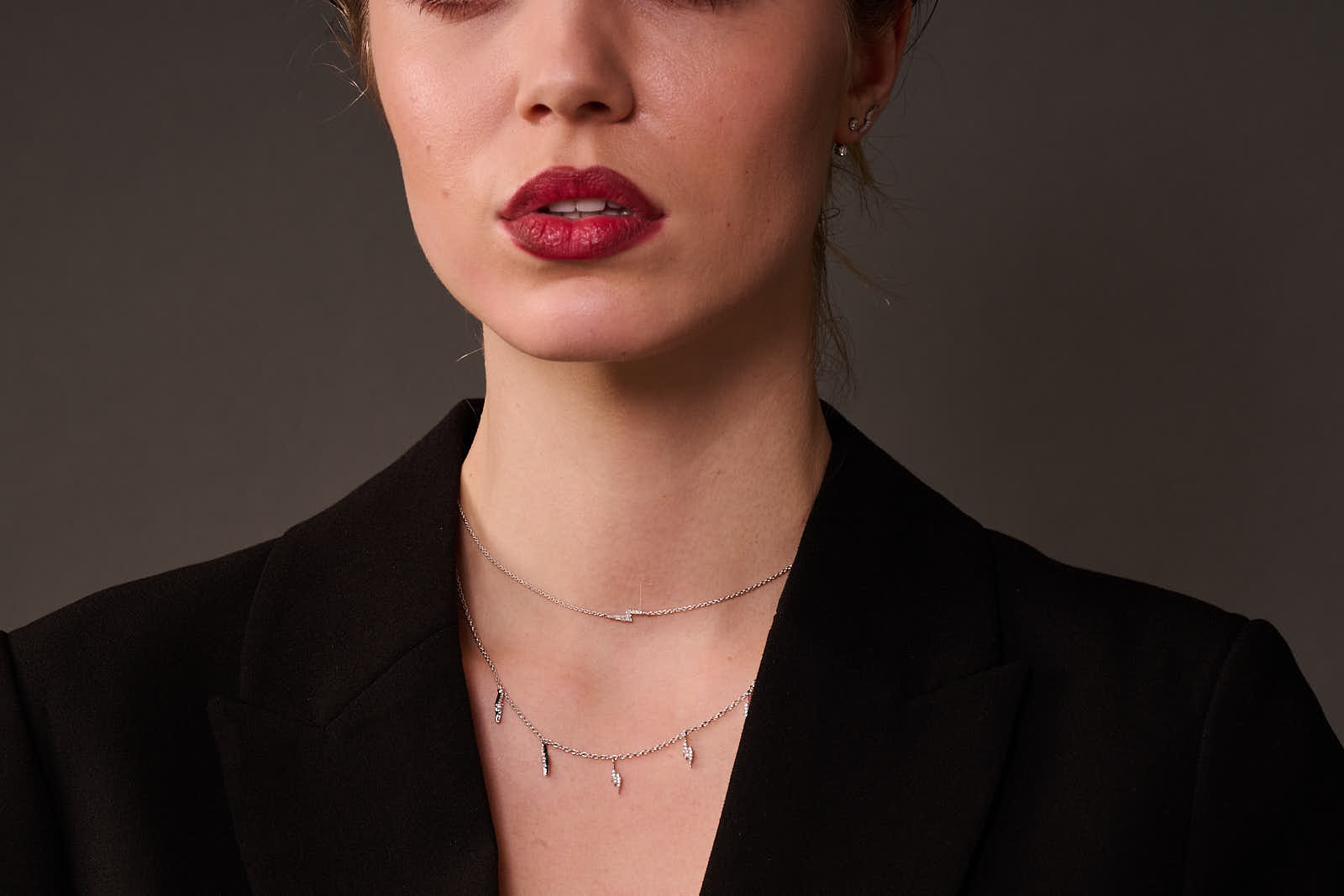
A distinctive shape or compact diamond arrangement can create impact without extreme dimensions.
Wearing several unrelated focal pieces
A prominent earring, heavy necklace, embellished neckline and complex ear stack can compete. Decide which element should lead.
Ignoring complete measurements
Product photographs alone do not provide reliable scale. Check width, height, drop and weight.
Treating every stud or hoop as understated
Studs and hoops can also be statement designs. Compare their actual visual presence.
Choosing by occasion name alone
Two wedding, party or dinner outfits may require entirely different earrings. Consider the fabric, neckline and hairstyle.
Relying on unverified product claims
Products should not be described as lightweight, secure, hypoallergenic, suitable for sensitive ears or comfortable for all-day use without evidence.
Statement earring checklist
Before purchasing or styling a pair, ask:
- What creates the statement: size, shape, movement, motif or diamond coverage?
- What are the complete measurements?
- What is the weight per earring?
- What fastening does it use?
- Will it touch the collar, shoulder or neckline?
- Does the outfit already contain strong detail?
- Should the earrings or necklace lead?
- Will the hairstyle show the complete design?
- Is there enough room for an ear stack?
- Are the metal, finish and stones clearly identified?
- Are all product claims supported by the exact product specifications?
Explore Our Store
View all→Got Questions?
Frequently Asked Questions
Ready to Shop?
Bold statement earrings work most successfully when their role in the outfit is intentional. Let one element lead the jewellery look.
Browse the I Want Jewels collection by comparing dimensions, weight, fastening, materials and diamond details. Choose the design that suits your outfit and intended styling rather than relying on the product name alone.
Continue Reading
More From Earring Styling Guides
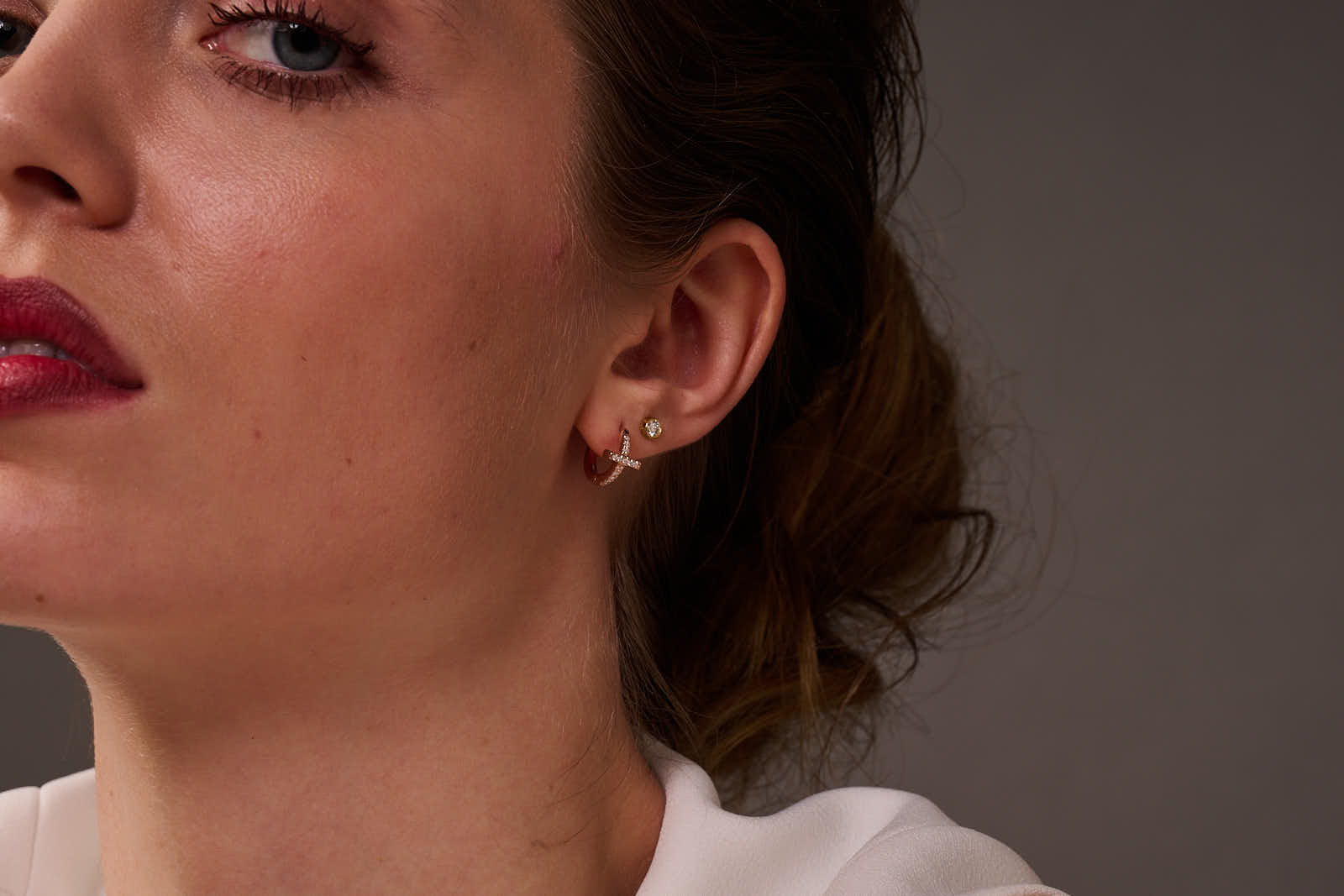
How to Stack Earrings: Complete Ear Stack Guide
Learn how to stack earrings step by step: choose a focal piece, vary the scale, repeat one feature and check spacing across two or three piercings.
Diamond Ear Stack Ideas: 15 Curated Looks
Fifteen diamond ear stack ideas for two and three piercings, covering minimalist, everyday, workwear, wedding guest and evening combinations.
Minimalist Earrings Guide: Styles & Buying Tips
Learn how to choose minimalist earrings by style, size, metal, closure and sparkle. Compare studs, huggies, slim hoops and subtle diamond designs.