
Lab-Grown Diamond Earrings
for Weddings
Wedding earrings sit close to the face and appear in many of the photographs taken throughout the day. The right pair should complement the wedding dress, hairstyle and veil while remaining secure and suitable for the ceremony and reception.
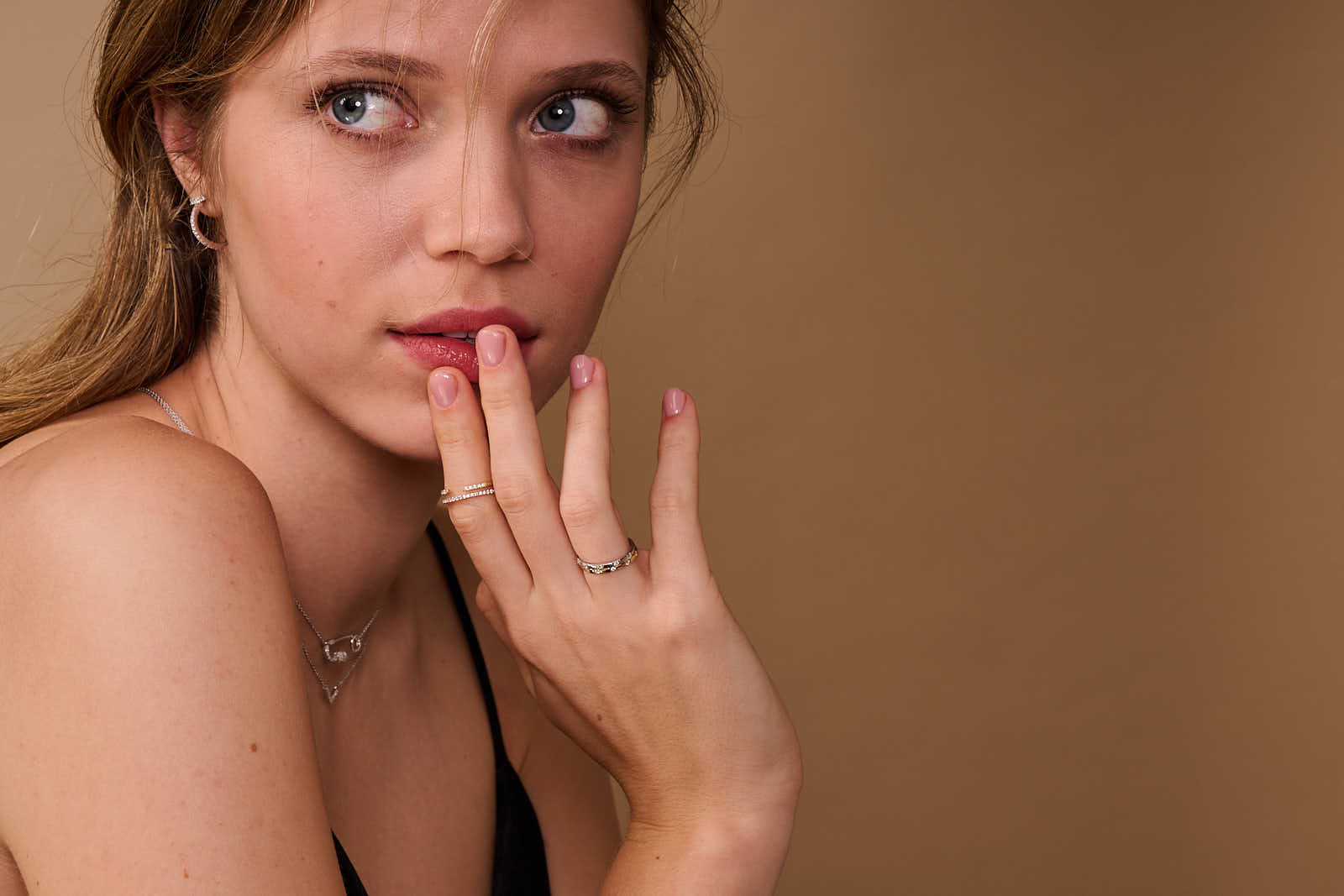
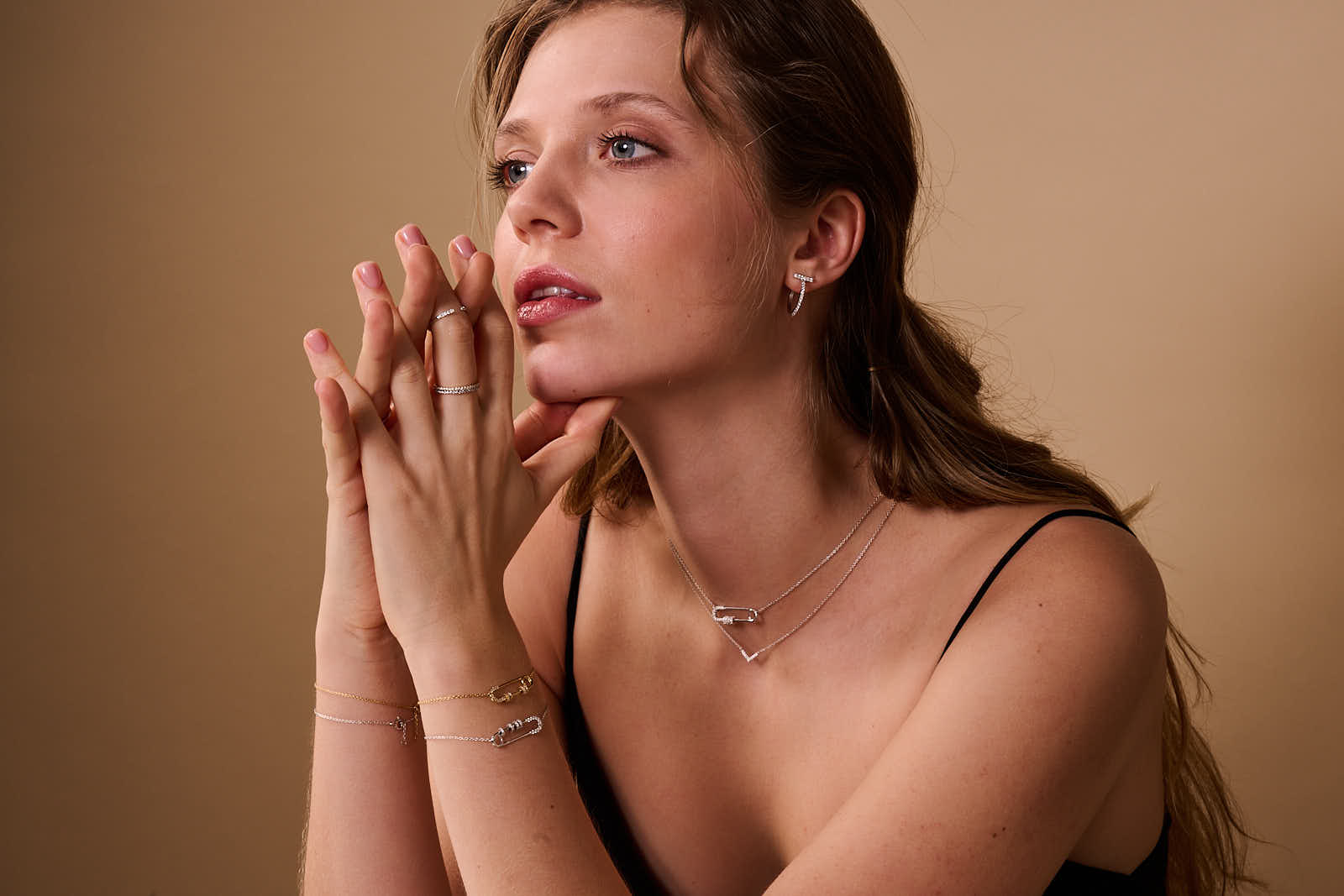
Lab-grown diamond studs, drops and hoops can all work as bridal earrings. Studs create a concentrated point of sparkle and suit detailed dresses, veils and prominent necklaces. Drop earrings add length and movement, particularly with open necklines and hair worn up. Diamond hoops provide a more contemporary direction for minimalist dresses, civil ceremonies and reception looks.
Begin with the dress and hairstyle rather than choosing earrings only by sparkle. Consider the neckline, fabric, embellishment, veil, other jewellery and the earrings' actual dimensions before deciding.
Quick Summary
- Wear studs when the dress, veil or necklace is already detailed
- Choose short drops for movement without a dramatic focal point
- Consider longer drops with plain dresses, open necklines and hair worn up
- Choose hoops for contemporary, civil-ceremony or reception styling
- Use one prominent jewellery element, not two
- Test the earrings with the actual hairstyle and veil before the wedding
- Judge size in millimetres and try-on photographs, not carat weight alone
Bridal earring selector
| Bridal look | Earring direction | Necklace direction |
|---|---|---|
| Minimalist wedding dress | Studs, drops or contemporary hoops | Optional delicate necklace |
| Detailed lace dress | Studs or uncomplicated short drops | Keep it restrained |
| Beaded or sequinned dress | Diamond studs | Usually unnecessary |
| Satin slip dress | Short or medium drops | Fine chain or no necklace |
| Strapless wedding dress | Drops, hoops or visible studs | Optional, depending on earrings |
| Off-shoulder wedding dress | Drops or visible studs | Often unnecessary |
| Sweetheart neckline | Studs, drops or short pendant combination | Pendant can follow the neckline |
| High-neck wedding dress | Studs or visible earrings | Usually skip the necklace |
| Wedding veil with heavy detail | Studs or snag-resistant short earrings | Keep the neckline balanced |
| Hair worn up | Studs, short drops or longer drops | Based on neckline |
| Hair worn down | Visible studs or drops that clear the hair | Keep other jewellery simple |
| Reception second look | Hoops, drops or one stronger design | Usually secondary |
Why choose lab-grown diamond earrings for a wedding?
Lab-grown diamonds are diamonds created in controlled laboratory conditions rather than extracted from the earth. They are not cubic zirconia, moissanite or glass.
For a wedding, their origin does not change the basic styling process. You should still evaluate:
- Diamond size and arrangement
- Earring dimensions
- Setting construction
- Base metal and finish
- Closure
- Weight per earring
- How the design sits on the ear
- Whether the listing is for a pair or single earring
- Care requirements
- Returns and delivery timing
A laboratory report should only be mentioned when that specific product genuinely includes one. Not every small diamond or finished earring automatically has an individual grading report.
See also: What are lab-grown diamonds?
Explore Our Store
View all→Start with the wedding dress
The dress determines how much additional detail the earrings need to introduce.
Minimalist wedding dress
A plain crepe, satin or structured dress provides flexibility. Studs can maintain the minimalist direction, while drops or hoops can become the principal jewellery feature. If the dress has a clean neckline and limited embellishment, the earrings can be more visible. However, they should still be checked against the hairstyle, veil and shoulder line.
Lace wedding dress
Lace already creates pattern and texture. Choose studs or uncomplicated drops that do not introduce another highly decorative motif. If lace continues into a high neckline or sleeves, earrings may be more effective than a necklace.
Beaded or sequinned wedding dress
A heavily embellished dress usually needs less jewellery. Diamond studs can add light around the face without introducing another moving or highly detailed element. Check whether the dress embellishment is warm, cool or mixed in tone before choosing yellow, white or rose-gold finishes.
Satin wedding dress
Satin reflects light across the fabric, so the jewellery does not need to create sparkle everywhere. Short and medium drops can complement a plain satin dress. Studs may be more suitable when the satin includes a cowl neck, ruching, draping or additional crystal detail.
Vintage-inspired wedding dress
Look at the specific design period and dress details rather than treating "vintage" as one style. A clean diamond stud, short drop or motif earring may work, depending on the neckline and headpiece.
Studs, drops and hoops for brides
Stud earrings
Diamond studs are useful when the dress, veil or necklace already contains important details. They provide sparkle in one defined area and are less likely than long drops to overlap with a veil or high neckline.
Studs can work well with lace wedding dresses, beaded dresses, high necklines, halter necklines, detailed veils, hair worn down, prominent bridal necklaces and minimal civil-ceremony outfits.
The correct stud size depends on the wearer's ear, hairstyle and desired visibility. Product photography should show the exact stud on an ear, accompanied by measurements in millimetres. "Small", "medium" and "large" should never be used without actual dimensions.
See also: Lab-grown diamond stud earrings guide
Drop earrings
Drop earrings create a vertical line below the ear and can add movement to bridal photographs. Their effect depends on their total length, width, weight and how close they sit to the neck or shoulder.
Drop earrings can suit strapless dresses, off-shoulder dresses, sweetheart necklines, V-neck wedding dresses, plain satin dresses, hair worn up, simple veils, evening ceremonies and reception dresses.
Short drops provide some movement without becoming the only jewellery feature. Longer drops need more space and should be tested against the shoulder, hairstyle and veil.
See also: Lab-grown diamond drop earrings guide
Diamond hoop earrings
Diamond hoops offer a more contemporary silhouette than traditional studs or drops. They can work with minimalist wedding dresses, civil ceremonies, tailored bridal suits and reception outfits. Small hoops can suit a restrained look or multiple piercings. More visible pavé hoops can work when the dress is plain enough to allow the hoop shape to remain clear.
Before choosing hoops, check:
- Hoop diameter
- Hoop width
- Closure type
- Weight per earring
- Whether the stones face forward when worn
- Interaction with the veil
- Whether the hoop catches against hair or dress detail
See also: Lab-grown diamond hoop earrings guide
Studs versus drops for a wedding
| Consideration | Choose studs when | Choose drops when |
|---|---|---|
| Dress detail | Lace, beads or sequins are prominent | The dress is relatively plain |
| Neckline | High, halter or heavily detailed | Strapless, off-shoulder, sweetheart or V-neck |
| Hairstyle | Hair is down or partly covering the ear | Hair is worn up or tucked back |
| Veil | The veil is ornate or sits close to the ear | The veil is simple and clears the earrings |
| Necklace | The necklace is prominent | The necklace is absent or delicate |
| Desired effect | Concentrated sparkle | Length and movement |
| Reception | Same understated pair all day | More visible evening styling |
Neither type is universally better. The decision should be based on how the earrings interact with the complete bridal look.
Match earrings to the wedding neckline
Strapless wedding dress
A strapless neckline creates open space around the shoulders. Studs, drops and hoops can all work. If the earrings are long or visually strong, the neckline may look cleaner without a necklace. If the earrings are small, a short necklace can become the principal jewellery element.
Off-shoulder wedding dress
Drops or visible studs can frame the face while keeping the shoulder line clear. Check that longer earrings do not touch the dress or catch against sleeves.
Sweetheart neckline
A sweetheart neckline naturally creates central space for a pendant. If a necklace is worn, use studs or restrained drops. Without a necklace, the earrings can be more noticeable.
See also: Jewellery for a sweetheart neckline
V-neck wedding dress
A delicate pendant can follow the V shape, paired with studs or shorter earrings. Alternatively, leave the neckline clear and use drops as the primary jewellery feature.
High-neck or halter dress
High necklines usually leave limited space for a necklace. Use earrings to add light around the face. Studs are appropriate with detailed fabric, while more visible earrings can work with a plain high-neck design.
One-shoulder wedding dress
The asymmetric shoulder already creates a strong line. Studs or controlled drops can work without adding another competing shape. Check that the earring on the covered side does not catch against the dress.
Match earrings to the bridal hairstyle
Bridal updo
An updo exposes the complete earring. Studs, short drops and longer drops can all be considered, depending on the neckline and veil. Take side-profile photographs during the hair trial to see the actual scale.
Hair worn down
Choose earrings that remain visible without catching in the hair. Small studs may disappear beneath thick hair, while highly open or intricate designs may catch. Test the earrings after the hairstyle has been completed rather than relying only on product photographs.
Half-up hairstyle
A half-up style can expose part of the ear while retaining movement around the face. Studs and short drops often work, but the final decision should be made during the hair trial.
Short bridal hair
Short hair naturally exposes the ear, but that does not mean the earrings must be large. Choose the scale according to the dress and desired focal point.
Wearing bridal earrings with a veil
The veil can change how the earrings sit and move. Test the exact earrings with the actual veil or a fabric sample whenever possible. Check:
- Whether the veil comb changes the hairstyle
- Whether the veil edge touches the earrings
- Whether stones or prongs catch the fabric
- Whether the earrings remain visible
- Whether the veil creates too much detail around the face
- Whether removing the veil changes the balance of the jewellery
- Whether the earring backing remains secure
Put the earrings on before the veil is attached, following the hairstylist's instructions. When removing the veil, have someone check that the fabric is clear of the earrings.
No earring should be described as "veil-safe" without testing its exact setting and construction.
Yellow, white or rose-gold bridal earrings
Yellow-gold finish
Yellow gold can add warmth to ivory, cream, champagne and warm-white dresses. It can also coordinate with warm-toned embroidery, shoes or other jewellery.
White or silver-tone finish
White and silver tones can create a cleaner, lower-contrast pairing with many white dresses. They may also coordinate with cool-toned embellishment and white-metal engagement rings.
Rose-gold finish
Rose gold provides a softer metal direction and may work with blush, champagne and warm romantic wedding palettes.
Bridal earrings do not have to match an engagement ring perfectly. Mixed metals can work when the combination is deliberate. Repeating each metal once elsewhere in the look can help the combination feel connected.
How large should bridal earrings be?
There is no universal bridal earring size. Carat weight does not tell you the full visible size because total carat weight may be divided across several diamonds or across both earrings.
Check:
- Total earring height in millimetres
- Maximum width
- Hoop diameter, when relevant
- Weight per earring
- Total carat weight and how it is distributed
- Number and arrangement of stones
- On-ear photographs
- Model ear scale
- Distance from the earlobe to shoulder
- Hairstyle visibility
See also: Lab-grown diamond earring size guide
Coordinating earrings for bridesmaids
Bridesmaid earrings can be coordinated without being completely identical. Choose one common feature:
- The same metal finish
- The same diamond shape
- The same stud family in different sizes
- The same short-drop silhouette
- The same motif
- One design for all bridesmaids and a related design for the maid of honour
Before buying matching earrings, confirm whether every person has pierced ears, any metal sensitivities or known allergies, the preferred earring size, whether the listing is for a pair, the dress necklines, hairstyle plans, delivery and return dates, and whether the earrings are a gift or part of the required outfit.
See also: Bridesmaid jewellery gifts
Ceremony and reception earrings
A bride can wear one pair throughout the day or change earrings for the reception.
Wearing one pair all day
Choose earrings that work with the ceremony dress, veil and reception plans. Check closure, weight and movement during the complete try-on.
Changing earrings for the reception
A reception change can work when the second outfit is simpler or more contemporary. Hoops, longer drops or a stronger design may suit a reception dress after the veil has been removed.
If changing earrings:
- Store the first pair in a labelled pouch
- Ask a trusted person to keep the replacement pair
- Keep clean hands when changing them
- Check the backing or closure
- Avoid changing earrings in a crowded or poorly lit area
- Confirm whether newly pierced ears allow jewellery changes
What to verify before buying
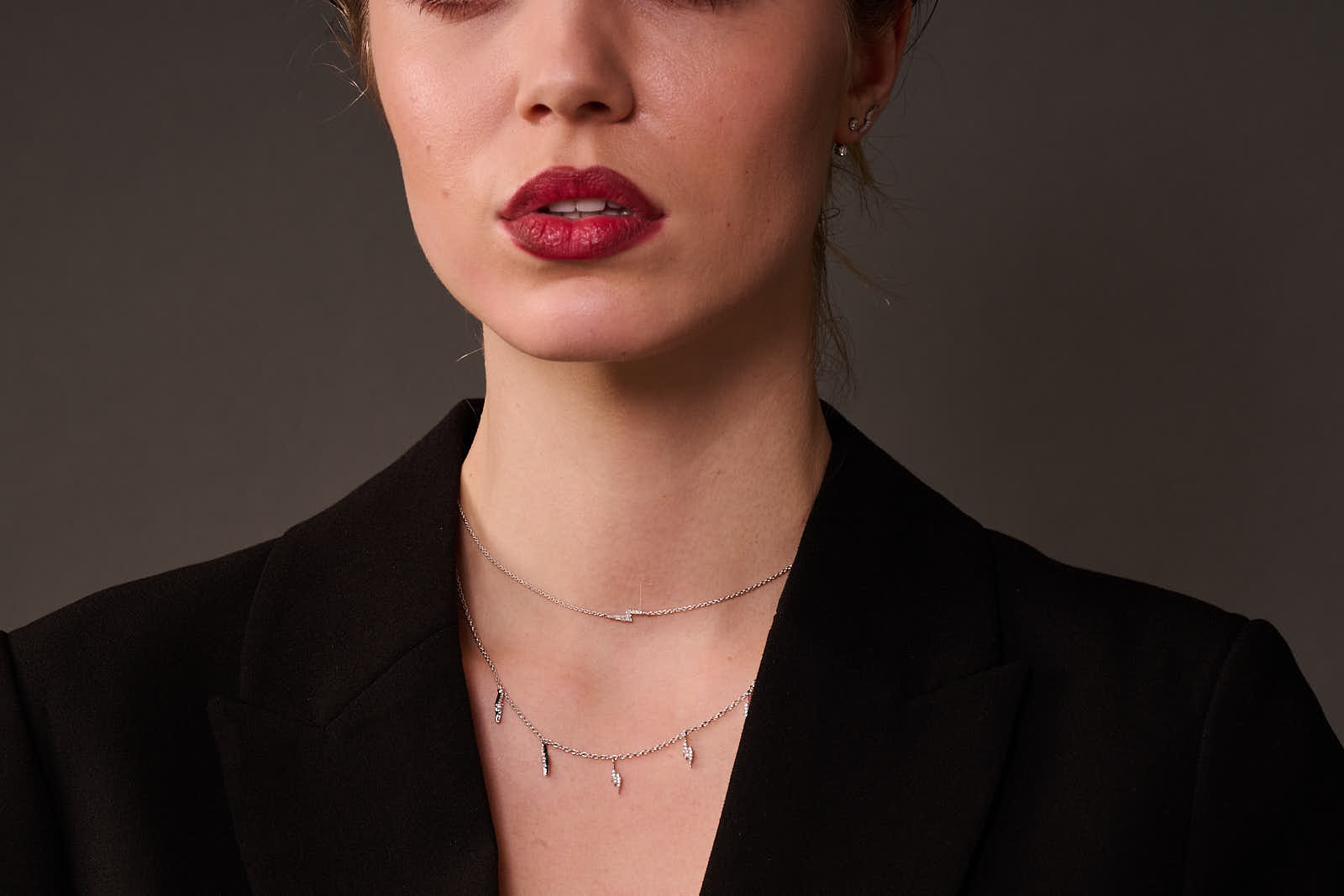
Do not choose wedding earrings from the product name alone. The product page should clearly state:
- Whether the earrings are sold as a pair
- Base metal
- Plating or finish
- Stone origin
- Total diamond weight
- Whether weight is per pair or per earring
- Number of diamonds
- Earring dimensions in millimetres
- Finished weight per earring
- Closure type
- Available metal colours
- Care instructions
- Dispatch estimate
- Return conditions
- Whether a grading or jewellery report is included
If any information is unavailable, the product page should be corrected before the earrings are promoted as bridal recommendations.
Wedding-day jewellery care
Apply hairspray, perfume and other styling products before putting on plated jewellery wherever possible. Avoid spraying products directly onto the earrings.
After the wedding:
- Handle the earrings with clean, dry hands.
- Wipe them gently with an appropriate soft cloth.
- Store each earring so it does not rub against other jewellery.
- Keep them away from moisture, perfume and household cleaning products.
- Follow the exact care instructions supplied with the product.
See also: How to care for gold-plated jewellery
What about wedding-guest earrings?
Wedding guests need different advice because their earrings must be selected around a guest dress, dress code, colour and fabric.
This page focuses on brides and wedding-party coordination.
See also: What earrings to wear as a wedding guest
Common mistakes to avoid
- Choosing earrings before confirming the dress and hairstyle
- Wearing long drops without testing them against the shoulder
- Ignoring whether the veil catches on the setting
- Judging visible size only by carat weight
- Combining large earrings with an equally prominent necklace
- Assuming every bride needs white-metal jewellery
- Buying matching bridesmaid earrings without checking piercings
- Describing earrings as comfortable without accurate weight information
- Forgetting to check whether the listing is for a pair
- Waiting until the wedding day to try the complete jewellery look
Final checklist
Before buying lab-grown diamond wedding earrings, confirm:
- Is the dress simple or highly detailed?
- What is the neckline?
- Will the bride wear a veil?
- Will the hair be up, down or half-up?
- Should the earrings or necklace lead the jewellery look?
- Are studs, drops or hoops more appropriate?
- What are the exact dimensions?
- What is the weight per earring?
- What closure is used?
- Are the earrings sold as a pair?
- Is the metal and plating accurately described?
- Are the stones clearly disclosed as lab-grown?
- Has the product been tried with the dress and veil?
- Can delivery and returns be completed before the wedding?
- Are the care instructions clear?
Explore Our Store
View all→Got Questions?
Frequently Asked Questions
Ready to Shop?
Begin with the dress, hairstyle and veil — then compare the earrings' actual dimensions, weight and closure before deciding.
Explore I Want Jewels lab-grown diamond earrings and check each product page for its measurements, materials, closure and whether the listing is for a pair.
Continue Reading
More From Lab-Grown Diamond Guides
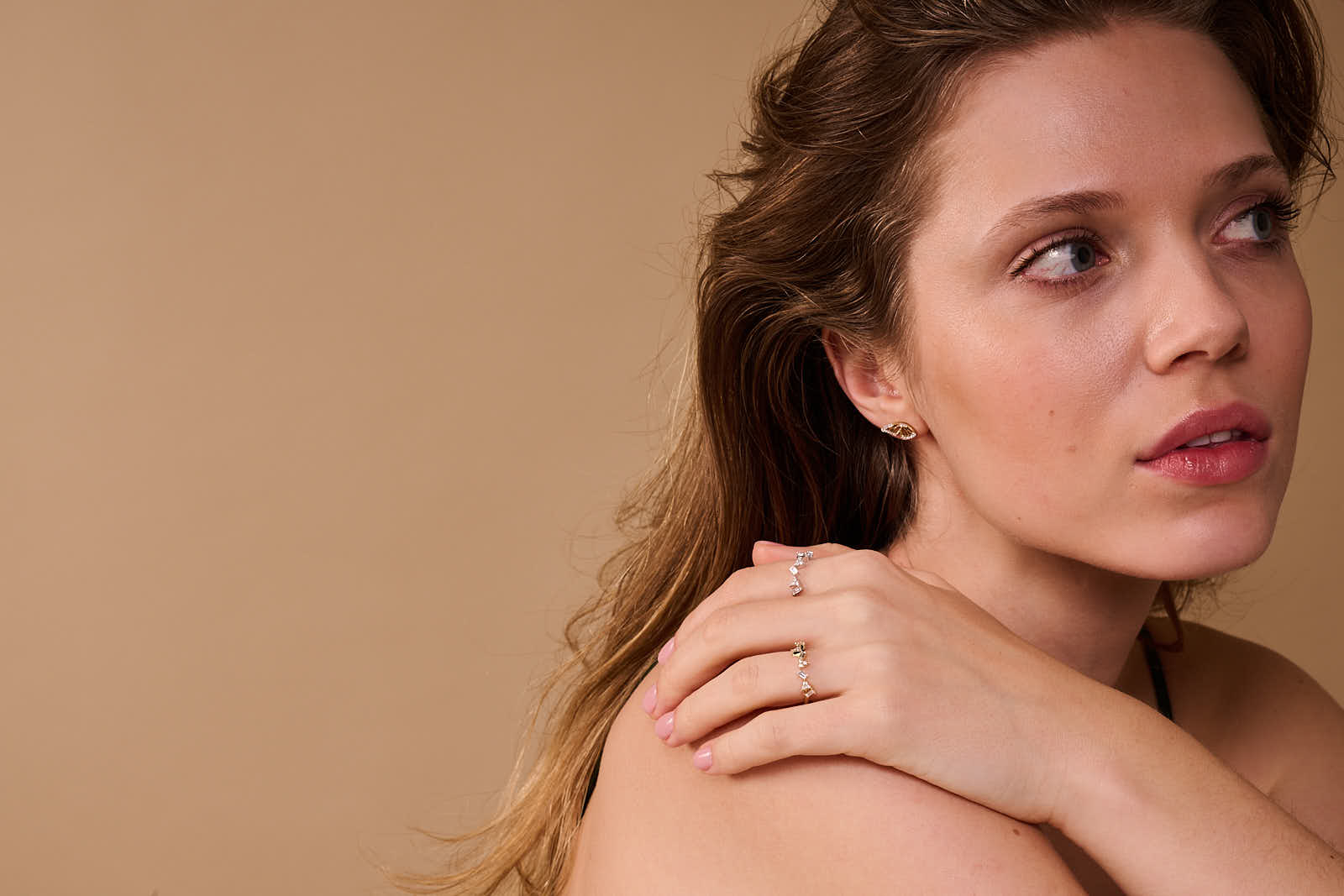
Are Lab-Grown Diamonds Real Diamonds?
Yes, lab-grown diamonds are real diamonds. Learn how they compare to natural diamonds, fake diamonds, cubic zirconia and moissanite before buying.
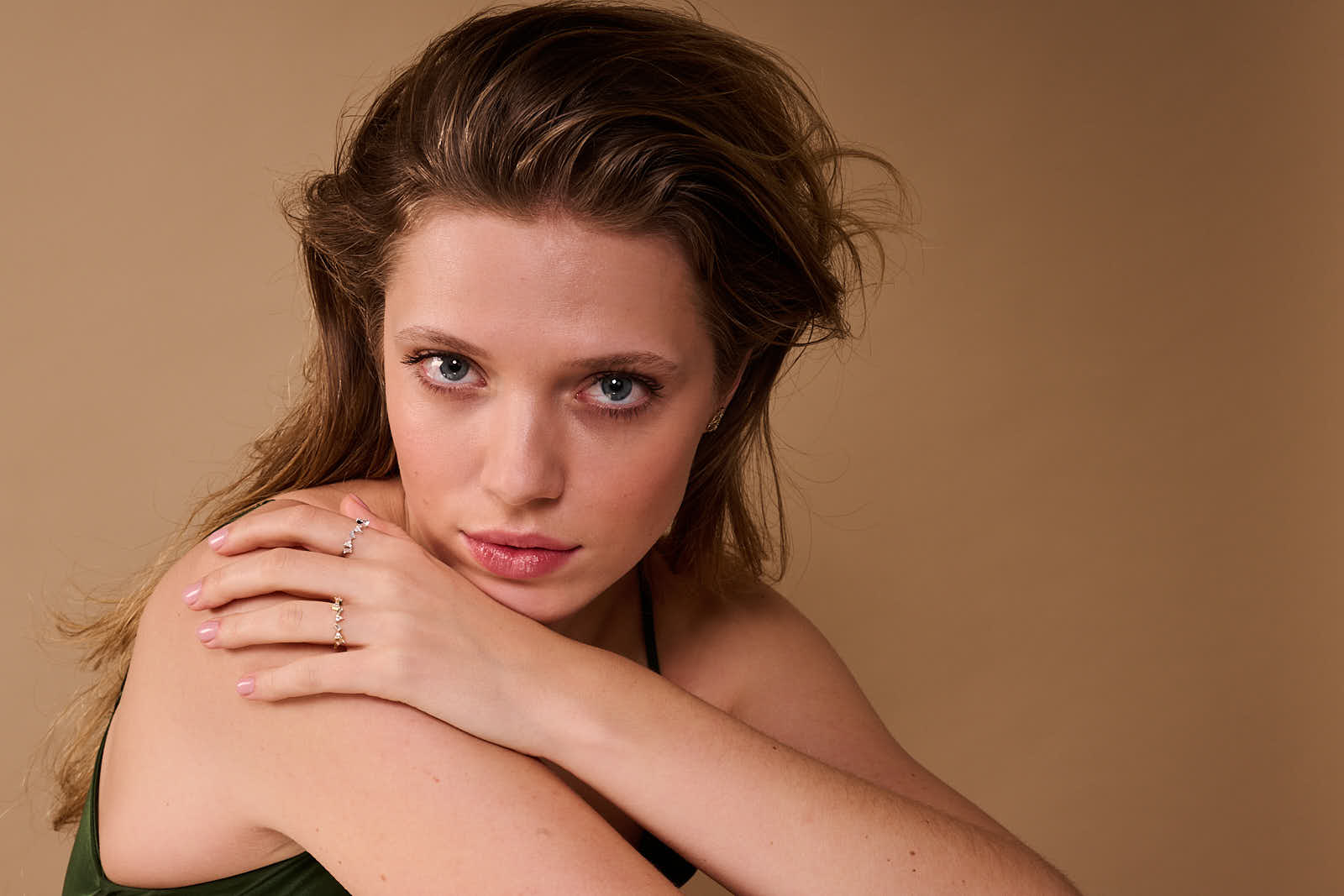
Lab-Grown vs Natural Diamonds: What Is the Difference?
Compare lab grown and natural diamonds in simple language. Learn the difference in origin, price, sparkle, value and jewellery use before buying.
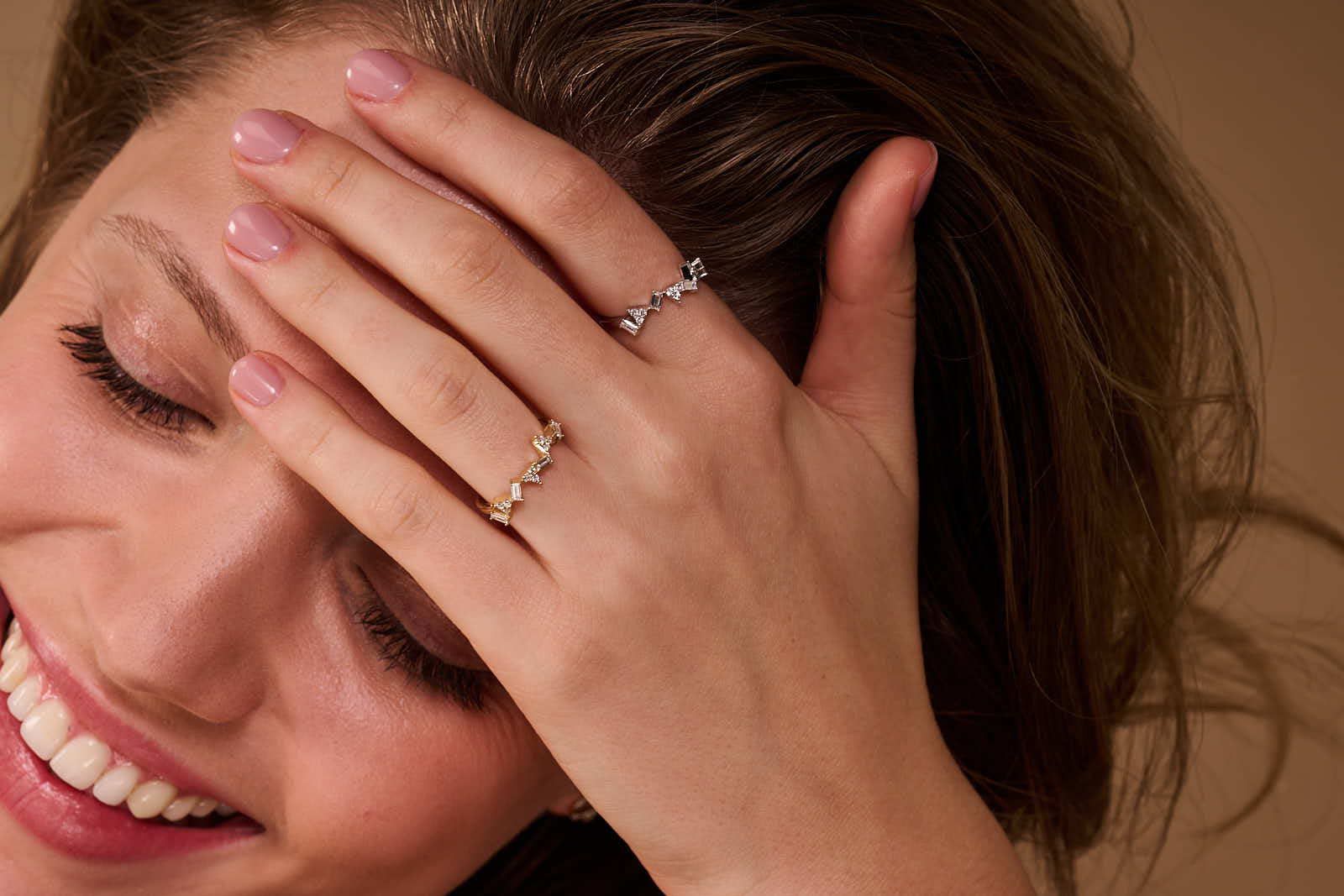
Are Lab-Grown Diamonds Worth It?
Find out if lab grown diamonds are worth buying, how they compare to natural diamonds, and when lab grown diamond jewellery makes sense.