
Will This Pendant Fit This Chain?
A Compatibility Checklist
Check pendant bail size, chain width, clasp passage and whether the pendant is removable before pairing it with a chain. Use this checklist to confirm the fit.
Quick Summary
- Pendant and chain compatibility checklist
- 1. Measure the bail opening
- 2. Measure the chain at its widest point
- 3. Check whether the clasp must pass through
- 4. Find out whether the pendant is fixed or removable
- How to check compatibility step by step
- Will the pendant hang properly?
Quick answer
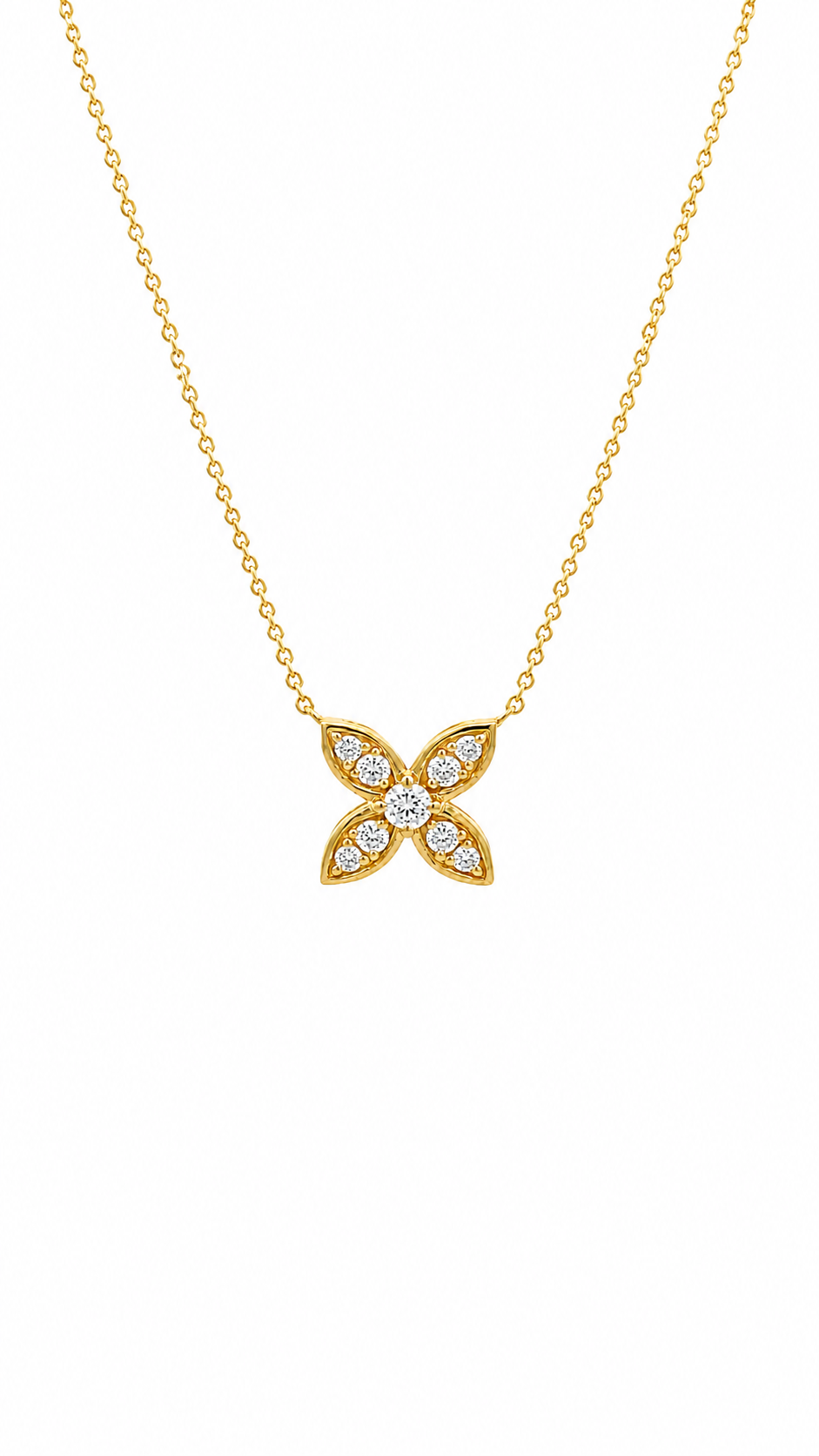
A pendant will fit a chain only if the chain can pass through the pendant’s bail or connector. Compare the bail’s inside opening with the chain’s widest point, including any links or decorative sections that need to pass through. If the clasp is too wide to pass through the bail, the pendant needs to be removable from the chain or attached another way. Check the measurements or ask the seller before buying.
Pendant and chain compatibility checklist
Before pairing a pendant with a chain, check these four things:
| Check | What to confirm |
|---|---|
| Bail opening | The pendant’s inside opening has enough clearance for the chain |
| Chain width | The widest part that must pass through the bail is narrow enough |
| Clasp passage | The clasp can pass through the bail if you plan to slide the pendant on from the end |
| Pendant attachment | The pendant is removable, or it is designed to stay fixed to its original chain |
Explore Our Store
View all→1. Measure the bail opening
The bail is the loop, ring or connector through which a chain passes. Measure the clear space inside the bail, not its outside height or width.
If the bail has an unusual shape, measure its narrowest inside point. That is the part that limits what can pass through.
2. Measure the chain at its widest point
Measure the chain where it is widest, including any textured or decorative link that must pass through the bail. A chain may have small links along most of its length but a wider connector near the clasp.
For the pendant to slide onto the chain, the relevant chain section must fit through the bail’s inside opening. Allow a little clearance so the chain is not forced through or caught on the edge.
3. Check whether the clasp must pass through
If the clasp cannot open or detach from the chain, the pendant may need to slide over the clasp before it reaches the chain. In that case, compare the clasp’s largest dimension with the bail opening too.
If the clasp is wider than the bail, the pendant cannot be added by sliding it over the clasp. It may still work if the pendant’s bail opens, the chain has a removable connector, or a jeweller can attach it another way. Do not force either piece.
4. Find out whether the pendant is fixed or removable
Not every pendant can be moved to another chain.
- Removable pendant: The bail or connector allows the pendant to slide off or be opened.
- Fixed pendant: The pendant is permanently attached, soldered, or integrated into the necklace design.
- Unclear attachment: The product page does not explain whether the pendant can be removed. Ask the seller before purchasing a separate chain.
A product photo may show a pendant on a chain without making the attachment method clear. Look for a side view or written confirmation.
How to check compatibility step by step
- Find the pendant’s bail or connector measurement.
- Find the chain’s width at its widest point.
- Check whether the chain can pass through the bail.
- If the clasp must pass through too, measure that as well.
- Confirm the pendant is removable or designed for a different chain.
- Check that the chain and pendant sit together as intended.
- Ask the seller or a jeweller to confirm if any measurement or attachment detail is missing.
Example
Suppose a pendant’s bail has an inside opening of 3 mm and the chain’s widest link is 2 mm. The chain may fit through the bail, but you still need to check whether the clasp can pass through and whether the pendant is removable.
If the chain measures 2 mm but its clasp is 4 mm, the pendant may not slide onto the chain from the clasp end. That does not automatically mean the combination is impossible; it means the connection method needs checking.
Will the pendant hang properly?
Physical fit is only one part of compatibility. A pendant can fit through a bail and still sit awkwardly if the bail is too loose, the chain sits off-centre, or the pendant’s weight and orientation pull it to one side.
Check the pendant from the front and side. It should face forward and sit naturally on the chain. If it twists, tilts or catches, ask whether that pendant is intended for the chain you have chosen.
What I Want Jewels product pages specify
The I Want Jewels necklace product pages reviewed for this guide show necklace lengths and some pendant dimensions. They do not consistently publish bail-opening measurements, chain widths or whether a pendant can be removed from its supplied chain. For example, the Stella Necklace lists an 18-inch chain and pendant dimensions, but those details alone do not confirm that its pendant can be transferred to another chain.
Browse the necklace collection for complete necklace designs. To recommend a separate chain and pendant combination, first confirm both measurements and the attachment method; this guide does not assume the listed pendants are interchangeable.
Explore Our Store
View all→Got Questions?
Frequently Asked Questions
Ready to Shop?
Find a piece you’ll love wearing
Check pendant bail size, chain width, clasp passage and whether the pendant is removable before pairing it with a chain. Use this checklist to confirm the fit.
Continue Reading
More From Necklace Guides
Necklace Clasp Types: How They Work and What to Check Before Buying
Compare necklace clasp types, including lobster and spring ring clasps. See how they open and what to check for easy, secure fastening before you buy.
Necklace Length Guide: What 40, 45 and 50 cm Look Like When Worn
See how 40, 45 and 50 cm necklace lengths sit, how to measure your fit, and what to check before choosing a lab-grown diamond necklace.
Types of Necklace Chains: A Visual Guide to Their Differences
Learn how cable, curb, box, rope, snake and other necklace chains look and differ. Explore chain styles and lab-grown diamond necklaces from I Want Jewels.