
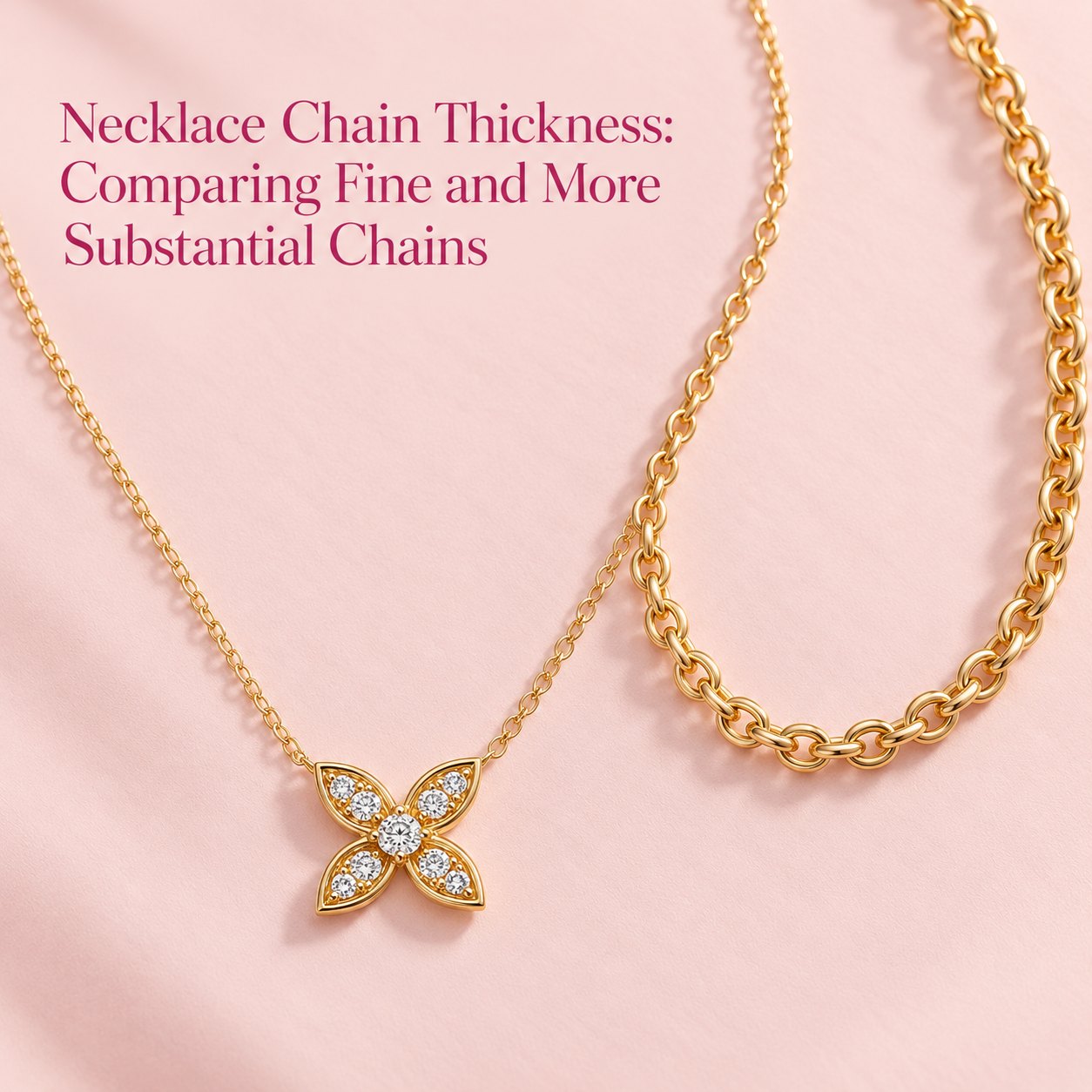
Necklace Chain Thickness:
Comparing Fine and More Substantial Chains
Compare fine and more substantial necklace chains by width, pendant fit and visual balance. Learn how to read millimetre measurements before buying.
Quick Summary
- How chain thickness affects the look
- Fine chains: subtle and delicate
- Medium-width chains: a visible balance
- More substantial chains: make the chain part of the look
- How to check whether a pendant fits a chain
- Chain width is not a strength rating
- How to compare chain thickness in product photos
Quick answer
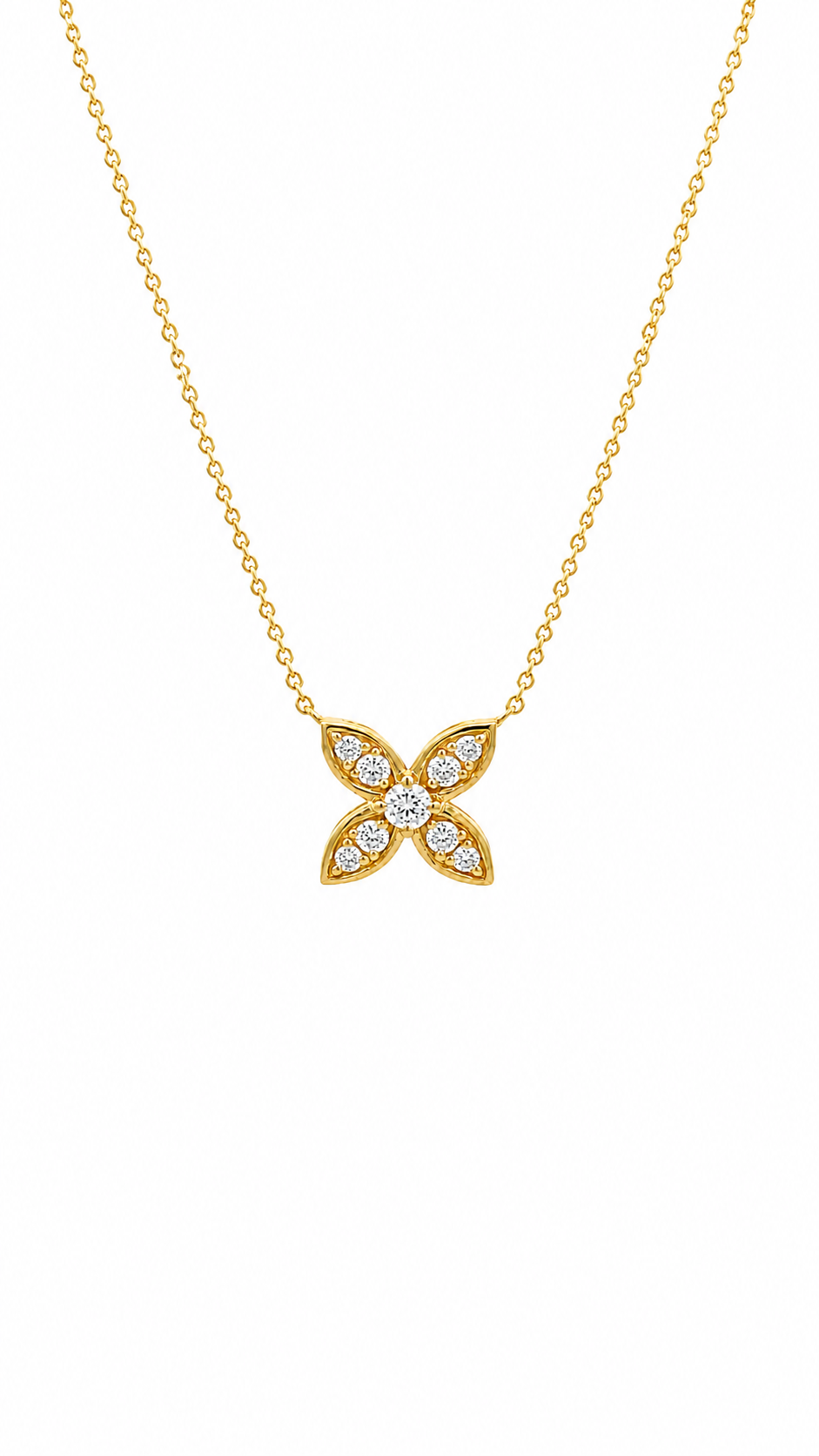
Necklace chain thickness usually refers to the width of the chain, measured in millimetres. A fine chain creates a delicate look, while a wider chain is more visually noticeable. Compare the actual width in millimetres rather than relying only on labels like “fine” or “substantial,” which can vary between sellers. If you plan to add a pendant, also check that the pendant’s bail opening is wide enough for the chain.
How chain thickness affects the look
Chain thickness changes how much visual attention the chain receives beside the pendant, neckline and other jewellery. It does not, by itself, tell you how strong or durable the chain is. Construction, material, clasp and workmanship also matter.
| Visual category | Approximate width for illustration | Appearance |
|---|---|---|
| Fine | Around 1 mm or less | Delicate and subtle |
| Medium | Around 1–2 mm | Visible, but still relatively understated |
| More substantial | Around 2 mm or more | More noticeable and prominent |
These are broad visual guideposts, not universal industry categories. Sellers may use different labels, and chain styles can look wider or narrower at the same measurement. Always check the stated width in millimetres where available.
Explore Our Store
View all→Fine chains: subtle and delicate
A fine chain keeps attention on the pendant or diamond detail. It can suit a small pendant or a minimal look where the necklace is meant to sit quietly against the neckline.
When comparing fine chains, check the clasp and links in close-up. A fine appearance alone does not tell you whether the chain is suitable for a particular pendant. For a pendant, check the maker’s guidance and the fit of the bail.
Medium-width chains: a visible balance
A medium-width chain is easier to notice than a fine chain while remaining visually balanced with many small and medium pendants. It can also be worn alone if you want the chain itself to contribute more to the look.
The best visual balance depends on the chain design, pendant shape, metal colour and neckline. Compare the complete necklace where possible, rather than choosing chain width in isolation.
More substantial chains: make the chain part of the look
A wider chain is more prominent and can be a deliberate style choice. It may be worn alone or paired with a pendant designed for a wider chain.
Before buying, check that the pendant’s bail opening can accommodate the chain. A pendant may have a bail that is too narrow even if the chain and pendant look as though they might suit each other.
How to check whether a pendant fits a chain
The bail is the loop or fitting through which the chain passes. To check compatibility:
- Find the bail’s inside opening measurement.
- Check the chain’s widest point, including any links or decorative sections that must pass through.
- Confirm that the opening is larger than the chain at that point, with enough clearance for it to move.
- Ask the seller or a jeweller to confirm compatibility if either measurement is missing.
Do not judge the fit from a front-facing product photo alone. A close-up from the side can show the bail opening more clearly.
Chain width is not a strength rating
A thicker chain can look more substantial, but width alone does not establish how much weight it can carry or how durable it will be. Two chains with similar widths may have different link designs, construction, materials and clasp mechanisms.
If you are choosing a chain for a specific pendant, check the product guidance or ask the maker whether that chain is suitable. Avoid relying on millimetres alone to make a strength or safety decision.
How to compare chain thickness in product photos
A product image can make a chain appear larger or smaller depending on camera distance, zoom and lighting. For a useful comparison, look for:
- The chain width stated in millimetres.
- A close-up photographed at a consistent scale.
- A millimetre ruler or scale placed beside the chain.
- A side view of the pendant bail, if the necklace is intended to be worn with a pendant.
- A photograph of the full necklace on a model for visual context.
If the width is not listed, ask the seller to measure it instead of estimating from a zoomed or retouched image.
What I Want Jewels lists about chain width
The current necklace collection and the product pages reviewed for this guide provide details such as necklace length and, on some designs, pendant measurements. They do not consistently provide chain width in millimetres. For example, the Stella Necklace lists an 18-inch chain and pendant measurements, but does not specify the chain’s width.
To make a direct thickness comparison for the collection, measure each chain in millimetres and photograph the examples at the same scale. Only label a chain “fine,” “medium” or “more substantial” once its actual width has been checked.
Explore Our Store
View all→Got Questions?
Frequently Asked Questions
Ready to Shop?
Find a piece you’ll love wearing
Compare fine and more substantial necklace chains by width, pendant fit and visual balance. Learn how to read millimetre measurements before buying.
Continue Reading
More From Necklace Guides
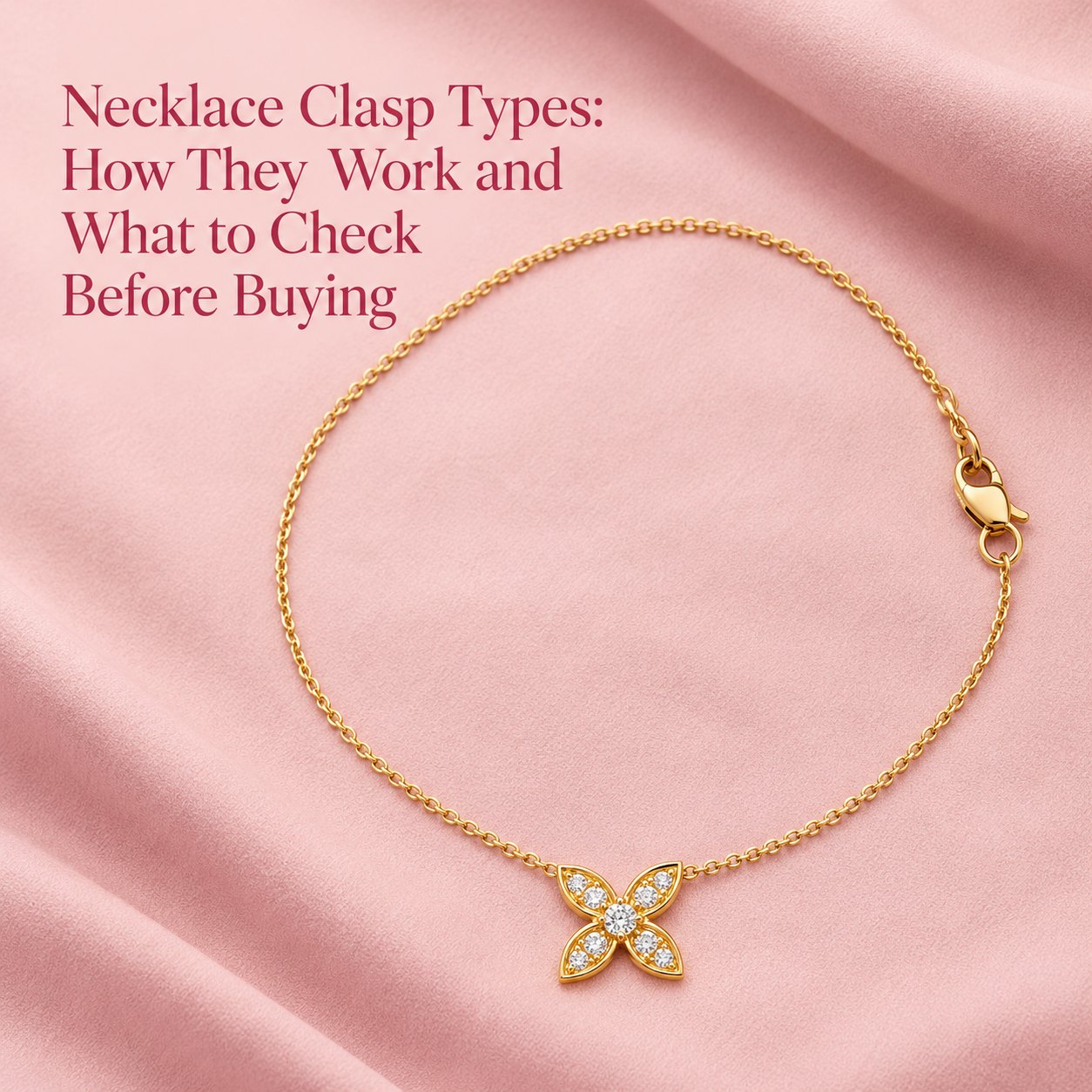
Necklace Clasp Types: How They Work and What to Check Before Buying
Compare necklace clasp types, including lobster and spring ring clasps. See how they open and what to check for easy, secure fastening before you buy.
Necklace Length Guide: What 40, 45 and 50 cm Look Like When Worn
See how 40, 45 and 50 cm necklace lengths sit, how to measure your fit, and what to check before choosing a lab-grown diamond necklace.
Types of Necklace Chains: A Visual Guide to Their Differences
Learn how cable, curb, box, rope, snake and other necklace chains look and differ. Explore chain styles and lab-grown diamond necklaces from I Want Jewels.