
Hoop vs Huggie Earrings:
What Is the Difference?
Hoops and huggies both create a curved shape around the ear, but they differ in how closely they sit, how much of the circle is visible and how they interact with the rest of an ear stack.
A huggie is generally a small type of hoop designed to sit close to the earlobe. "Hoop earrings" is a much broader category covering small, medium and large circular or curved earrings. This means that huggies can usually be described as hoops, but not every hoop is a huggie.
Neither style is automatically better. Choose a huggie when you want a compact curve with little visible space beneath the lobe. Choose a hoop when you want a more noticeable circular outline, more space below the ear or a stronger role in your overall look.
Quick Summary
- A huggie is a small, close-fitting hoop — every huggie is a hoop, but not every hoop is a huggie
- Inner diameter and piercing position matter more than the product name
- Larger hoops usually move more; a loose huggie can still rotate
- Neither style is inherently more comfortable — fit decides that
- Both use hinged, latch, post or continuous closures; no closure is universally best
- A side-profile try-on image shows the gap a front-facing photo hides
Hoop vs huggie earrings at a glance
| Feature | Hoop earrings | Huggie earrings |
|---|---|---|
| Basic design | A broad category of circular or curved earrings | A small, close-fitting type of hoop |
| Position | May sit close to or extend below the lobe | Intended to sit close around the lobe |
| Diameter | Available in a wide range of sizes | Commonly smaller, although labels vary |
| Visible gap | Can leave noticeable space below the ear | Usually designed to leave a smaller gap |
| Movement | Depends on diameter, weight and construction | Often less movement when the fit is close |
| Visual effect | Creates a more visible circular outline | Creates a compact, defined curve |
| Ear-stack role | Can act as the main or focal earring | Often used as a connecting or supporting shape |
| Closures | Hinged, click, latch, post or continuous designs | Frequently hinged or click designs, but this varies |
| Most important fit detail | Diameter, weight and thickness | Inner diameter and the position of the piercing |
These descriptions are general, not universal. Retailers do not all use "small hoop" and "huggie" in exactly the same way, so the product's measurements are more reliable than its name.
What are hoop earrings?
Hoop earrings are circular or partially circular earrings that pass through the piercing and create a curved outline around the ear. The term covers a wide range of designs, from small hoops that sit close to the lobe to large hoops that extend well below it.
A slim small hoop can produce a refined outline, while a wider or larger hoop creates greater visual presence. Diamond-set and pavé hoops add detail along the curve, whereas plain-metal hoops place more emphasis on the silhouette.
Because "hoop" is such a broad category, the word alone does not tell you whether an earring will be subtle, heavy, close-fitting or suitable for a particular piercing. Its internal diameter, external diameter, thickness, weight and closure provide much more useful information.
See also: Lab-grown diamond hoop earrings guide
Explore Our Store
View all→What are huggie earrings?
Huggie earrings are small hoop-style earrings intended to sit closely around the lobe or another suitable healed ear piercing. Their name comes from the way the curve appears to "hug" the ear.
However, the word "huggie" describes a design intention rather than a guaranteed fit. A huggie that sits closely on one person may leave a visible gap on another. Piercing position, lobe thickness and the earring's inner diameter all influence the result.
See also: What are huggie earrings?
Are huggies a type of hoop?
Yes. Huggies are generally considered a small, close-fitting form of hoop earring.
The distinction is useful because two earrings can both have a circular shape but create very different looks. A huggie usually follows the lower edge of the lobe closely. A conventional hoop may extend farther away from the ear, creating more negative space inside and below the circle.
Product naming is not completely standardised. Some retailers may call a close-fitting design a mini hoop, while others may call a slightly roomier design a huggie. Always compare the actual dimensions instead of relying only on the product category.
The most important difference: size and fit
The practical difference between hoops and huggies is not simply that one is "small" and the other is "large". Small hoops and huggies can overlap in size. The more useful distinction is how closely the earring fits around the ear.
Check the following measurements before buying.
Inner diameter
The inner diameter is the open space measured across the inside of the ring. It is particularly important for huggies because it determines whether the earring can curve around the lobe without pinching it.
Outer diameter
The outer diameter measures the complete width of the earring, including the metal or stone setting. It helps you understand how prominent the earring will look from the front.
Hoop thickness
A thicker hoop can appear much bolder than a thin hoop of the same diameter. Thickness may also affect the available internal space.
Weight
Diameter alone does not determine how an earring feels. Construction, materials, thickness and stone settings can all affect its weight.
Piercing-to-edge distance
This is the distance between the piercing and the outer edge of the lobe. It helps determine how much inner diameter is needed for a close fit.
A correctly measured huggie should have enough room for the relevant part of the ear without pressing into it. If you cannot determine the correct size, a qualified piercer can help assess the placement and anatomy. The Association of Professional Piercers notes that size, material, style, weight and finish all contribute to whether jewellery is appropriate for regular wear. Jewellery should never be forced into a piercing.
Do hoops move more than huggies?
Larger hoops generally have more opportunity to move because they extend farther from the ear. A correctly fitted huggie will often move less because it sits closer to the lobe.
However, this is a comparison of proportions — not a universal rule. A loose huggie may rotate, while a small, well-balanced hoop may have very little movement. Weight distribution, closure design and piercing placement also affect the wearing experience.
Consider how the earrings may interact with:
- Hair and hair accessories
- Glasses
- Headphones and headsets
- High collars and scarves
- Telephone use
- Other earrings in the same ear
If reducing movement is important, compare the measurements and try-on images rather than assuming every product labelled "huggie" will behave identically.
Are huggies more comfortable than hoops?
Huggies are not automatically more comfortable. They can feel unobtrusive when their diameter suits the wearer, but a huggie that is too tight may press against the lobe. A hoop that is too heavy may pull or move more than desired.
Comfort depends on:
- The internal diameter
- Earring weight
- Hoop thickness
- Post thickness
- Closure alignment
- Piercing position
- Lobe shape and thickness
- Surface finish
- How long the earring is worn
A well-fitted huggie may suit someone who prefers earrings that sit close to the ear. A lightweight hoop may suit someone who prefers more space around the lobe. Neither description should be used as a comfort guarantee.
Only change jewellery in a healed piercing. Seek advice from a qualified piercer if an earring causes persistent pressure, redness, swelling or irritation.
Which closures do hoops and huggies use?
Both styles can use several closure types.
Hinged or click closure
A section of the hoop opens on a hinge and clicks into position. This can create a continuous-looking circle, but the mechanism should be correctly aligned.
Latch closure
A curved or straight post passes through the piercing and connects with the opposite side of the hoop. Closure designs vary, so examine the product photographs and instructions.
Post and butterfly back
Some hoop-shaped earrings use a conventional post and separate back. These may look like hoops from the front without forming a complete ring through the piercing.
Continuous or wire hoop
The earring passes through the piercing and the ends meet or overlap. These can take more practice to insert and remove.
No closure is universally the most secure or easiest. Construction quality, alignment and the wearer's ability to operate the mechanism matter more than the closure's name.
Which is better for everyday wear?
Choose based on fit, weight and your preferred visual effect.
A huggie may be suitable when you want a compact curve close to the lobe, limited visual space beneath the ear, a smaller shape within an ear stack, or an understated outline.
A hoop may be suitable when you want a clearer circular silhouette, more visibility around the face, the earring to play a stronger role in an outfit, or a wider choice of diameters and proportions.
For everyday use, check whether the dimensions suit your ear and whether the weight, post and closure work for the intended wearing time. "Everyday" should describe how a product is designed and tested — not act as a promise that it will suit every wearer.
Hoop vs huggie earrings for an ear stack
Huggies are frequently used in ear stacks because their compact curve can introduce shape without extending far below the ear. Hoops can create a more prominent focal point.
One possible arrangement is:
- First lobe piercing: a visible small or medium hoop
- Second lobe piercing: a closer-fitting huggie
- Additional healed piercing: a small stud, if its size and placement suit the available space
Another option is to place a huggie in the first lobe piercing and use small studs above it for a more compact arrangement.
There is no rule requiring a huggie to sit in a second piercing. The correct order depends on the spacing between the piercings and the dimensions of each earring.
See also: How to stack earrings
See also: Diamond ear stack ideas
How do hoops and huggies change an outfit?
Huggies generally contribute a smaller, neater curve. They can complement minimal outfits or act as a supporting detail when another piece of jewellery is intended to lead.
Hoops create a clearer outline around the ear. Even a relatively simple hoop can become more noticeable when hair is tied back or tucked behind the ear.
For a restrained look, consider a slim huggie or small hoop with limited embellishment. For greater visibility, consider a larger diameter, wider profile or diamond-set curve. The outfit does not determine the correct earring — the desired balance between clothing, hairstyle and jewellery does.
Lab-grown diamond hoops vs diamond huggies
Lab-grown diamonds can be set into either design. The distinction between a diamond hoop and a diamond huggie still depends primarily on the proportions and fit.
Before buying, verify:
- Inner and outer diameter
- Width or thickness
- Weight per earring
- Closure type
- Base metal and finish
- Whether the product is sold as a single earring or pair
- Diamond origin
- Total carat weight for the pair or individual earring
- Diamond count
- Where the diamonds are positioned
- Whether the photographs show the product on an ear
A front-facing photograph alone may make a small hoop appear close-fitting. A side-profile try-on image is needed to show the space between the earring and the lobe.
Are hoops or huggies better as gifts?
Neither is automatically a safer gift. Huggies require a relatively precise fit, while hoop preferences can vary considerably by diameter and style.
Before choosing either, find out:
- Whether the recipient normally wears hoops
- Their preferred metal colour
- Whether they have one or multiple lobe piercings
- Whether they prefer close-fitting or more visible earrings
- The approximate dimensions of earrings they already wear
- Whether the product can be returned or exchanged
When the recipient's fit is unknown, avoid assuming a close-fitting huggie will be universally suitable.
Which should you choose?

| Your priority | Consider | Check before buying |
|---|---|---|
| A curve that sits close to the lobe | Huggie | Inner diameter and piercing position |
| A visible circular outline | Hoop | Outer diameter and thickness |
| Less movement | Close-fitting huggie or small hoop | Fit, weight and construction |
| A focal earring for a stack | Small or medium hoop | Spacing between piercings |
| A compact supporting stack element | Huggie | Available space around the piercing |
| More diamond visibility | Diamond-set hoop or huggie | Stone coverage and on-ear photographs |
| A gift | Either, when preferences are known | Measurements, materials and returns |
The most useful product page will supply these measurements clearly. If a product does not state its inner diameter, weight or closure, ask for the information before treating it as a close-fitting or everyday design.
How to care for hoops and huggies
Handle earrings with clean, dry hands and operate hinged mechanisms gently. Do not force a closure that appears misaligned.
Remove surface residue with a soft, dry cloth after wearing. Store each pair separately to reduce scratching and tangling. Follow the product-specific instructions for plated finishes, diamonds and other stones.
Water, cosmetics, perfume, hairspray and cleaning chemicals may affect some metals or plated finishes. Apply personal-care products before putting on the earrings and allow them to dry first.
See also: How to care for gold-plated jewellery
Final answer: hoop or huggie?
Choose a huggie if you want a compact hoop that follows the lobe closely and its verified inner diameter suits your piercing. Choose a hoop if you want a more visible circular outline or a wider choice of sizes.
Do not base the decision on claims that one category is always more comfortable, secure or versatile. The best choice depends on measurable product details, piercing placement and the look you want to create.
Explore Our Store
View all→Got Questions?
Frequently Asked Questions
Ready to Shop?
Explore hoop and huggie designs only after comparing their dimensions, weight, closure, materials and on-ear photographs.
Browse I Want Jewels earrings with clearly stated dimensions, materials and on-ear photographs, and check the inner diameter before assuming a design will sit close to your lobe.
Continue Reading
More From Earring Styling Guides
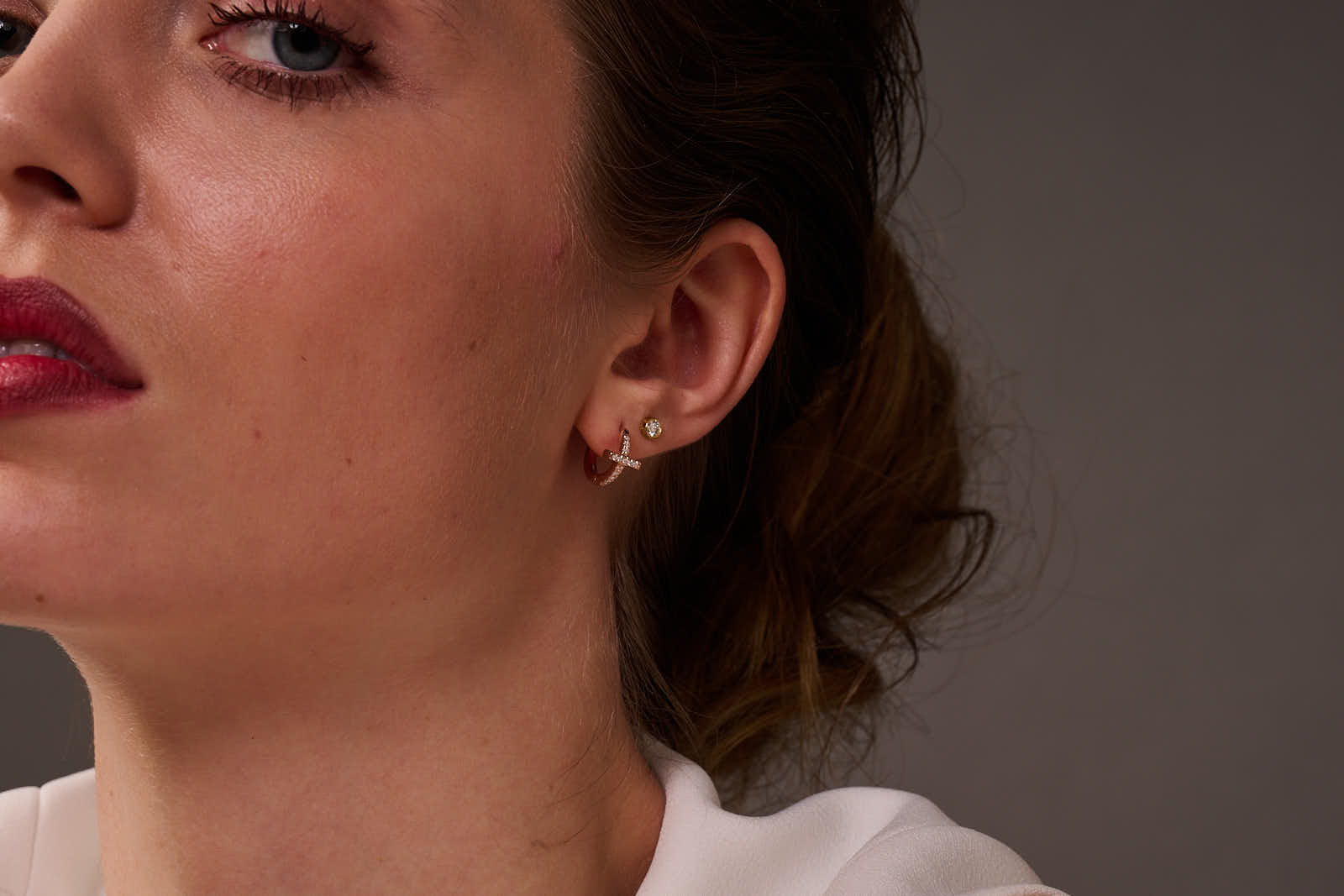
How to Stack Earrings: Complete Ear Stack Guide
Learn how to stack earrings step by step: choose a focal piece, vary the scale, repeat one feature and check spacing across two or three piercings.
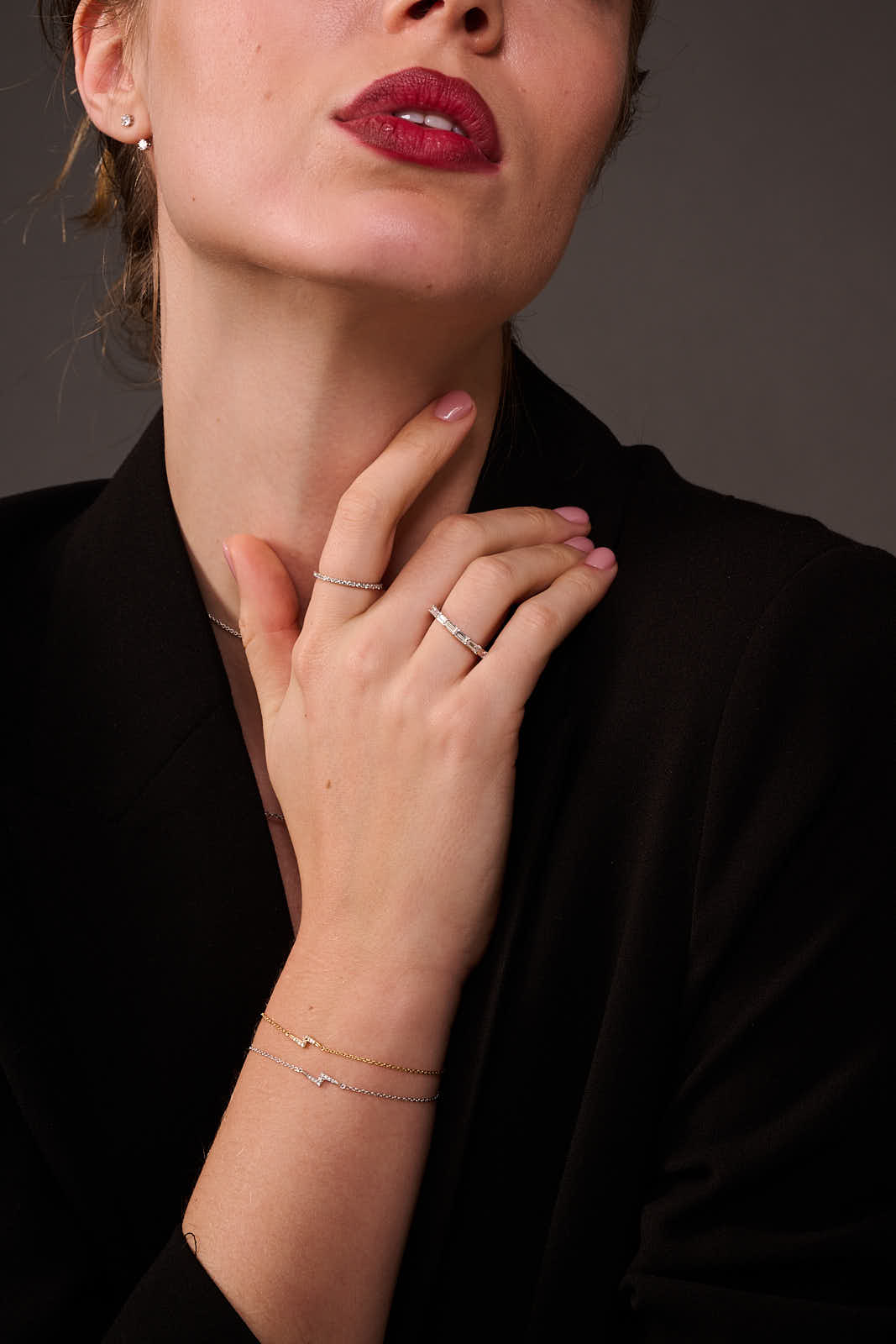
Diamond Ear Stack Ideas: 15 Curated Looks
Fifteen diamond ear stack ideas for two and three piercings, covering minimalist, everyday, workwear, wedding guest and evening combinations.
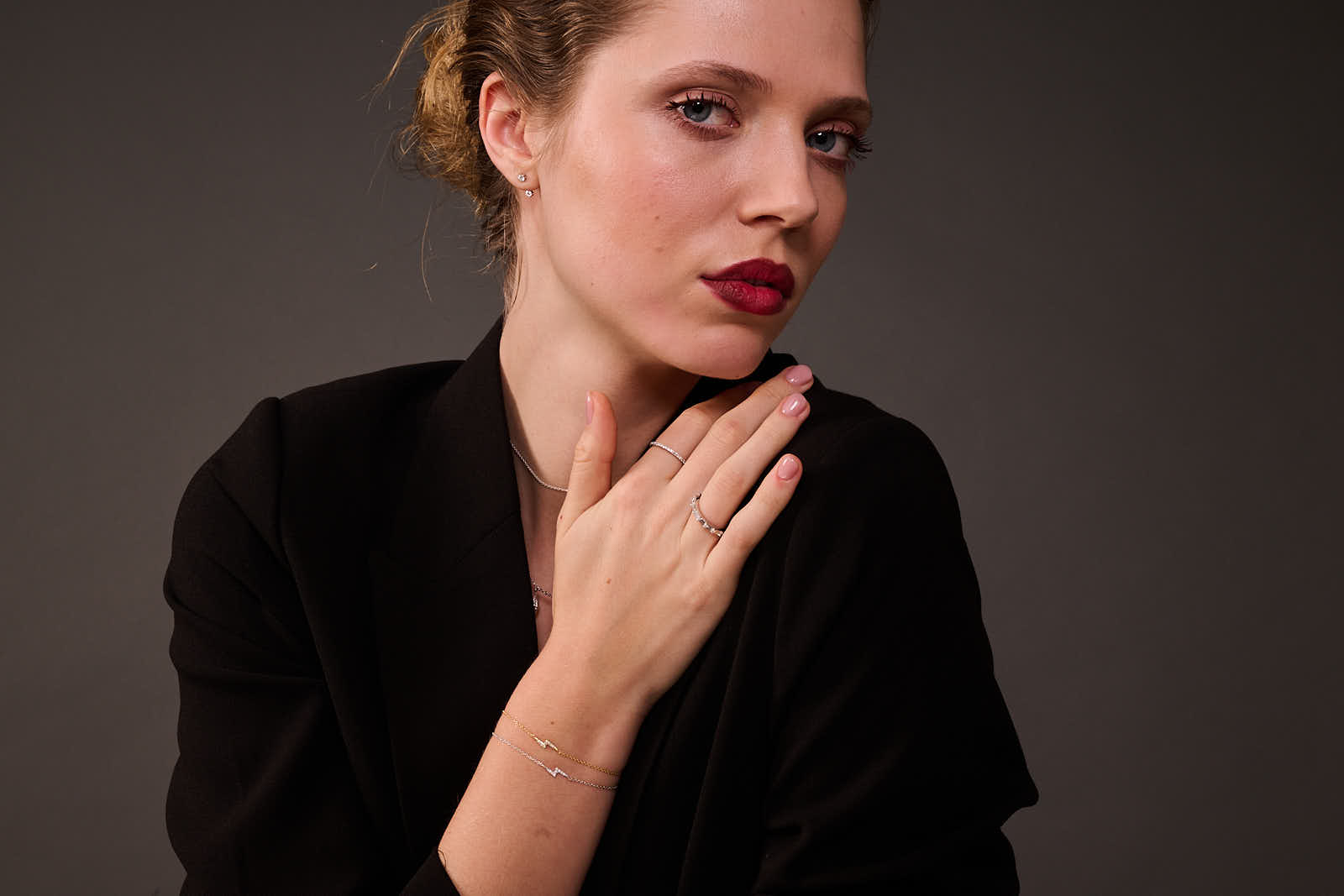
Minimalist Earrings Guide: Styles & Buying Tips
Learn how to choose minimalist earrings by style, size, metal, closure and sparkle. Compare studs, huggies, slim hoops and subtle diamond designs.