
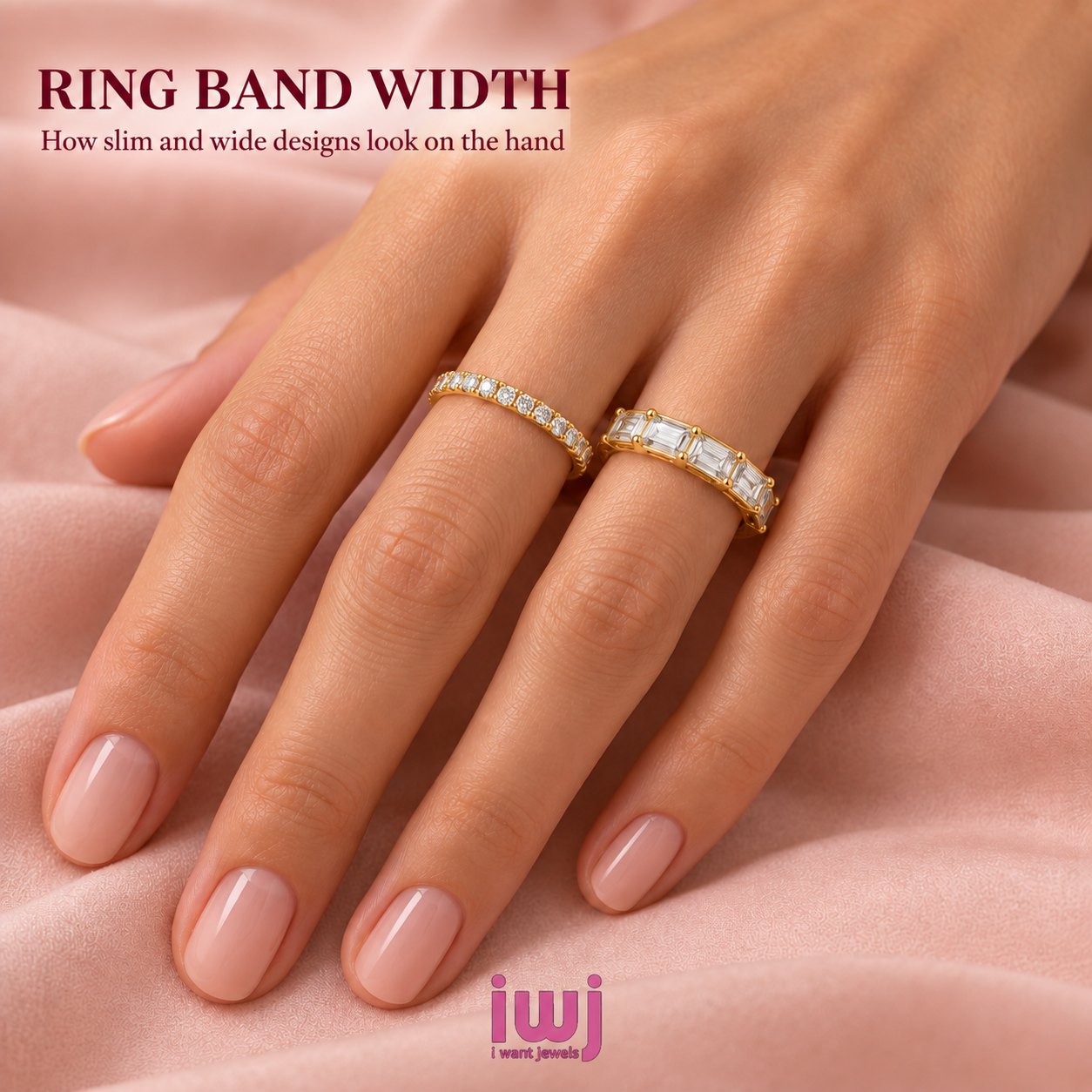
Ring Band Width:
How Slim and Wide Designs Look on the Hand
Compare slim and wide ring bands by their look, finger coverage and fit. Learn what to check in product photos before choosing a ring.
Quick Summary
- Slim and wide bands at a glance
- What does ring band width mean?
- How slim bands look on the hand
- How wide bands look on the hand
- Band width and fit
- Compare ring width in product photos
- Ring styles in the I Want Jewels collection
Quick answer
A slim ring band leaves more of the finger visible and creates a delicate line. A wider band covers more of the finger and is more noticeable from above. Width can also affect how a ring feels: a wider band may feel snugger than a narrow band in the same nominal size. Compare the band’s measured width, check the ring size guide on the product page and look at worn photos before deciding.
Slim and wide bands at a glance
| Band style | How it looks on the hand | What to check |
|---|---|---|
| Slim band | Delicate line; more skin remains visible beside the ring | Whether the top setting adds extra width |
| Medium band | More visible than a slim band, while keeping a defined band profile | The width of both the band and the setting |
| Wide band | Covers more of the finger and makes a stronger visual feature | Fit guidance, inner profile and how the edges sit |
Explore Our Store
View all→What does ring band width mean?
Ring band width is the measurement across the band, usually given in millimetres. A ring may not have the same width all the way around: it could be narrow at the back and wider at the front, or have a raised setting that extends beyond the band.
When comparing product measurements, check whether the listed figure refers to:
- The band at its narrowest point.
- The band at its widest point.
- The setting or decorative top.
- The total width across the ring when viewed from above.
If a listing does not say which point is measured, ask before comparing it with another design.
How slim bands look on the hand
A slim band creates a fine, subtle line around the finger. It can leave more room for other rings and may suit someone who prefers understated jewellery.
Check the setting as well as the band. A slim shank can still have a prominent top design, so the overall ring may look more noticeable than the band width alone suggests.
How wide bands look on the hand
A wider band covers more of the finger and can make the ring more prominent. The design may use a broad surface, a sculptural shape or more extensive diamond detail.
Look at the ring from above and from the side. The top view shows how much of the finger it covers; the side view shows the height and shape of the setting.
Band width and fit
Band width can change how a ring feels. A wider band touches more of the finger than a slim band, so the same nominal size may feel snugger. Finger size can also change during the day and with temperature.
For a comfortable fit:
- Check the ring size guide on the individual product page.
- Use the exact size options listed for that ring.
- Consider the band’s width and profile, not just the size label.
- Ask the seller for fit guidance if you are between sizes or comparing a wide band with a slim one.
This article focuses on width and appearance. Use the existing ring size guide for size measurements and conversions.
Compare ring width in product photos
Photos can distort scale. A close-up may make a slim band look wide, while a distant shot can hide the profile. For a fair comparison, look for:
- Worn photos using the same finger and camera angle.
- The band’s width in millimetres.
- A top view that shows finger coverage.
- A side view that shows setting height and band profile.
- A clear note about where the measurement was taken.
If the width is not listed, do not infer an exact measurement from the image.
Ring styles in the I Want Jewels collection
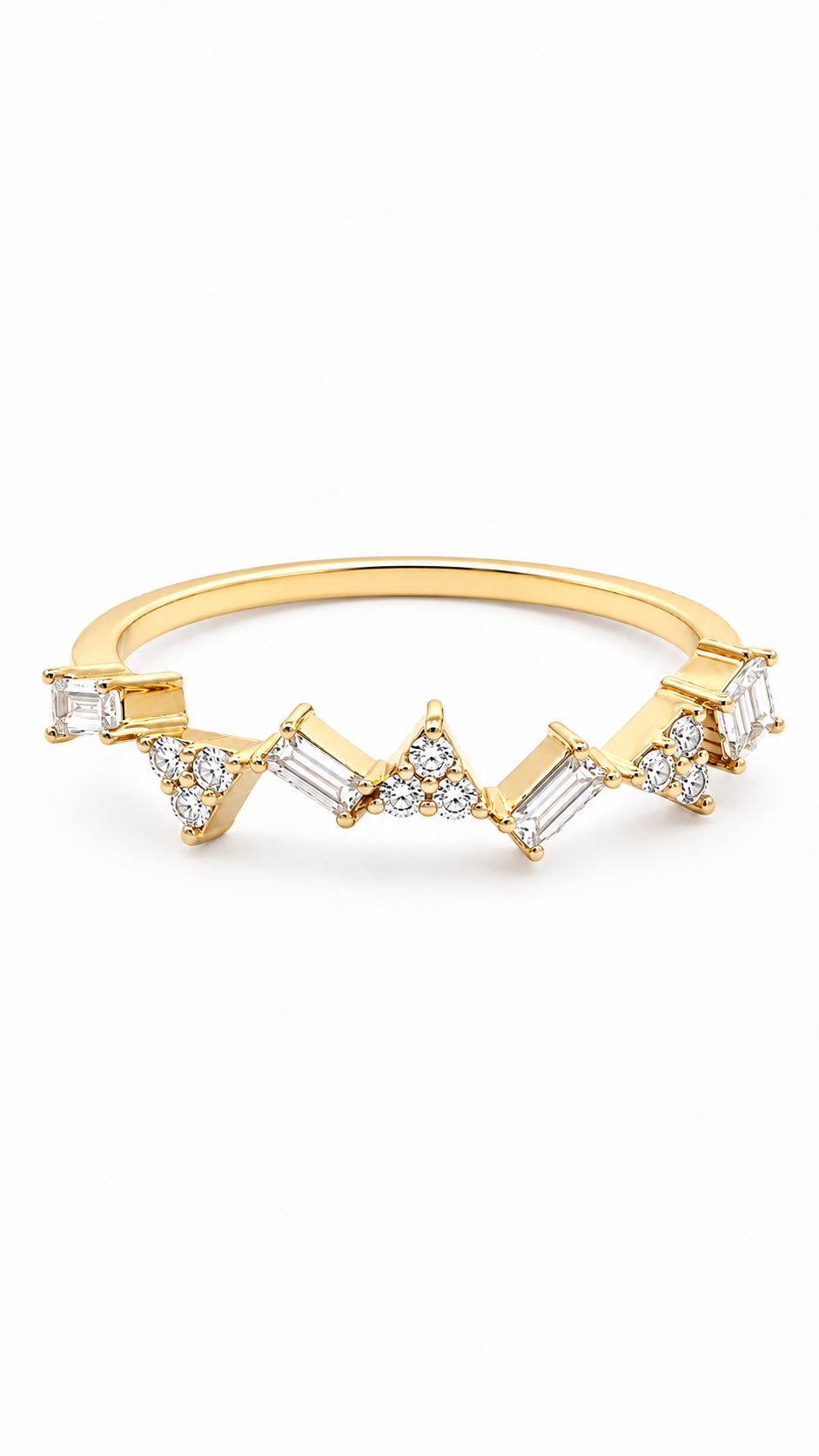
The current ring collection includes different profiles, such as open, wave and statement designs. The Ondina Ring is described as a wave-shaped band, while the Lucrezia Ring is identified as a statement ring.
The product pages reviewed for this guide do not consistently publish band width in millimetres. To make a direct slim-versus-wide comparison, measure the actual rings and photograph them on the same hand at the same scale. Until those measurements are available, describe the verified design features rather than labelling specific rings as “thin” or “wide.”
How to choose a band width
- Choose a slim band if you prefer a subtle profile or want to wear other rings nearby.
- Choose a wider band if you want the ring to cover more of the finger and stand out more.
- Compare the top setting if you want to understand the ring’s full visual width.
- Check the fit guidance if the band is wide or has a distinctive profile.
- Use worn photos and measurements together rather than relying on a single product image.
Browse the I Want Jewels ring collection and check the ring size guide on each product page before ordering.
Explore Our Store
View all→Got Questions?
Frequently Asked Questions
Ready to Shop?
Find a piece you’ll love wearing
Compare slim and wide ring bands by their look, finger coverage and fit. Learn what to check in product photos before choosing a ring.
Continue Reading
More From Ring Guides
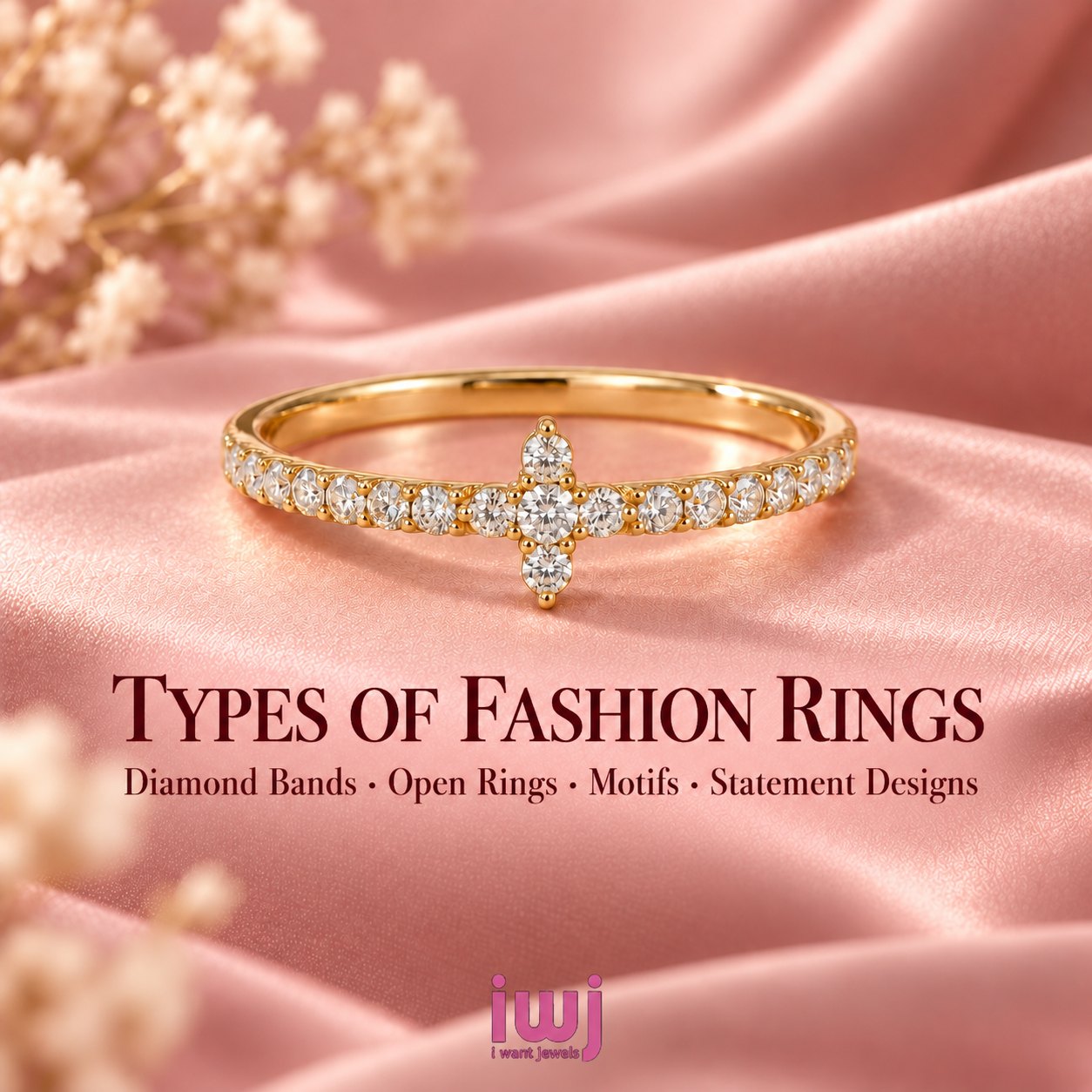
Types of Fashion Rings: Diamond Bands, Open Rings, Motifs and Statement Designs
Compare fashion ring styles, from diamond bands and open rings to motif and statement designs. See how each profile looks and find a style that suits you.
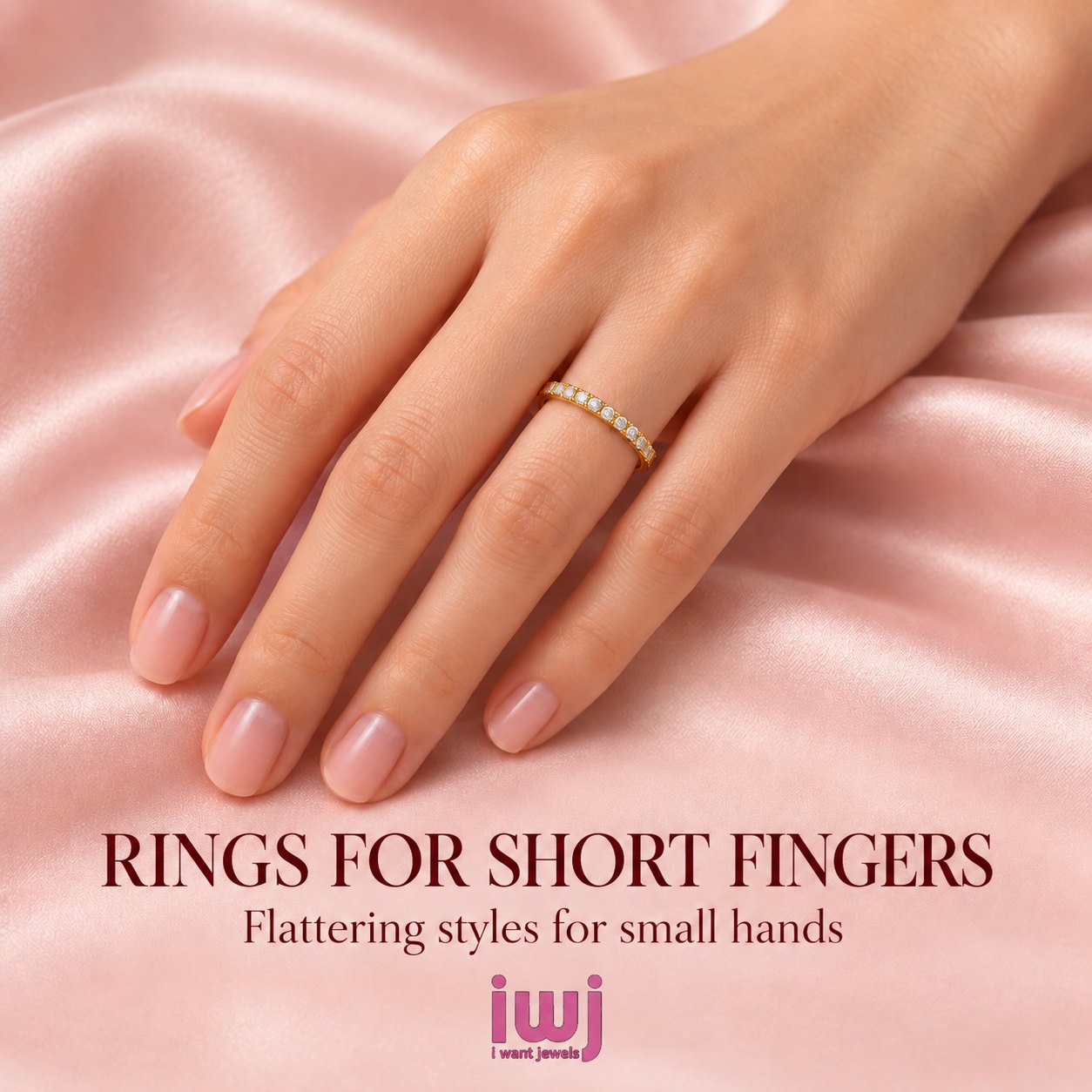
How to Choose Rings for Short Fingers and Small Hands
Explore ring styles for short fingers and small hands, from slim bands to open and statement designs. Compare profiles and choose what feels right to you.
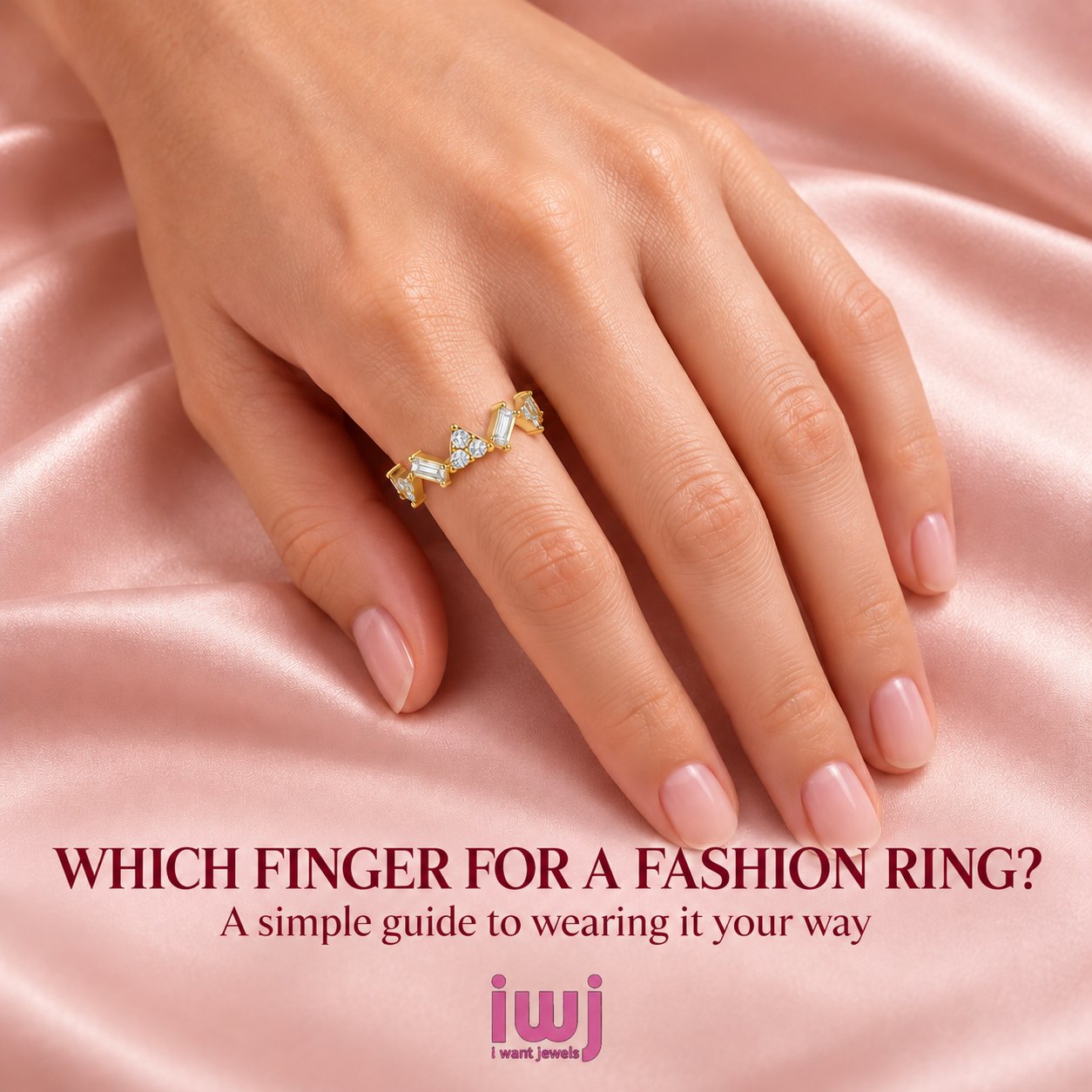
Which Finger Can You Wear a Fashion Ring On?
Learn how to style fashion rings on different fingers, with practical comfort tips and notes on cultural meanings. Choose the placement that feels right to you.