
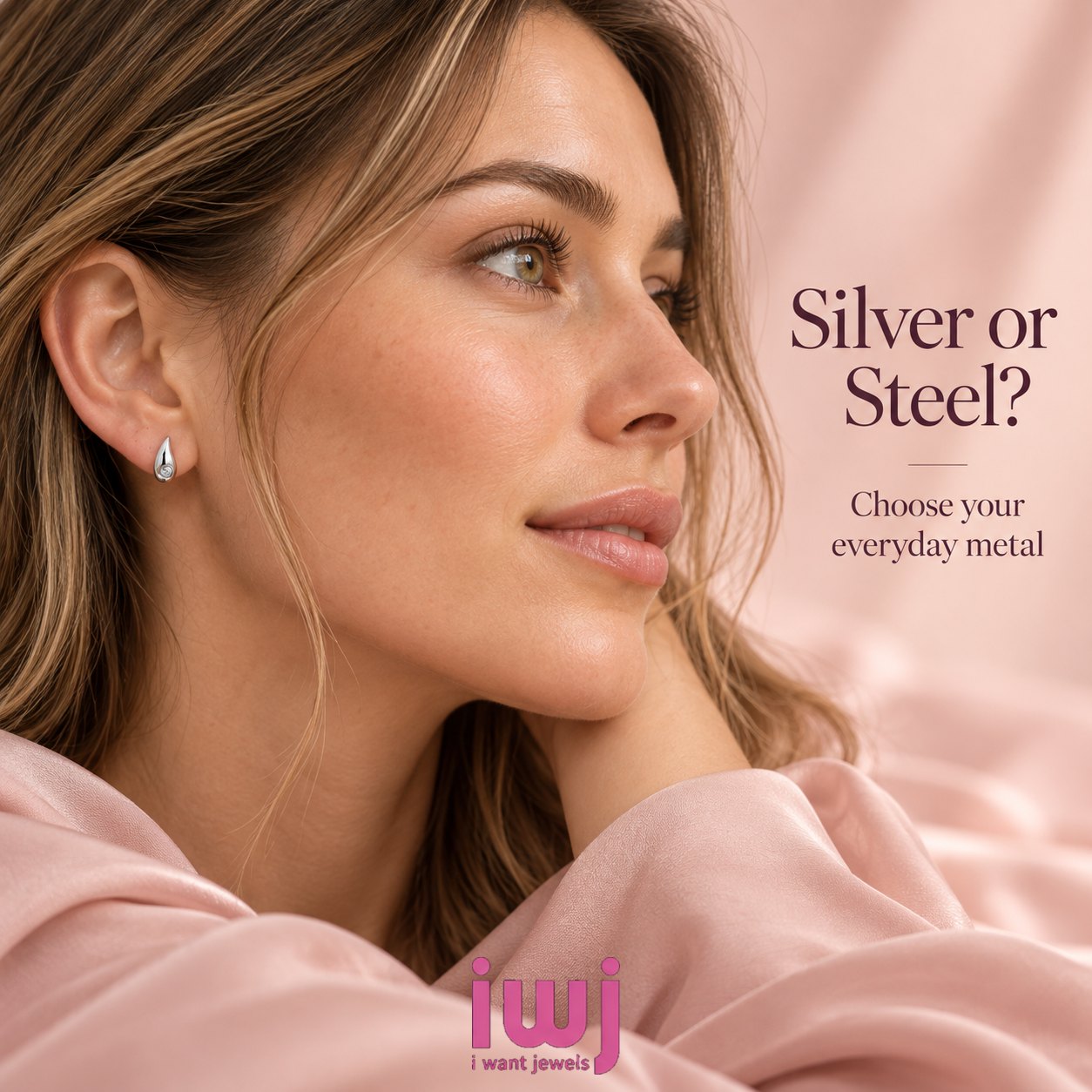
Sterling Silver vs Stainless Steel Jewellery: Which Should You Choose?
Compare sterling silver and stainless steel jewellery by composition, finish, care and price. See why I Want Jewels uses 925 sterling silver for its lab-grown diamond range.
Explore Our Store
View all→Quick answer
Sterling silver is a precious-metal alloy containing 92.5% silver, while stainless steel is an iron-based alloy that contains chromium and may include other elements, depending on its grade. Sterling silver has a traditional precious-metal look and can be shaped for detailed jewellery designs, but it may tarnish and needs care. Stainless steel is often chosen for its corrosion resistance and lower-maintenance appeal. The better choice depends on the design, finish, budget and how you plan to wear the piece.
Sterling silver vs stainless steel at a glance
| Feature | 925 sterling silver | Stainless steel |
|---|---|---|
| What it is | 92.5% silver alloyed with other metals | Iron-based alloy containing chromium; other elements vary by grade |
| Surface finish | May be left silver-coloured or plated with rhodium or gold | Often polished or given other finishes; some pieces may also be coated |
| Care | Can tarnish; plated finishes need gentle care | Generally valued for corrosion resistance, but performance depends on grade and use |
| Price | Price reflects silver content, design and any stones or plating | Often available at a lower price, though design and brand affect cost |
| Common appeal | Precious-metal base and classic jewellery finish | Practical, contemporary material with relatively low maintenance |
What is 925 sterling silver?
Sterling silver is an alloy made with 92.5% silver and other metals that help make it suitable for jewellery. The “925” mark refers to that silver content. Pure silver is softer, so alloying it helps it hold its shape in wearable designs.
Sterling silver can develop tarnish over time. A plated finish, such as rhodium or gold, changes the surface appearance and may affect how the piece needs to be cared for. Check the product page to see both the base metal and finish.
What is stainless steel jewellery?
Stainless steel is not one single alloy or a surface coating. It is a family of iron-based alloys that contain chromium; the exact composition and properties depend on the grade. Some grades also contain nickel or other alloying elements.
Jewellery listings should ideally identify the grade if that information is available. If you have a metal sensitivity, check the full material details rather than relying on a general label such as “stainless” or “hypoallergenic.”
Which material needs more care?
Sterling silver can tarnish through exposure to air, moisture and other conditions. A gentle cleaning routine and separate storage can help maintain its appearance. If the piece is plated, avoid abrasive cleaning methods that could damage the surface finish.
Stainless steel is commonly chosen for its resistance to corrosion, but “stainless” does not mean that every grade is unaffected by every environment. Follow the seller’s care instructions, particularly for pieces with plating, stones or mixed materials.
For I Want Jewels pieces, the care and materials FAQs recommend keeping jewellery dry, avoiding perfume and harsh chemicals, wiping it with a soft cloth, and storing pieces separately in their pouch.
How do the finishes compare?
A sterling silver piece may have a bright silver-coloured surface, or it may be plated with another metal. Rhodium plating gives silver a bright white finish; gold plating adds a gold-coloured surface. These are surface finishes, not changes to the silver base.
A stainless steel piece may be polished or given another finish, and some designs may have an additional coating. Check the product specifications to distinguish the base material from the finish.
A white or silver-coloured appearance alone does not confirm what material or plating has been used.
Which material is more affordable?
Stainless steel jewellery is often sold at a lower price point, while sterling silver is a precious-metal material. However, price cannot be judged by the base metal alone. Design complexity, craftsmanship, finish, stones, brand and production all affect the final price.
For a like-for-like comparison, check the stated material, finish, stone details and dimensions on both product pages.
Why I Want Jewels uses sterling silver
I Want Jewels positions its range in the demi-fine jewellery category. The brand states that its collections use 925 sterling silver with rhodium or 14kt gold plating and lab-grown diamonds. The silver base gives the range a precious-metal foundation, while the plated finishes and lab-grown diamonds support a more accessible alternative to solid-gold diamond jewellery.
For example, the Amadea Ring lists 925 sterling silver, gold plating and lab-grown diamonds. Check each product page for the exact finish and available colour option; do not assume that a white-coloured option is rhodium-plated unless its specifications say so.
Explore the ring collection, necklace collection and earring collection.
Which should you choose?
Choose sterling silver if you want a precious-metal base and like the classic silver look or a plated finish. Choose stainless steel if you prefer a material often selected for corrosion resistance and lower-maintenance use. For either material, check the grade or purity, finish, care instructions and full product description before buying.
Neither material is automatically the right choice for everyone. The design and how you plan to wear it matter just as much as the metal.
Explore Our Store
View all→Frequently Asked Questions
More Articles
- Best Earrings for a Girls' Night Out
- Geometric Earrings vs Classic Hoop Earrings: Which Is Right for You?
- What Is a Tennis Bracelet? Meaning, Cost & Buying Guide
- Lab Grown vs Natural Diamond Tennis Bracelet
- How Much Does a Tennis Bracelet Cost in 2026?
- Are Lab Grown Diamond Tennis Bracelets a Good Investment?
- Tennis Bracelet Size Guide — How to Measure Your Wrist