
How to Untangle a Fine Necklace Without Damaging the Finish
Learn how to untangle a fine necklace gently. Follow safe steps for loose chains and knots, protect plated finishes and know when to stop.
How do you untangle a fine necklace safely?
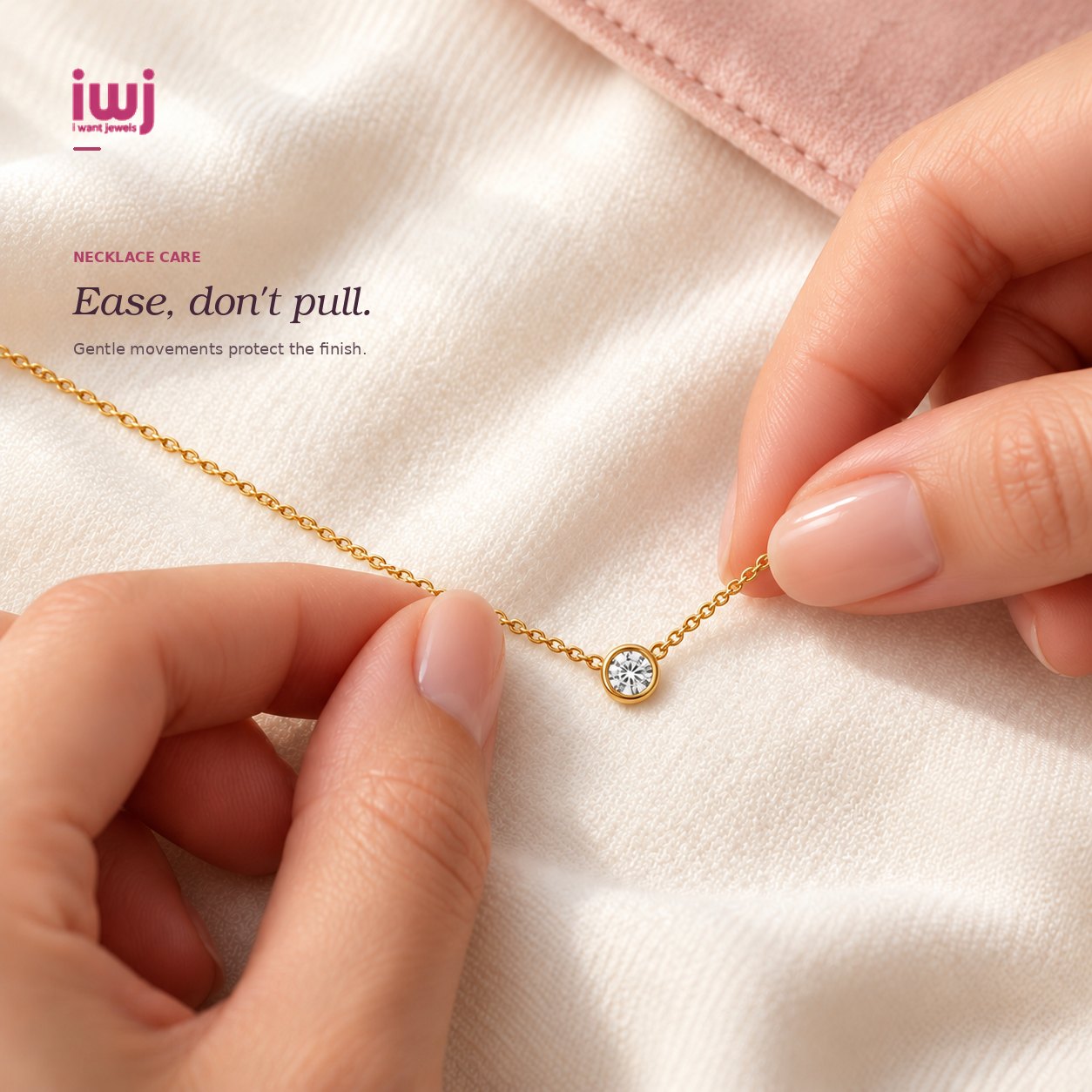
Lay the necklace flat, open the clasp and loosen the chain gradually from the outside of the tangle. Start with your fingertips. If the knot is loose but difficult to separate, use two smooth, blunt tools to ease apart the loops without pulling.
For plated jewellery, avoid sharp pins, oils, powders, cleaners and soaking. These can scratch the chain, leave residue or affect the finish. If the knot is tight, a link looks bent, or the chain is caught around a pendant or setting, stop and ask a jeweller to assess it.
What you need
- A clean, dry, light-coloured surface
- Good lighting
- A soft cloth to protect the necklace
- Your fingertips
- If needed, two smooth, blunt, non-metal tools
Avoid sharp needles, pins or tools with rough edges. Fine links can catch or deform under pressure.
Step-by-step: untangling a loose necklace chain
- Prepare the surface. Place a soft cloth on a flat table under bright light. Keep the chain away from the table edge.
- Open the clasp. This separates the ends and gives the chain room to move.
- Find the outer loops. Do not pull on the clasp, pendant or ends. Look for a loop you can gently widen.
- Loosen the tangle with your fingertips. Use small movements to ease the loops apart. Keep the chain flat.
- Use blunt tools only if needed. Place them into an open loop and move the links gently apart. Do not push the tools through a tight knot.
- Separate the chain gradually. Work from the loose outer loops towards the centre of the knot.
- Check the full length. Once free, lay the chain flat and inspect it before wearing or storing it.
The aim is to create slack, not to pull the chain straight through the knot.
If the knot is tight
A tight knot needs more patience, not more force. Hold the section beside the knot and try to open a small loop with your fingers. If it does not loosen with gentle movement, stop.
Do not tug both ends in opposite directions. This can tighten the knot or put strain on delicate links and the clasp. If blunt tools cannot ease the loops apart without force, take the necklace to a jeweller.
When to stop and get help
Stop working on the necklace if:
- The chain is pulled taut and the knot will not loosen gently.
- A link looks stretched, kinked, flattened or separated.
- The chain is caught around a pendant, stone setting or connector.
- The clasp or jump ring appears bent or damaged.
- You feel you need to pull hard or use a sharp tool.
- The plated surface looks scratched, worn or discoloured.
A jeweller can assess whether the chain can be safely freed and check for damage. Avoid trying to repair a bent link or broken clasp yourself.
What not to use on plated jewellery
Do not use oil, lotion, powder, soap, alcohol, cleaning solution or water as a shortcut. These products can leave residue, collect around small links or expose the finish to unnecessary moisture and friction.
For gold-plated jewellery, the site’s care guidance recommends gentle handling, a soft dry cloth and separate storage. Follow the care instructions for the specific necklace and avoid harsh cleaners or rough cloths. See the gold-plated jewellery care guide.
How to prevent necklace tangles
- Store each necklace separately in a pouch or divided jewellery box.
- Fasten the clasp before putting the necklace away.
- Lay the chain flat or hang it so it cannot knot around other pieces.
- Avoid carrying several loose chains together in a handbag or travel case.
- When layering necklaces, choose noticeably different lengths and check that the chains do not overlap repeatedly.
Explore Our Store
View all→Frequently Asked Questions
More Articles
- Best Earrings for a Girls' Night Out
- Geometric Earrings vs Classic Hoop Earrings: Which Is Right for You?
- What Is a Tennis Bracelet? Meaning, Cost & Buying Guide
- Lab Grown vs Natural Diamond Tennis Bracelet
- How Much Does a Tennis Bracelet Cost in 2026?
- Are Lab Grown Diamond Tennis Bracelets a Good Investment?
- Tennis Bracelet Size Guide — How to Measure Your Wrist